Bred by the Grand Duke's court at Weimar as an all-purpose hunting dog, the Weimaraner is a fast, tightly wound gundog distinguished by its silver-grey coat and amber eyes.
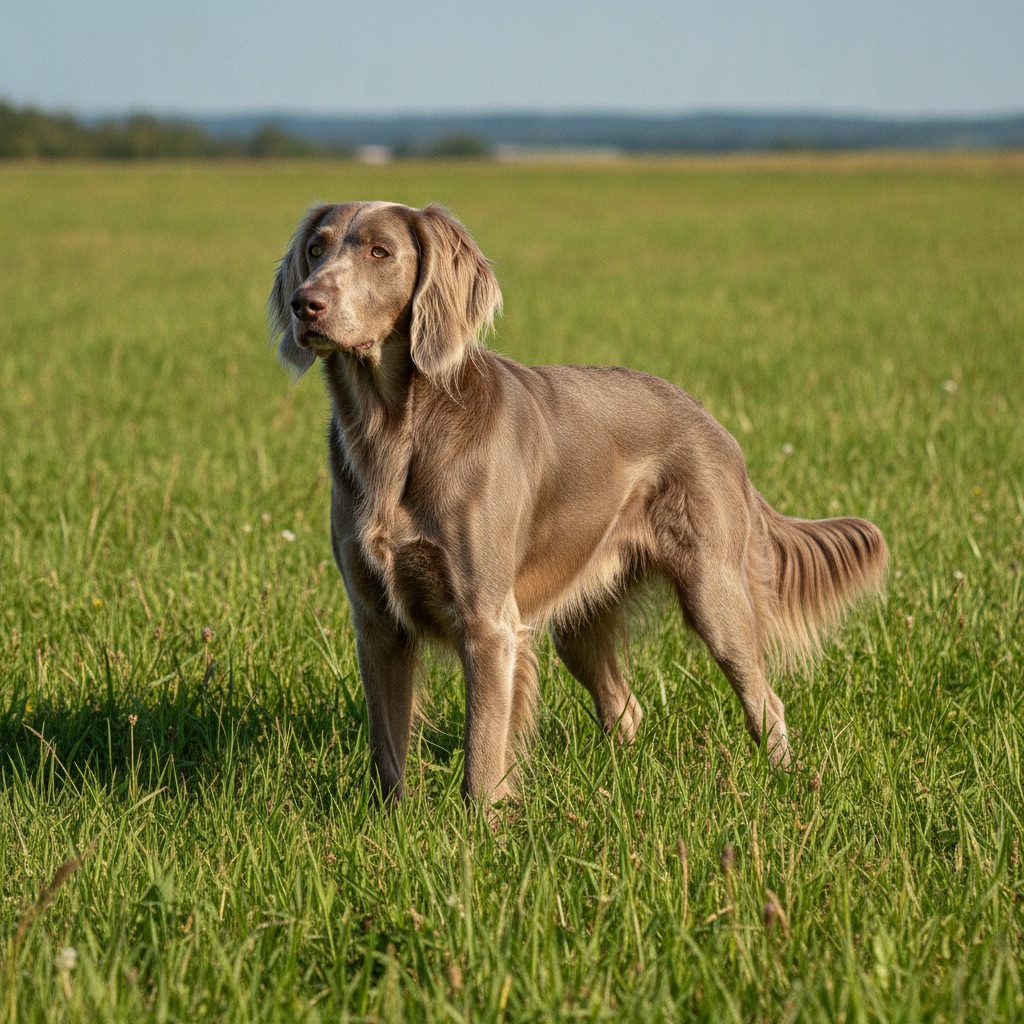

The breed was developed in the early nineteenth century at the court of Weimar in Thuringia, initially for hunting large game — boar, bear and deer — and later adapted to birds and small game as the large quarry disappeared from central Europe.2 Its ancestry is thought to include the Bloodhound and various German pointing breeds.
The Weimaraner Club of Germany, founded in 1897, restricted ownership to approved members and controlled exports tightly, which is why the breed remained obscure abroad for decades.1 An American sportsman, Howard Knight, gained club membership and imported breeding stock in 1929; the AKC recognised the breed in 1943, and it became briefly fashionable in post-war America.1
The name refers to the city and court of Weimar, seat of the Grand Duchy of Saxe-Weimar-Eisenach, whose noble hunters developed and controlled the breed. The nickname "Grey Ghost" is a twentieth-century English coinage describing the coat and the dog's silent, low-carried movement in cover.2
| Life expectancy | 10–13 years |
|---|---|
| Height — male | 25–27 in (64–69 cm) |
| Height — female | 23–25 in (58–64 cm) |
| Weight — male | 70–90 lb (32–41 kg) |
| Weight — female | 55–75 lb (25–34 kg) |
| Coat type & colors | Short, smooth, sleek; solid mouse-grey to silver-grey. A rare long-haired variety exists |
| Shedding | Moderate |
| Exercise needs | Very high — a serious field breed |
| Country of origin | Germany |
| AKC group | Sporting Group (AKC) |
| Prestige Breed size class | Large Breed · Over 60 lbs |
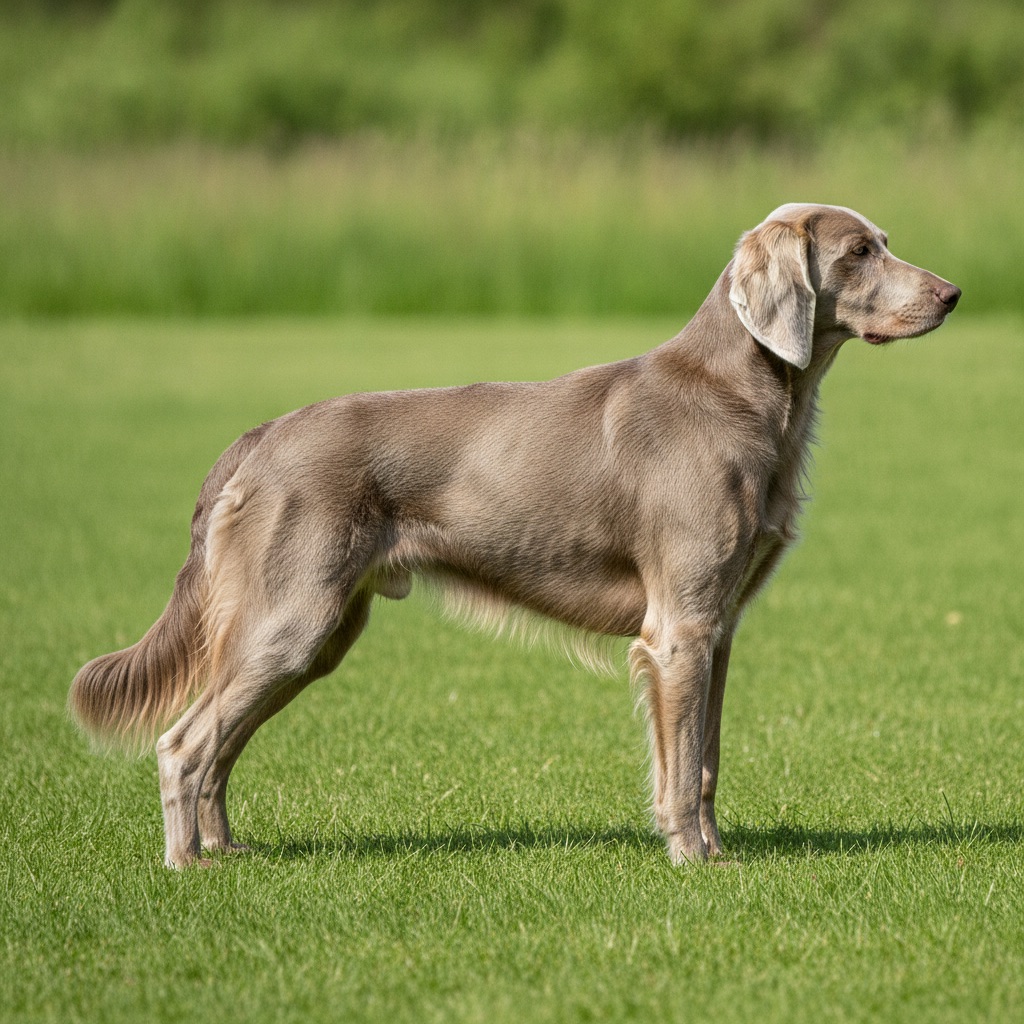
The AKC describes the Weimaraner as friendly, fearless and obedient.1 The breed was bred to hunt in close partnership with a single handler across a full day's work, and the resulting dog is intensely attached, energetic and mentally quick.
That attachment has a cost: Weimaraners are among the breeds most prone to separation anxiety, and they do badly as kennel or yard dogs. They are also determined and inventive — counter-surfing, door-opening and fence-testing are common. High prey drive makes them a poor match for households with small pets.
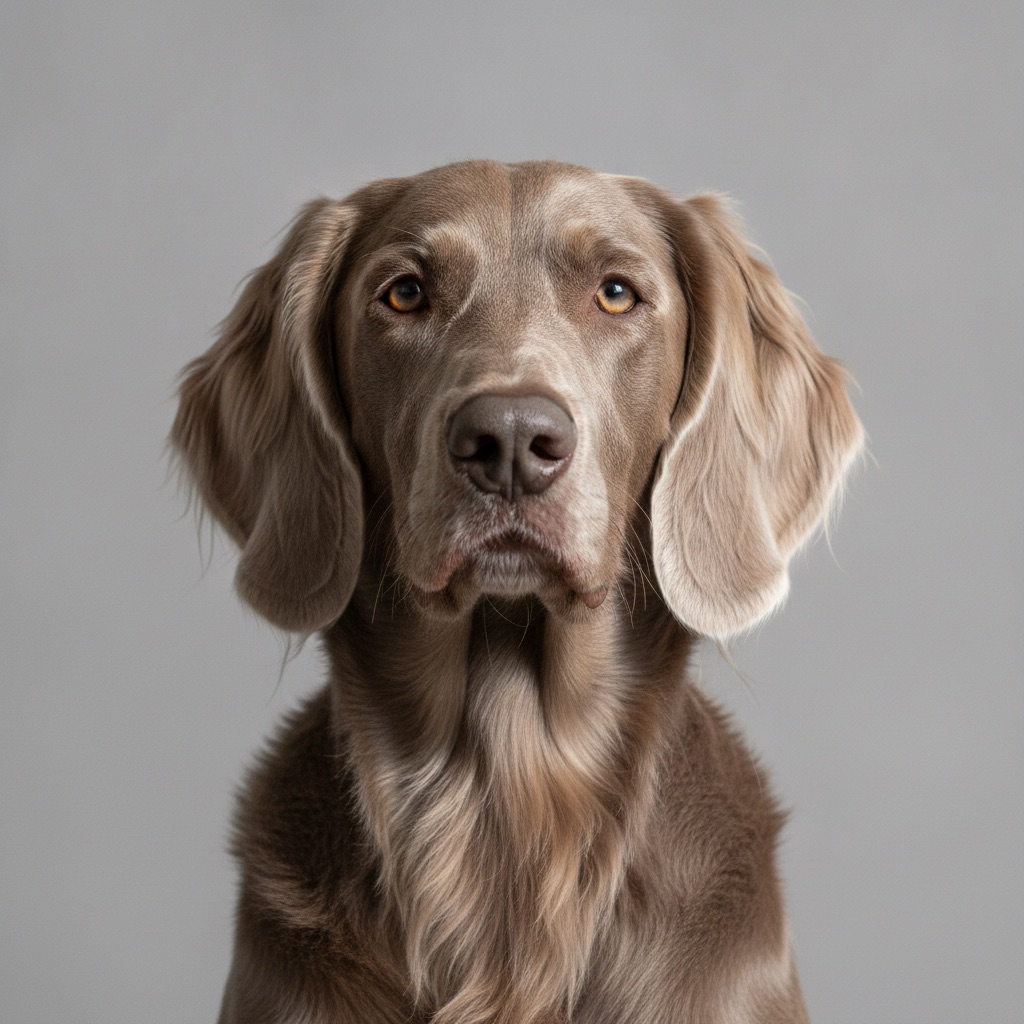
The photographer William Wegman built a decades-long body of work around his Weimaraners, beginning with Man Ray in the 1970s, which is largely responsible for the breed's visual familiarity outside hunting circles.2
A Weimaraner without a job is destructive, and not mildly so. Plan for an hour or more of hard exercise daily plus training work.
Build tolerance for being alone gradually from puppyhood. Crate training and departure conditioning prevent a serious adult problem.
Deep-chested breeds are at elevated risk of gastric dilatation-volvulus. Avoid heavy exercise immediately around meals and know the emergency signs.3
The combination of prey drive, athleticism and problem-solving makes casual fencing inadequate.
This guide is educational and is not veterinary advice. Breed standards, measurements and health information are drawn from the sources listed above; consult your veterinarian for guidance specific to your dog.
Prestige Breed makes a large breed multivitamin designed for breeds like the Weimaraner — see the Weimaraner Multivitamin.