A thickset, low-slung English breed with a wrinkled face and a rolling gait, the Bulldog was transformed from a baiting dog into one of the most placid of companion breeds within a few generations.
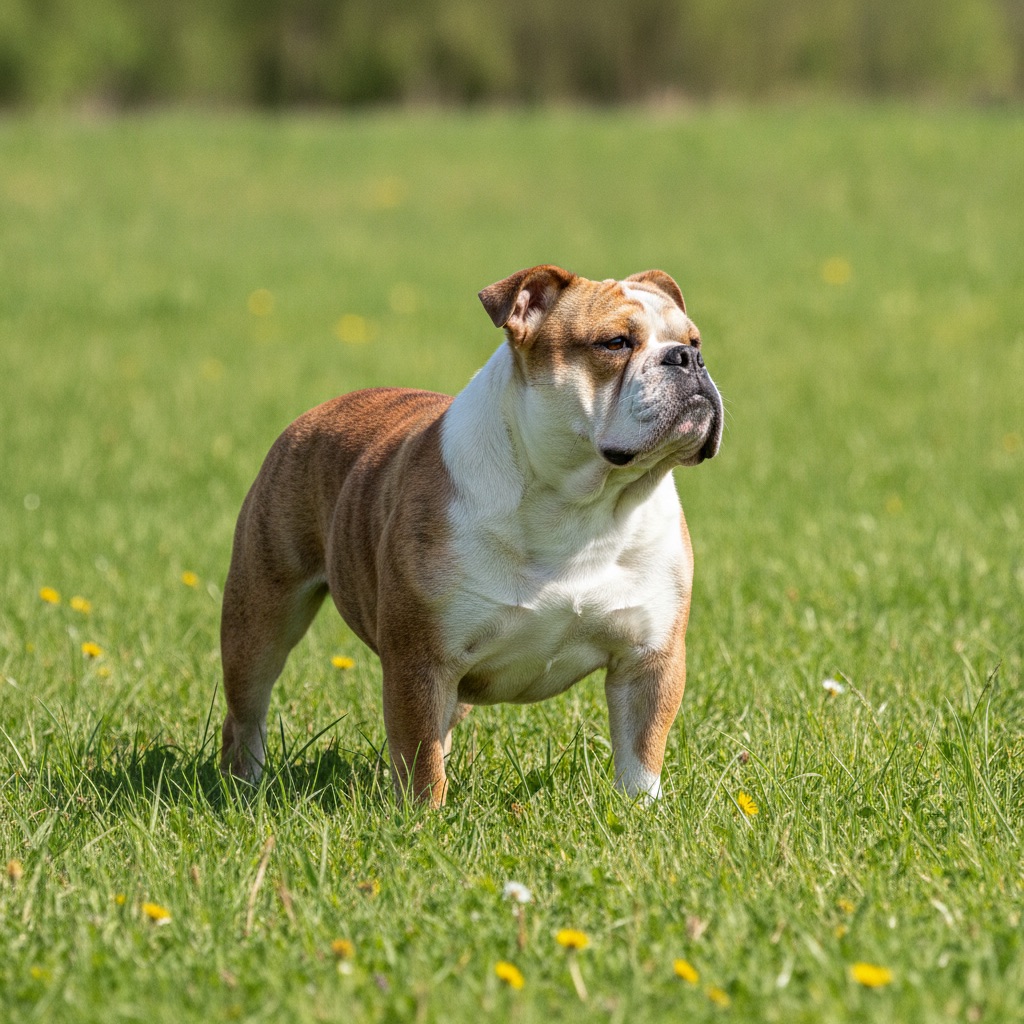

The Bulldog was developed for bull-baiting, a popular English spectacle in which the dog gripped the bull's nose and held on. The physical traits still visible in the breed — the undershot jaw, laid-back nose and heavy shoulders — were functional adaptations to that work.2
The Cruelty to Animals Act of 1835 outlawed baiting and left the breed without purpose. Rather than let it die out, English fanciers deliberately bred out aggression over the following decades, producing by the 1860s a dog selected entirely for docility and appearance. The Bulldog Club was founded in 1878 and the AKC recognised the breed in 1886.1
The name is entirely occupational: this was the dog used on bulls. Contemporary references from the seventeenth century use "bulldog" and "bandog" for the baiting type, and the name survived the loss of the function by two centuries.2
| Life expectancy | 8–10 years |
|---|---|
| Height — male | 14–15 in (36–38 cm) |
| Height — female | 14–15 in (36–38 cm) |
| Weight — male | 50 lb (23 kg) |
| Weight — female | 40 lb (18 kg) |
| Coat type & colors | Short, smooth, fine; brindle, white, red, fawn, fallow, piebald |
| Shedding | Moderate |
| Exercise needs | Low — short walks in cool weather only |
| Country of origin | United Kingdom |
| AKC group | Non-Sporting Group (AKC) |
| Prestige Breed size class | Medium Breed · 25 – 60 lbs |
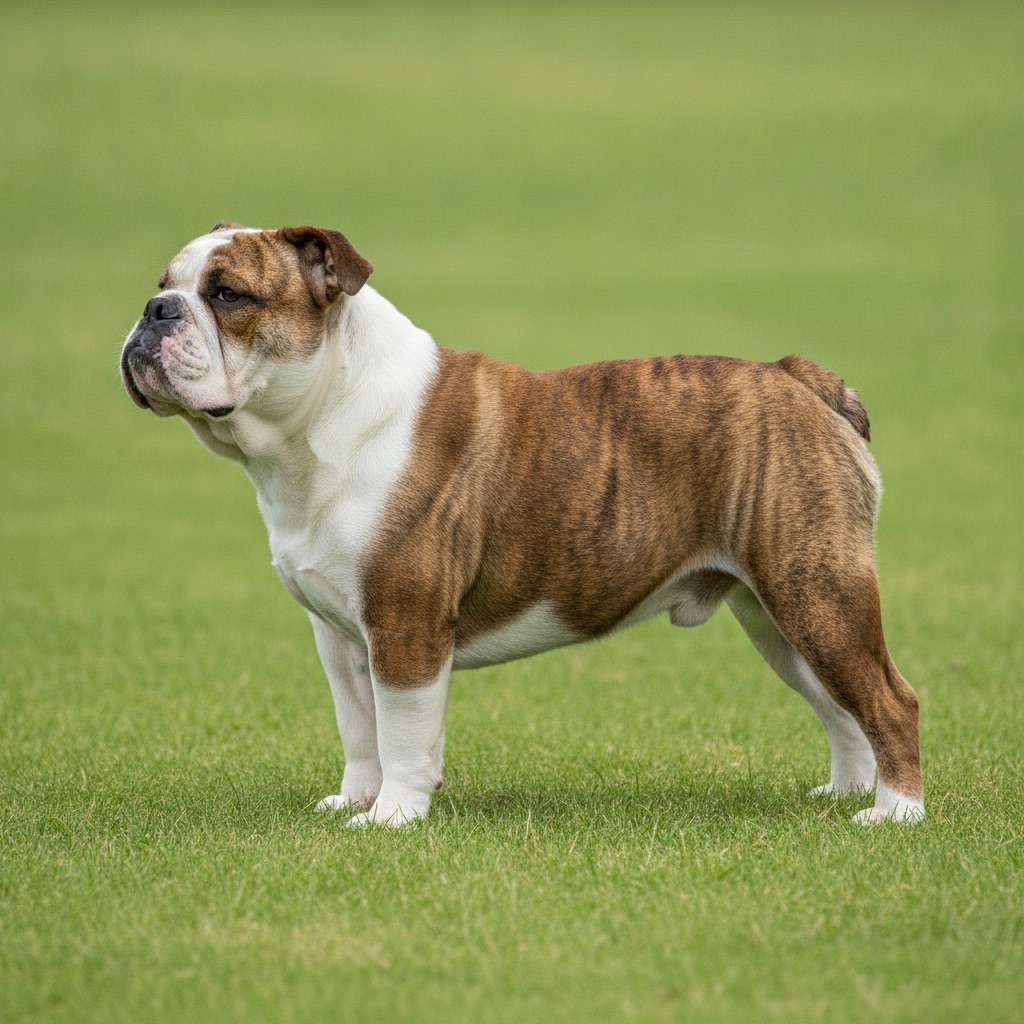
The AKC describes the Bulldog as friendly, courageous and calm.1 The modern breed is one of the most consistently good-natured of all dogs — tolerant of children, unbothered by household noise, and generally uninterested in confrontation.
Bulldogs are stubborn in the literal sense: they are not disobedient so much as unhurried, and they will simply decline. They are largely sedentary, comically attached to their people, and known for snoring, flatulence and a strong preference for lying down.
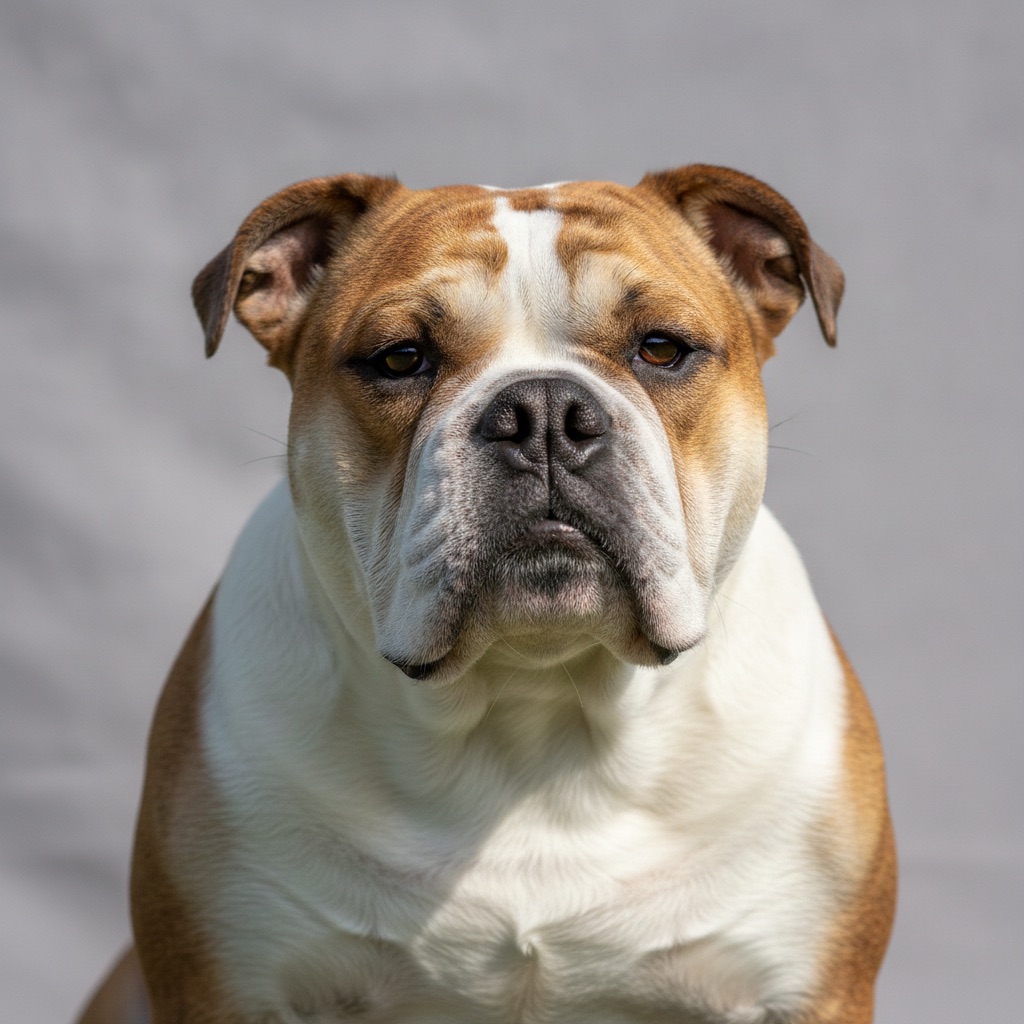
The Bulldog is the official mascot of the United States Marine Corps, an association dating to the First World War, and serves as a mascot for dozens of universities and clubs worldwide.2
Brachycephalic obstructive airway syndrome affects a large share of the breed. Noisy breathing at rest, exercise intolerance and collapse in heat are veterinary matters, not breed charm.4
Bulldogs cannot cool themselves effectively. Avoid midday heat entirely and never leave one in a warm car or unshaded yard.
Facial folds and the tail pocket trap moisture and develop dermatitis. Wipe and dry them several times a week.
A heavy front end and short muzzle make many Bulldogs poor swimmers. Use a life vest near water.
This guide is educational and is not veterinary advice. Breed standards, measurements and health information are drawn from the sources listed above; consult your veterinarian for guidance specific to your dog.
Prestige Breed makes a medium breed multivitamin designed for breeds like the Bulldog — see the Bulldog Multivitamin.