The most accomplished scent-trailing dog in the world, the Bloodhound can follow a human trail days old over many miles, and its identifications have been accepted in court.
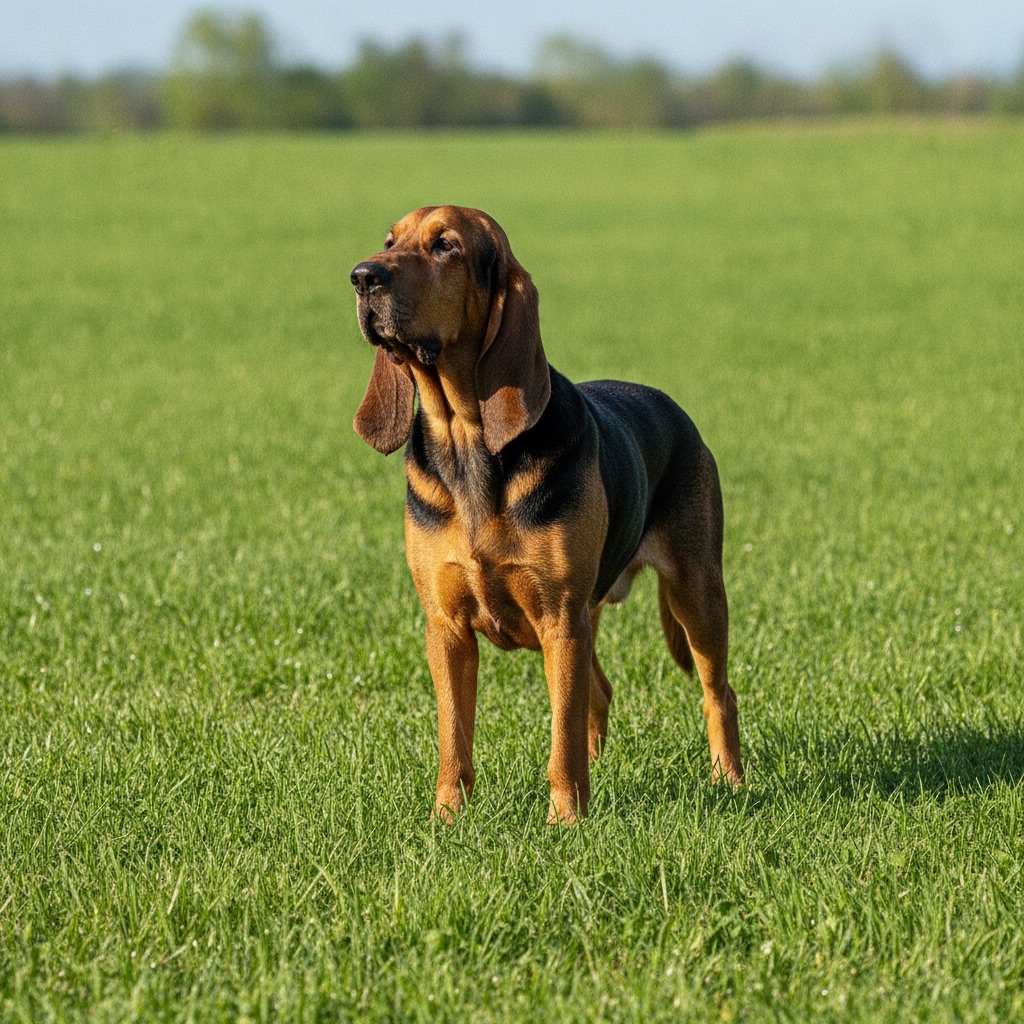

The breed traces to hounds kept by monastic houses in medieval Europe, particularly the Abbey of Saint-Hubert in the Ardennes, whose monks bred black-and-tan trailing hounds from at least the eighth century and sent pairs annually to the French king.2 The type reached England after the Norman conquest and was refined there.
By the Middle Ages the Bloodhound was used to trail poachers and thieves as well as game — the practice of "man-trailing" was established in Britain and Scotland by the sixteenth century.2 Modern police and search-and-rescue use follows directly from that tradition, and Bloodhound trail evidence has been admitted in American courts.1
The name refers to breeding, not to blood-tracking: a "blooded hound" was a hound of documented, aristocratic pedigree, and the term reflects the care with which monastic and noble kennels recorded their lines.2 The French and FCI name, Chien de Saint-Hubert, preserves the monastic origin instead.
| Life expectancy | 10–12 years |
|---|---|
| Height — male | 25–27 in (64–69 cm) |
| Height — female | 23–25 in (58–64 cm) |
| Weight — male | 90–110 lb (41–50 kg) |
| Weight — female | 80–100 lb (36–45 kg) |
| Coat type & colors | Short, hard; black and tan, liver and tan, or red |
| Shedding | Moderate |
| Exercise needs | High — long scent walks rather than sprints |
| Country of origin | Belgium / France / United Kingdom |
| AKC group | Hound Group (AKC) |
| Prestige Breed size class | Large Breed · Over 60 lbs |
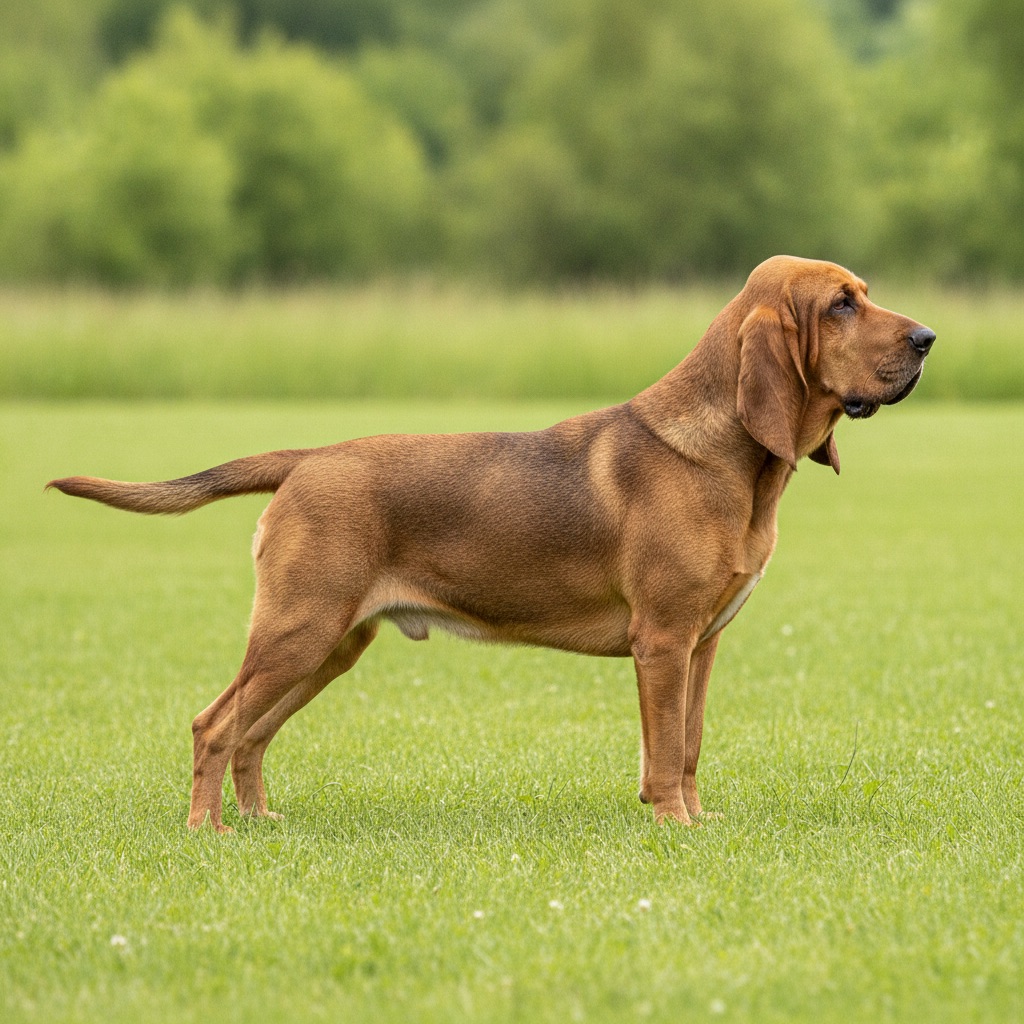
The AKC describes the Bloodhound as friendly, independent and inquisitive.1 With people the breed is famously gentle and tolerant, including with children, and it is not a guarding dog despite its size and voice.
On a scent, however, the Bloodhound is effectively unreachable — the breed was selected to ignore everything but the trail, and recall is unreliable to the point that off-leash work is inadvisable outside controlled tracking. Bloodhounds are also stubborn in training, heavy droolers, and considerable vocalists.
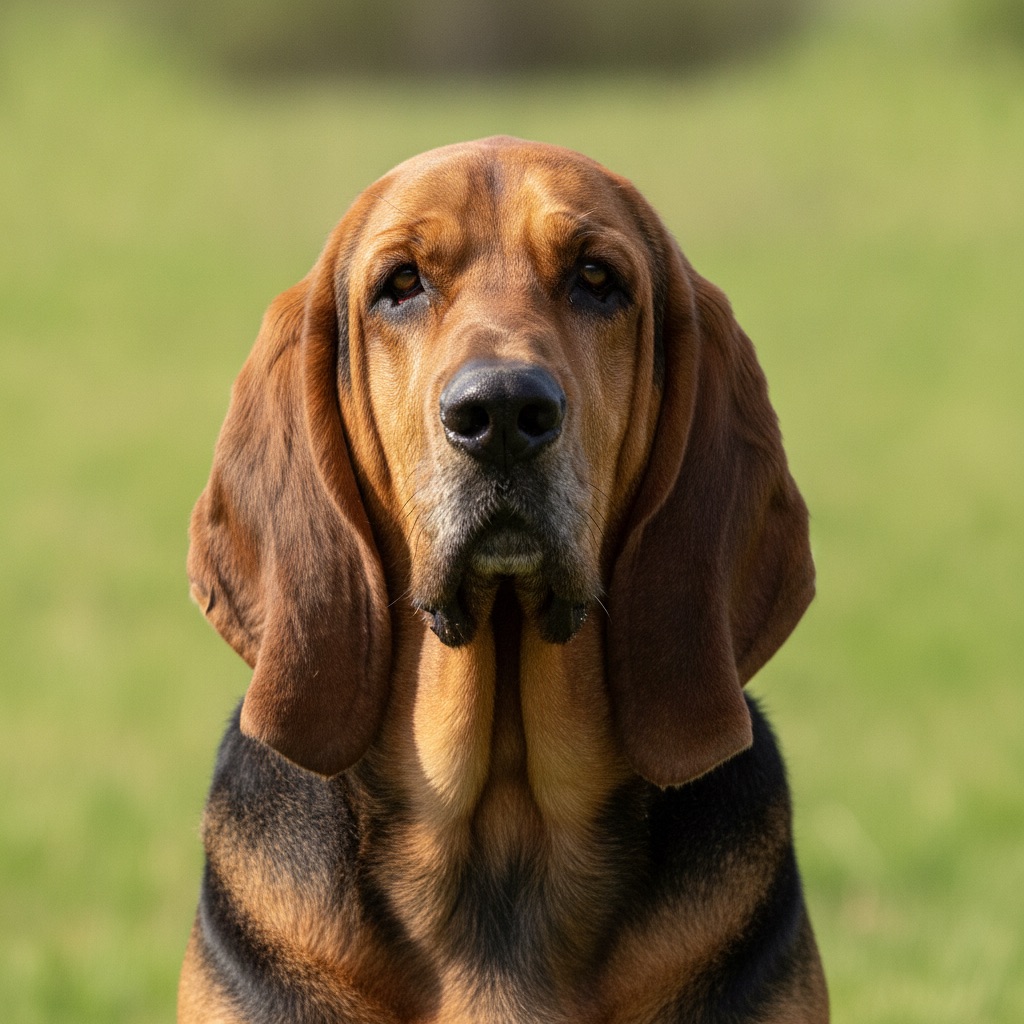
A Bloodhound's nose carries an estimated 230 million scent receptors — roughly forty times a human's — and the breed has successfully followed trails more than 130 hours old.2
A Bloodhound on a scent will travel miles without looking back. Secure containment is a safety requirement, not a convenience.
Long pendulous ears and facial wrinkles trap moisture and debris. Weekly cleaning prevents chronic infection.
Deep-chested and large, the Bloodhound is at elevated GDV risk. Split meals, avoid exertion around feeding, and know the signs.3
Tracking, mantrailing or simple scent games meet a need that walking alone does not.
This guide is educational and is not veterinary advice. Breed standards, measurements and health information are drawn from the sources listed above; consult your veterinarian for guidance specific to your dog.
Prestige Breed makes a large breed multivitamin designed for breeds like the Bloodhound — see the Bloodhound Multivitamin.