Bred by hospice monks in the Swiss Alps to find travellers lost in the snow of the Great St Bernard Pass, the Saint Bernard is a giant, powerfully built rescue dog with a famously benevolent character.
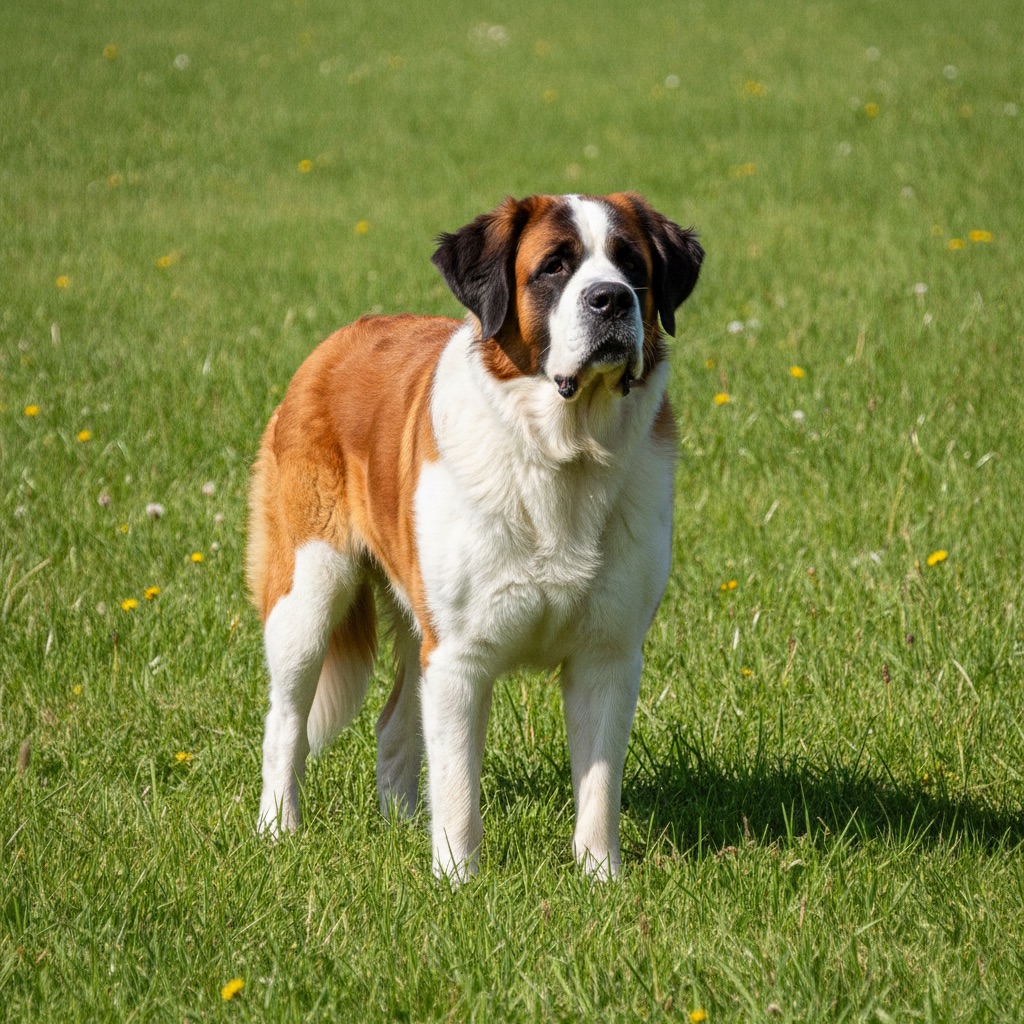

The hospice at the Great St Bernard Pass, founded around 1050 by Bernard of Menthon, kept large dogs from at least the seventeenth century — first as watchdogs and companions, then as pathfinders and rescue dogs on the pass, where they located travellers buried in snow.2 The dogs worked in pairs and are credited by the hospice with roughly two thousand rescues over three centuries.
Severe winters in the early nineteenth century killed many of the hospice dogs, and the line was rebuilt with Newfoundland crosses — which introduced the long-haired variety, unsuited to alpine work because the coat iced up.2 Swiss breeders formalised the breed as the St. Bernard in 1880; the AKC recognised it in 1885.1
The breed takes its name from the Great St Bernard Hospice and Pass, themselves named for Saint Bernard of Menthon, the eleventh-century Italian monk who founded the refuge. Before 1880 the dogs were known variously as Barry hounds, Alpenmastiff and Hospice dogs.2
| Life expectancy | 8–10 years |
|---|---|
| Height — male | 28–30 in (71–76 cm) |
| Height — female | 26–28 in (66–71 cm) |
| Weight — male | 140–180 lb (64–82 kg) |
| Weight — female | 120–140 lb (54–64 kg) |
| Coat type & colors | Smooth or rough double coat; white with red, brindle or brown markings and typically a dark mask |
| Shedding | Heavy, with major seasonal moults |
| Exercise needs | Moderate — steady walks in cool conditions |
| Country of origin | Switzerland / Italy |
| AKC group | Working Group (AKC) |
| Prestige Breed size class | Large Breed · Over 60 lbs |
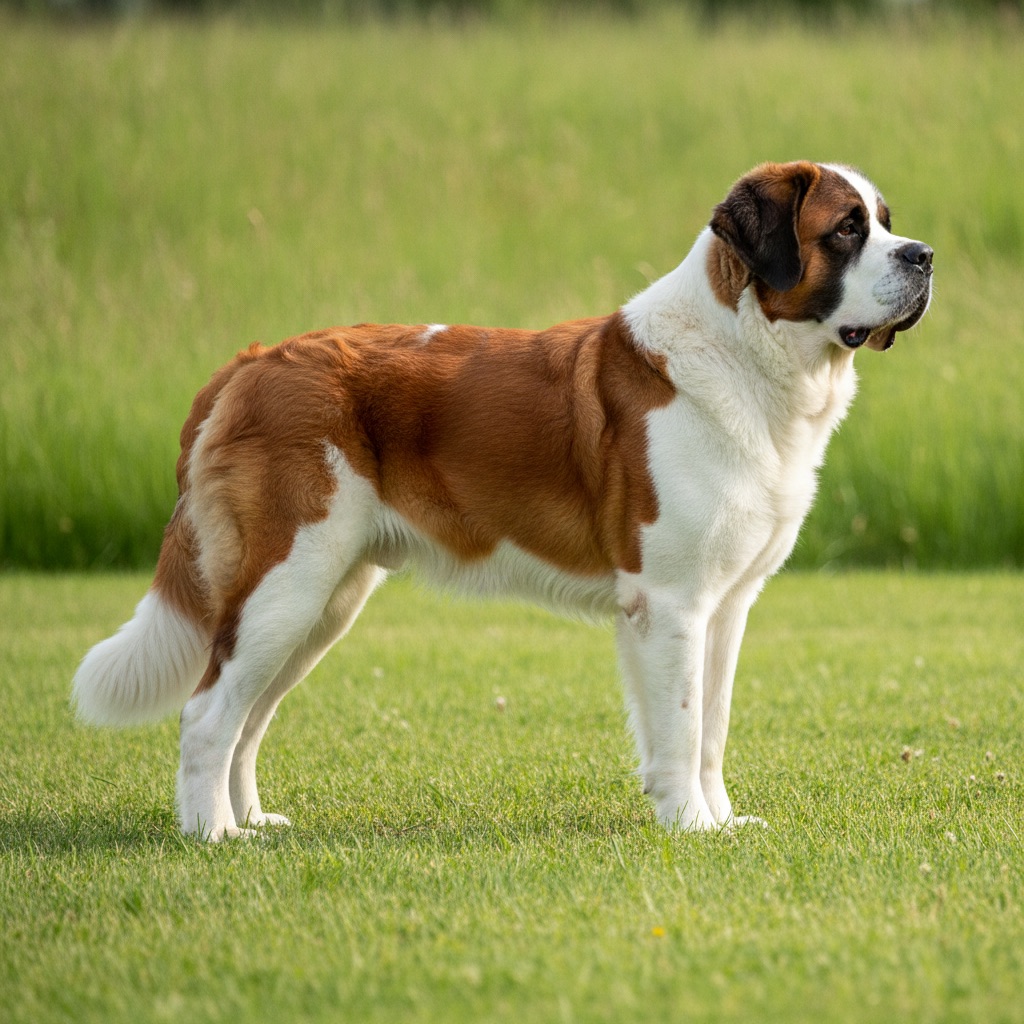
The AKC describes the Saint Bernard as playful, charming and inquisitive.1 The breed was selected for tolerance and steadiness in extreme conditions, and a sound Saint is exceptionally patient — the "nanny dog" reputation is well earned, with the caveat that its size is a genuine hazard to small children.
Saints are slow to arouse and slow to anger, and they are not typically reactive or territorial. They are also slow-moving, heavy-shedding and prodigious droolers. Training must be established early, because a fully grown Saint Bernard cannot be physically managed by most owners.
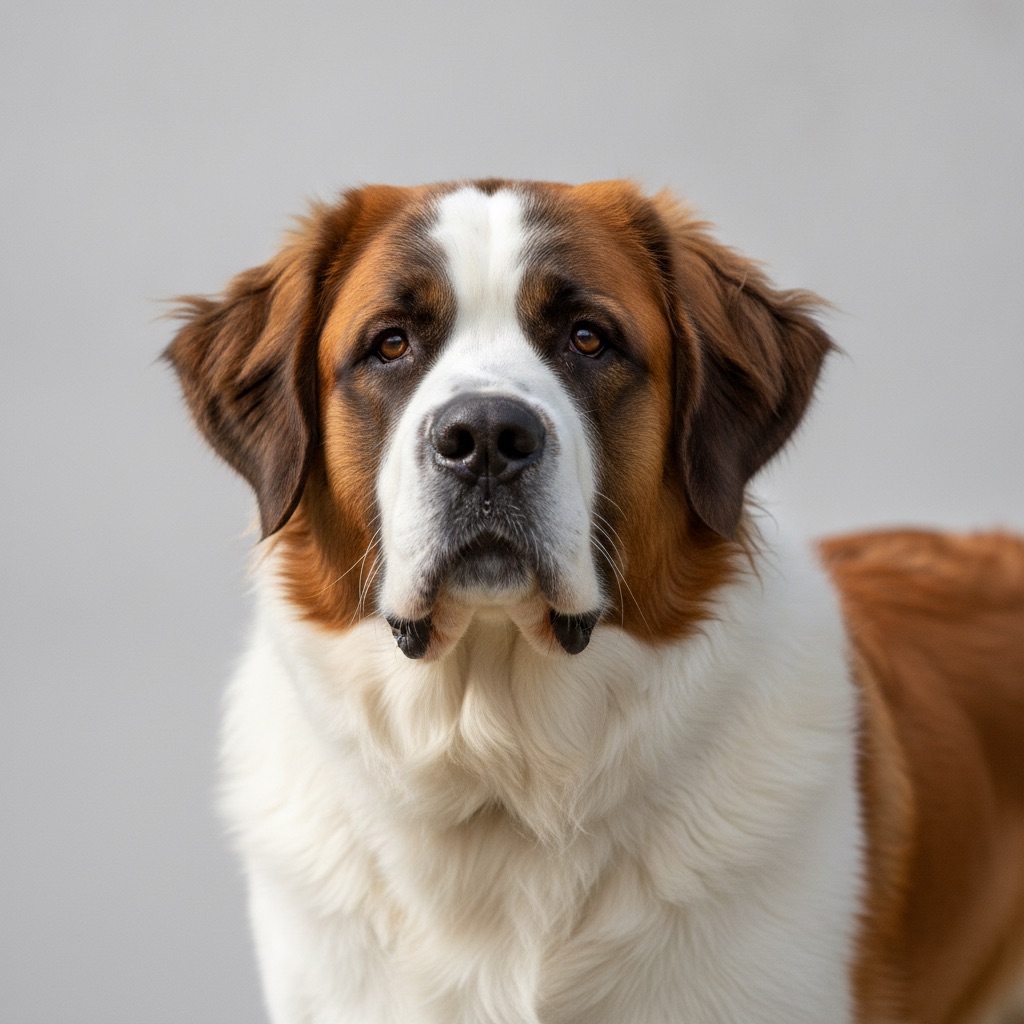
The brandy cask around the neck is an invention: it appears in Edwin Landseer's 1820 painting "Alpine Mastiffs Reanimating a Distressed Traveller," not in hospice practice. The most celebrated hospice dog, Barry, is credited with over forty rescues and is preserved at the Natural History Museum in Bern.2
Rapid growth in giant breeds causes developmental orthopaedic disease. Use a large-breed puppy formula and keep the dog lean throughout growth.
A thick coat, heavy mass and a somewhat shortened muzzle make hot weather dangerous. Air conditioning is not a luxury.
Eyelid abnormalities, hip and elbow dysplasia and cardiac conditions are the parent club's screening priorities.3
Loose flews mean drool, particularly after drinking. A towel by the water bowl is standard equipment.
This guide is educational and is not veterinary advice. Breed standards, measurements and health information are drawn from the sources listed above; consult your veterinarian for guidance specific to your dog.
Prestige Breed makes a large breed multivitamin designed for breeds like the Saint Bernard — see the Saint Bernard Multivitamin.