A white, powder-puff Mediterranean companion of the barbichon family, the Bichon Frise has passed from Spanish sailors to Renaissance courts to French street performers and back to the drawing room.
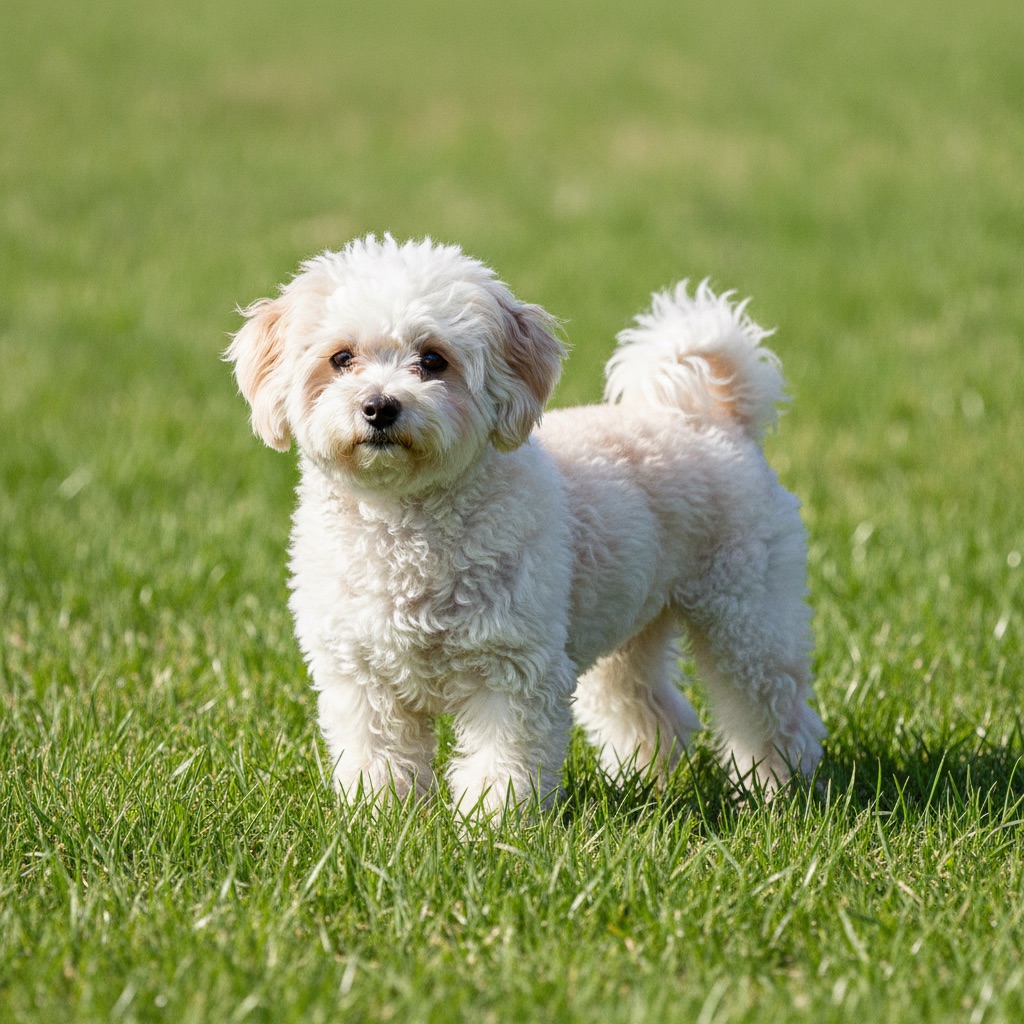

The Bichon belongs to the barbichon group of small white Mediterranean companion dogs, alongside the Maltese, Bolognese and Havanese, descended from the Barbet water dog.2 Spanish sailors are credited with spreading the type through the Canary Islands, and the Tenerife bichon is the direct ancestor of the modern breed.
The breed was a favourite of the French court under Francis I and Henry III, and appears in Goya's paintings in Spain.2 It fell from fashion after the French Revolution and survived as a street performer's and organ grinder's dog. French and Belgian breeders standardised it in 1933 under the name Bichon à poil frisé; the AKC recognised the breed in 1972.1
From the French bichon à poil frisé — "curly-haired lapdog." Bichon is a diminutive of barbichon, itself from barbet, the shaggy water dog from which the group descends; frisé means curly. The name was formally assigned in 1933 to settle the confusion between "Tenerife" and "Bichon."2
| Life expectancy | 14–15 years |
|---|---|
| Height — male | 9.5–11.5 in (24–29 cm) |
| Height — female | 9.5–11.5 in (24–29 cm) |
| Weight — male | 12–18 lb (5–8 kg) |
| Weight — female | 12–18 lb (5–8 kg) |
| Coat type & colors | Soft, dense undercoat with a coarse curly outer coat; white, sometimes with cream or apricot shading |
| Shedding | Very low — hair is caught in the coat rather than shed |
| Exercise needs | Moderate — daily walks and active play |
| Country of origin | Mediterranean / France / Belgium |
| AKC group | Non-Sporting Group (AKC) |
| Prestige Breed size class | Small Breed · Under 25 lbs |
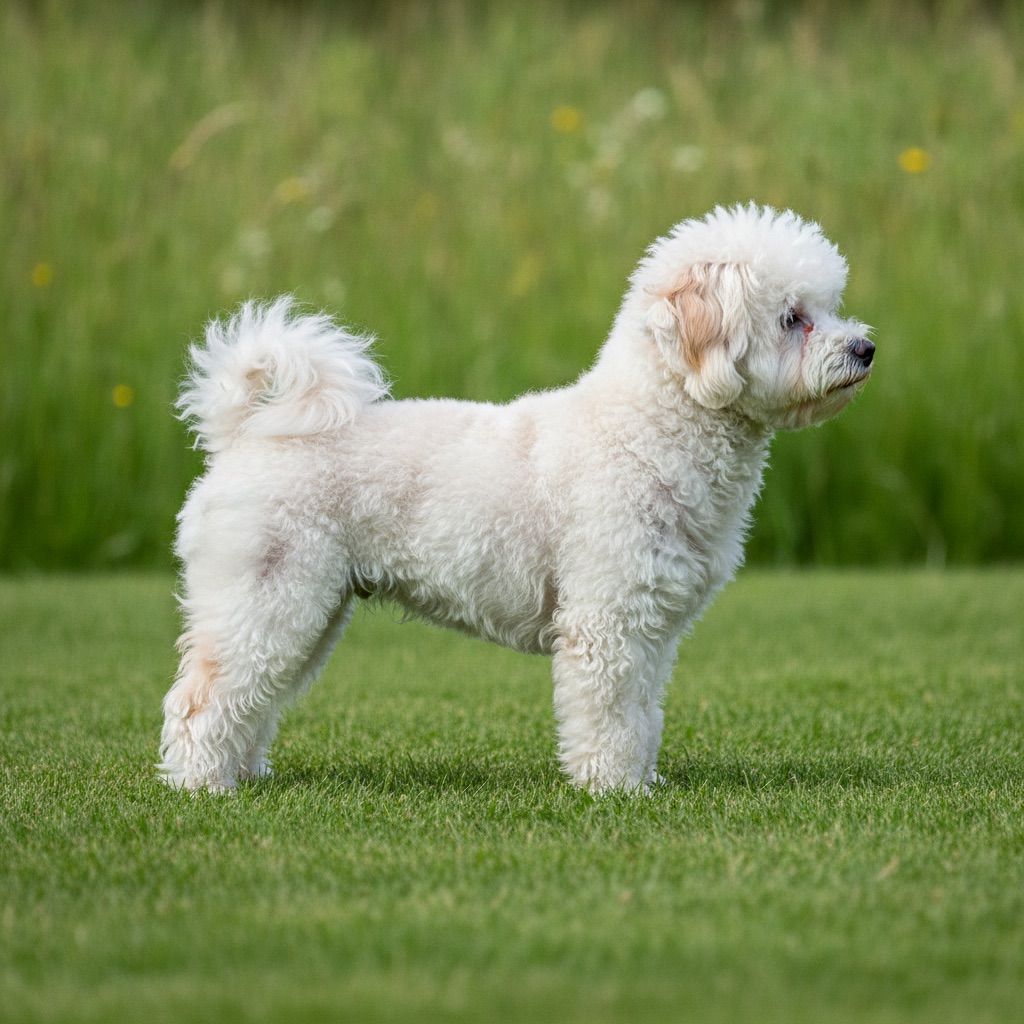
The AKC describes the Bichon Frise as playful, curious and peppy.1 Centuries as a performing and companion dog produced an outgoing, adaptable temperament with very little wariness of strangers.
Bichons are cheerful and highly trainable — the performing history is not incidental — and they get on well with children and other animals. They form strong attachments and separation anxiety is the most commonly reported behavioural problem. Housetraining can take longer than in larger breeds.
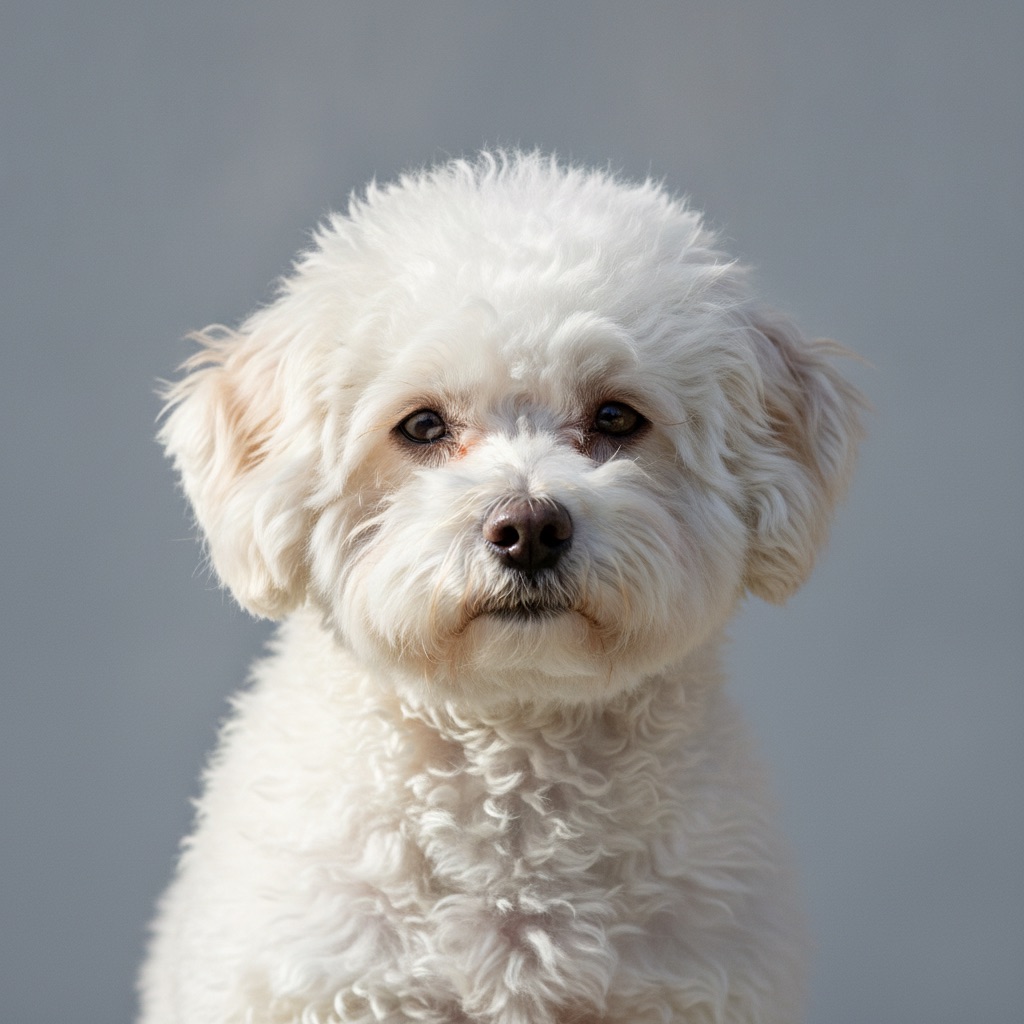
The Bichon's coat does not shed loose: dead hair is caught in the curl, which is why the breed requires professional grooming and why it is often recommended to allergy-conscious households — though no dog is truly hypoallergenic.2
The curly double coat mats to the skin if neglected. Professional clipping plus brushing several times a week.
Bichons are notably prone to atopic dermatitis and food sensitivity. Persistent scratching, ear infections and paw licking warrant investigation.3
Build alone-time tolerance gradually from puppyhood; this is the breed's characteristic weakness.
Patellar luxation and a predisposition to bladder stones are both documented; ensure constant water access.3
This guide is educational and is not veterinary advice. Breed standards, measurements and health information are drawn from the sources listed above; consult your veterinarian for guidance specific to your dog.
Prestige Breed makes a small breed multivitamin designed for breeds like the Bichon Frise — see the Bichon Frise Multivitamin.