A compact French pointing dog with the leg of a setter and the size of a spaniel, the Brittany is among the most successful field trial breeds in the world.
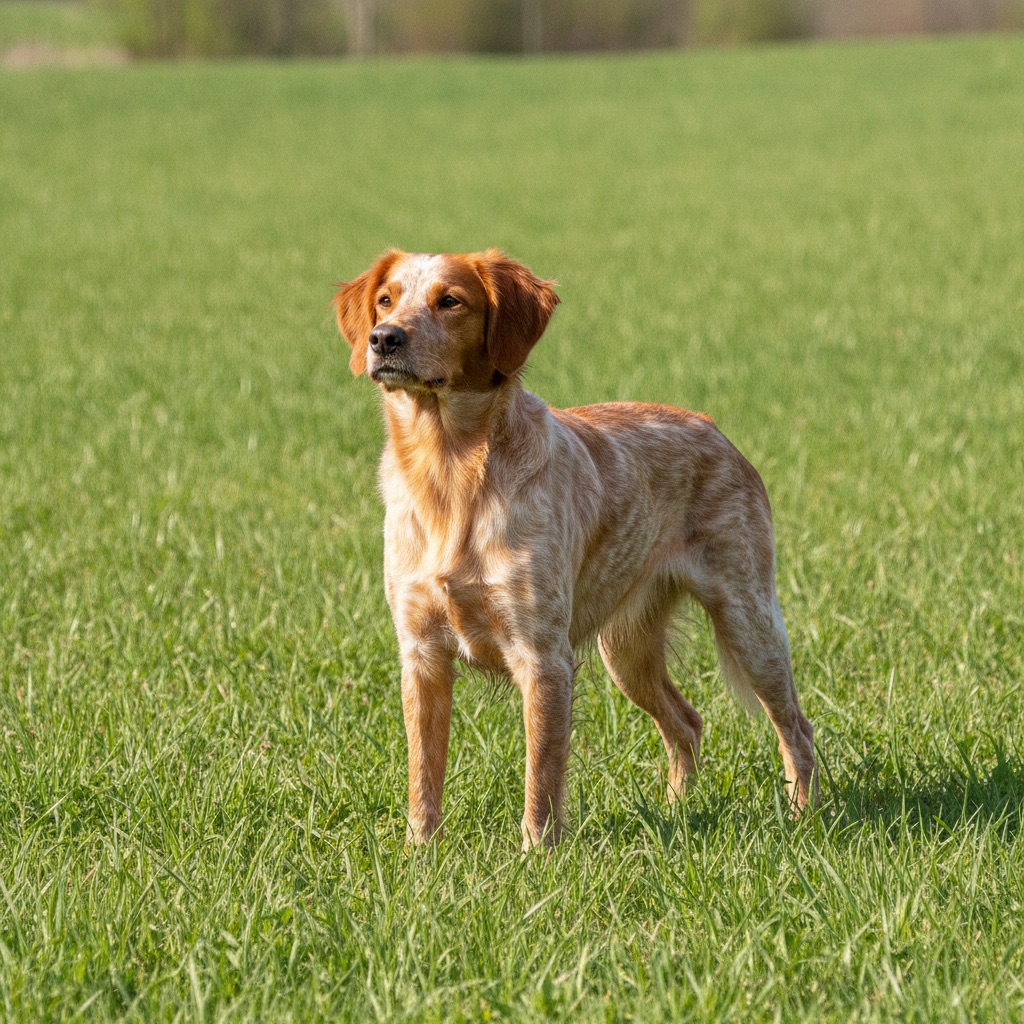

The breed developed in the Brittany region of northwestern France as an all-purpose gundog for small landholders — a single dog that could point, flush and retrieve. Tapestries and paintings from the seventeenth century depict recognisable liver-and-white pointing dogs of the type.2
The modern breed was standardised in the early twentieth century; the first French standard was written in 1907. Brittanys reached the United States in the 1930s and the AKC recognised the breed in 1934 as the Brittany Spaniel, dropping "Spaniel" in 1982 because the dog points rather than flushes.1
The breed is named for Brittany — Bretagne — the region of its origin, and is known in France as the Épagneul Breton, "Breton spaniel." The AKC removed the spaniel designation in 1982 to reflect the dog's pointing function.1
| Life expectancy | 12–14 years |
|---|---|
| Height — male | 17.5–20.5 in (44–52 cm) |
| Height — female | 17.5–20.5 in (44–52 cm) |
| Weight — male | 30–40 lb (14–18 kg) |
| Weight — female | 30–40 lb (14–18 kg) |
| Coat type & colors | Dense, flat or wavy; orange and white or liver and white, in clear or roan patterns |
| Shedding | Moderate |
| Exercise needs | Very high — a field dog first |
| Country of origin | France |
| AKC group | Sporting Group (AKC) |
| Prestige Breed size class | Medium Breed · 25 – 60 lbs |
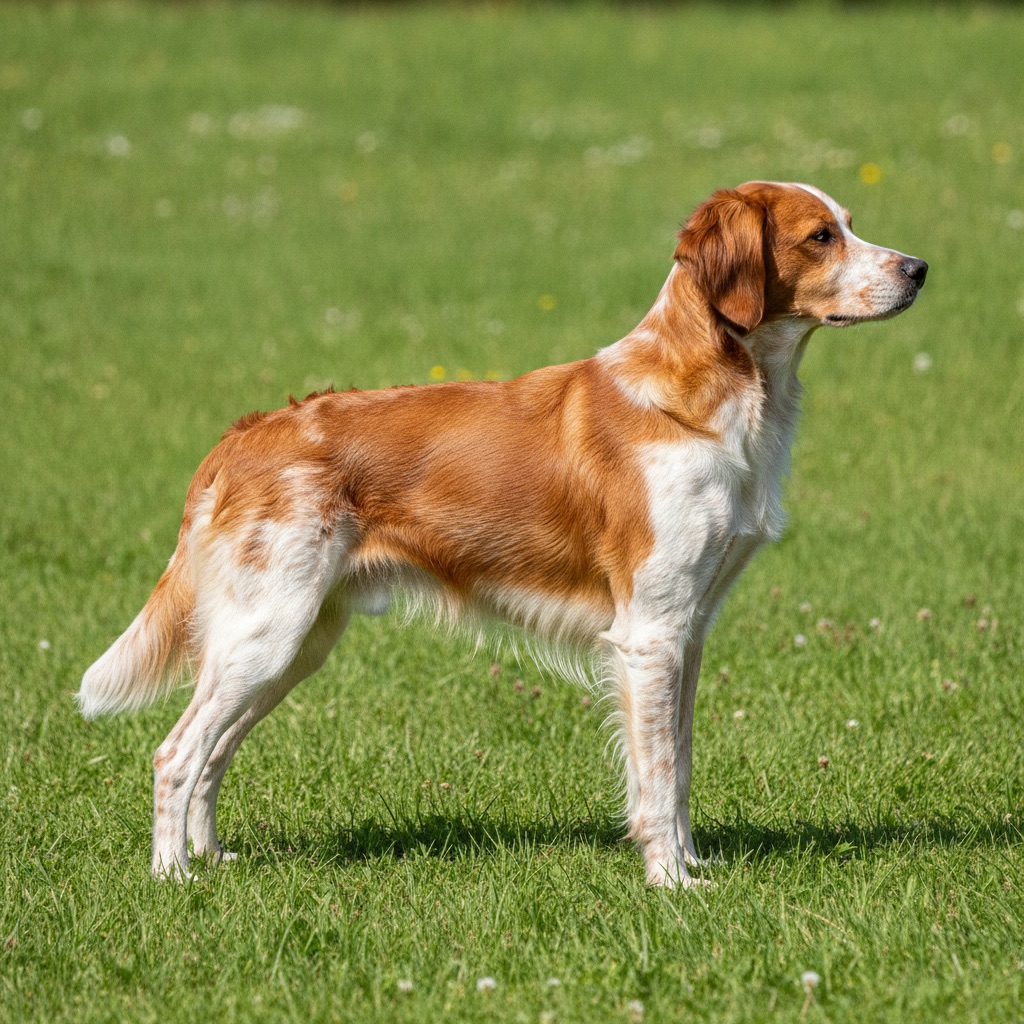
The AKC describes the Brittany as bright, upbeat and fun-loving.1 The breed is enthusiastic, affectionate and eager to work with a handler, and it is notably softer than most gundogs — harsh correction produces a dog that shuts down.
Brittanys are sensitive to household tension and thrive on inclusion. Energy is the main practical consideration: this is a dog bred to hunt all day, and it does not adapt well to a sedentary home. Some lines are shy without early socialisation.
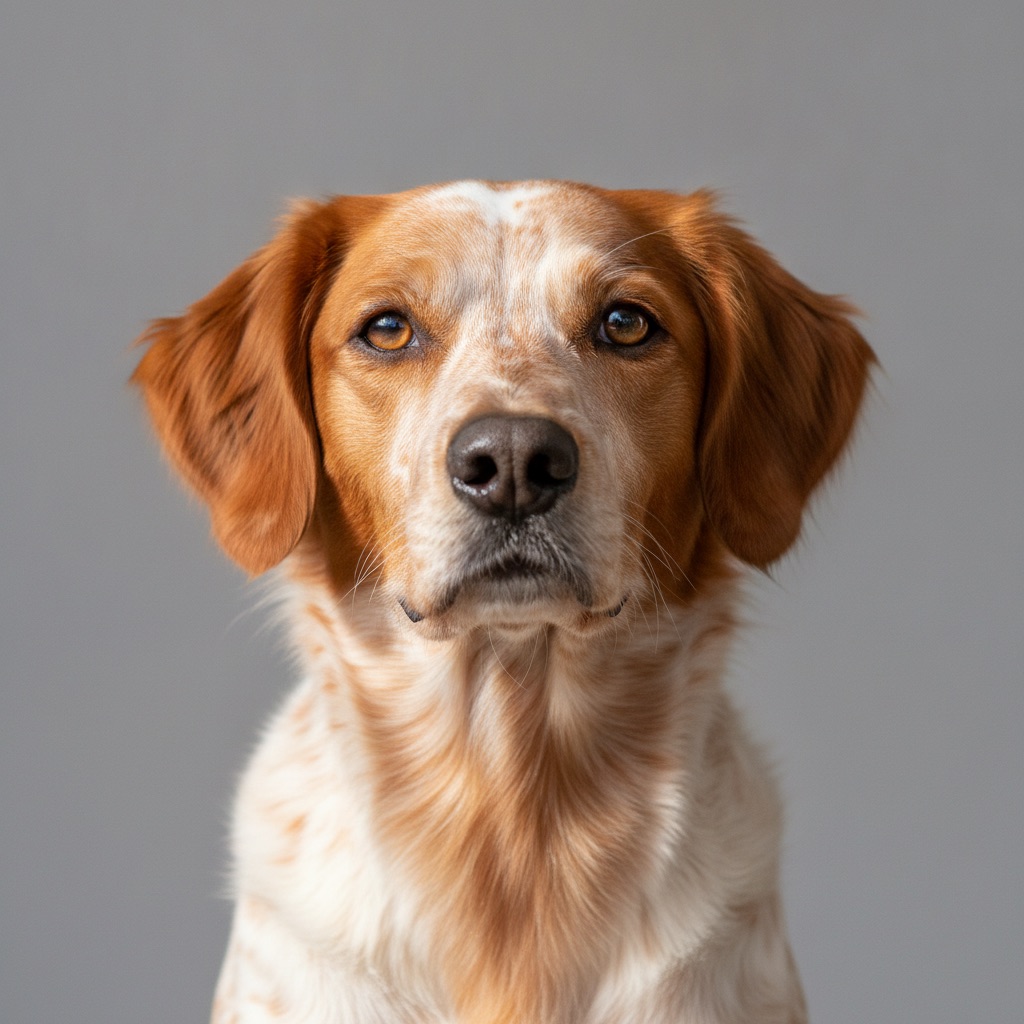
The Brittany has produced more dual champions — dogs titled in both conformation and field trials — than any other AKC sporting breed, a direct consequence of breeders refusing to split show and field lines.3
A soft breed. Positive reinforcement and short sessions; heavy-handed methods create avoidance rather than compliance.
An hour or more of hard running daily. Under-exercised Brittanys become anxious and hyperactive.
Some lines carry timidity. Broad early exposure to people, surfaces and sounds is important.3
Hip dysplasia and hereditary eye conditions are the parent club's screening recommendations.3
This guide is educational and is not veterinary advice. Breed standards, measurements and health information are drawn from the sources listed above; consult your veterinarian for guidance specific to your dog.
Prestige Breed makes a medium breed multivitamin designed for breeds like the Brittany — see the Brittany Multivitamin.