The golden-rust pointing dog of Hungary, the Vizsla is a lean, elegant gundog bred to work close to the hunter — and to live indoors with the family, which it still insists upon.
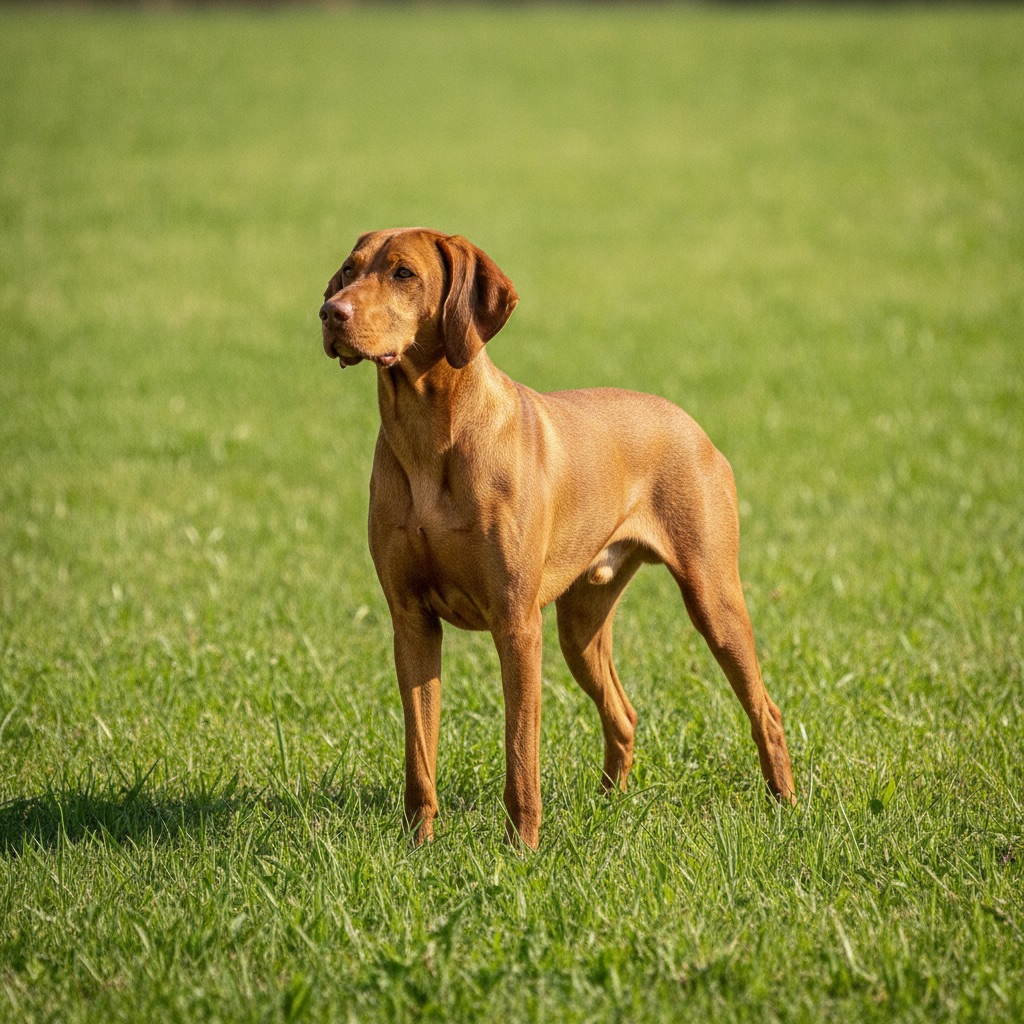

Ancestors of the Vizsla accompanied the Magyar tribes who settled the Carpathian Basin in the ninth century, and a recognisable pointing dog appears in Hungarian illustrated chronicles from the fourteenth century.2 The breed was maintained by Hungarian nobility and landowners as a versatile falconry, pointing and retrieving dog.
The two World Wars and the Soviet occupation nearly eliminated the breed; it is often said that only a few dozen dogs of the true type survived in Hungary by the late 1940s, and Hungarians fleeing the country carried Vizslas to Austria, the United States and elsewhere.2 The AKC recognised the breed in 1960.1
Vizsla is a Hungarian word conventionally translated as "pointer" or "searcher," though it also appears as a place name in Hungary. The formal breed name is Rövidszőrű Magyar Vizsla — "short-haired Hungarian pointer."2
| Life expectancy | 12–14 years |
|---|---|
| Height — male | 22–24 in (56–61 cm) |
| Height — female | 21–23 in (53–58 cm) |
| Weight — male | 55–60 lb (25–27 kg) |
| Weight — female | 44–55 lb (20–25 kg) |
| Coat type & colors | Short, smooth, dense, no undercoat; solid golden rust |
| Shedding | Moderate |
| Exercise needs | Very high — a serious field breed |
| Country of origin | Hungary |
| AKC group | Sporting Group (AKC) |
| Prestige Breed size class | Medium Breed · 25 – 60 lbs |
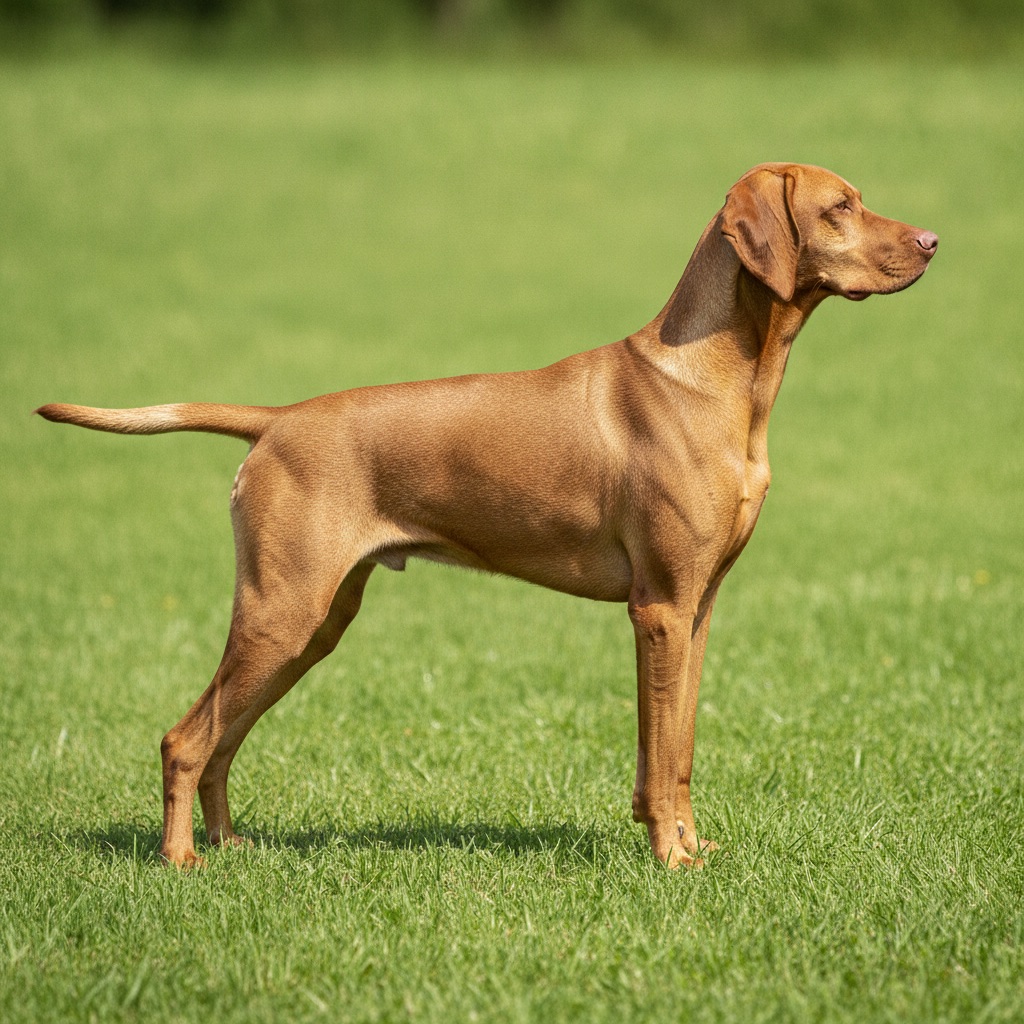
The AKC describes the Vizsla as affectionate, gentle and energetic.1 The breed is often called the "velcro Vizsla" for its insistence on physical contact — it was bred to live in the house with its owner, not in a kennel, and it has never given up the habit.
Vizslas are sensitive, quick to learn and easily discouraged by harsh handling. They combine very high exercise needs with a strong attachment to their people, which makes them poorly suited to households where they will be alone all day. Separation anxiety is the breed's most commonly reported behavioural problem.
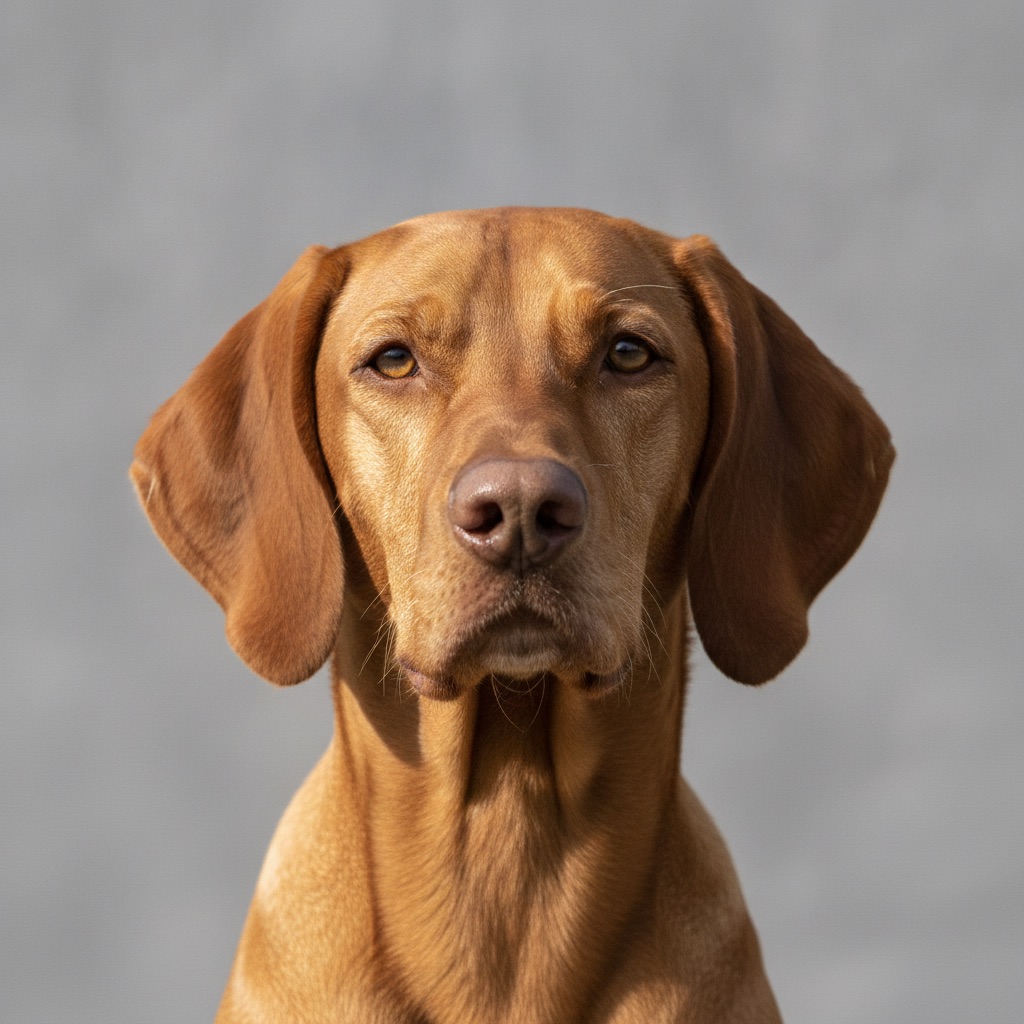
The Vizsla is one of a small number of breeds with fully self-coloured features — nose, eye rims, lips, paw pads and even nails blend with the golden-rust coat.2
This is the breed's defining constraint. Plan for company, daycare or a household with someone present.
An hour or more of running, plus training or scent work. A Vizsla without an outlet is frantic rather than merely restless.
A short coat with no undercoat and very little body fat means Vizslas feel the cold acutely. Coats in winter are practical.
Sensitive to tone and correction. Reward-based training, short sessions, no force.3
This guide is educational and is not veterinary advice. Breed standards, measurements and health information are drawn from the sources listed above; consult your veterinarian for guidance specific to your dog.
Prestige Breed makes a medium breed multivitamin designed for breeds like the Vizsla — see the Vizsla Multivitamin.