A German earth dog built to follow badger into its sett, the Dachshund pairs a long, low body with the courage and self-belief of a much larger hound.
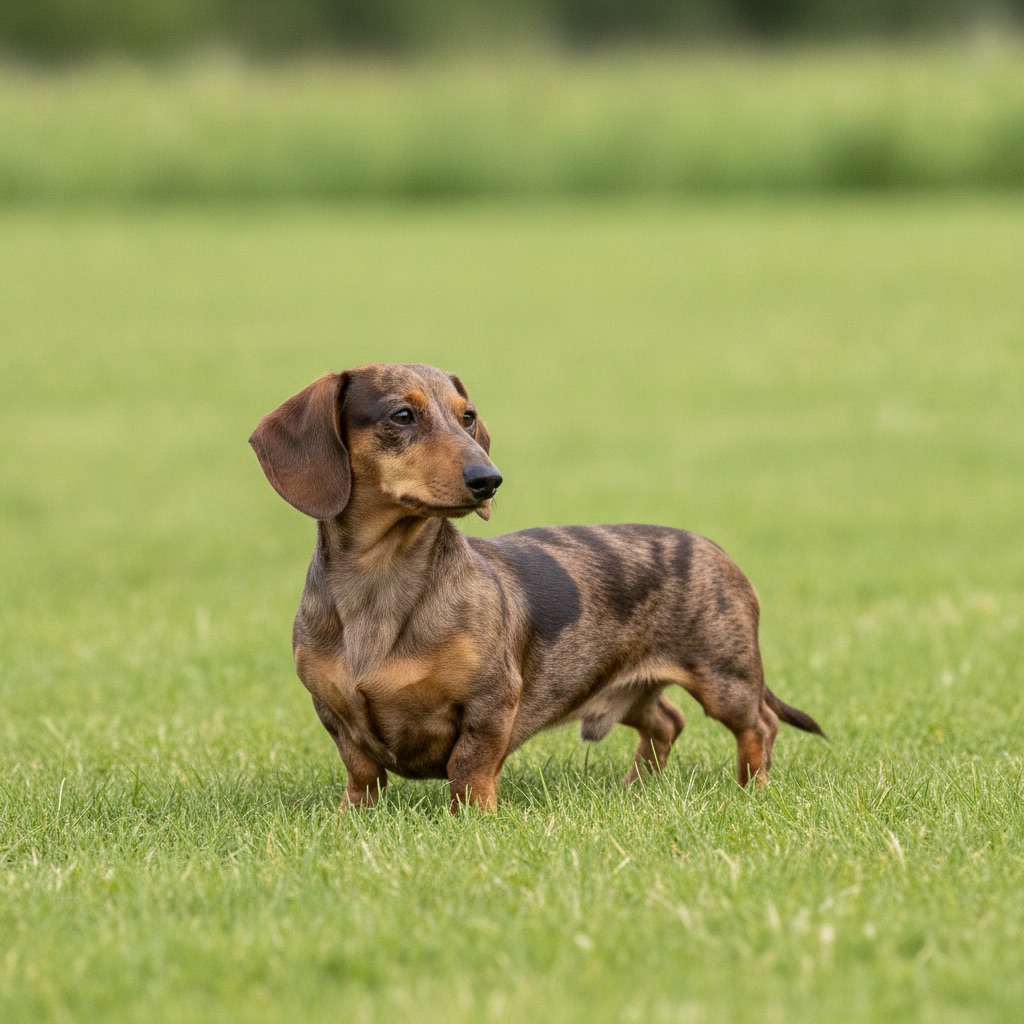

The breed was developed in Germany, with records from the seventeenth century onward, to hunt badger and other den-dwelling animals: the elongated body allowed the dog to enter the tunnel, the loud voice let the hunter locate it underground, and the loose skin protected against injury while turning in a confined space.2
Three coat varieties — smooth, longhaired and wirehaired — and two sizes were established by German breeders, with the miniature developed specifically to enter rabbit warrens. The breed reached Britain and America in the nineteenth century; the AKC recognised the Dachshund in 1885. Anti-German sentiment during the First World War damaged its popularity so severely that it was temporarily renamed the "liberty hound" in America.2
German for "badger dog" — Dachs, badger, and Hund, dog. Germany itself more often uses Dackel or Teckel; the FCI registers the breed as the Dachshund under the German national listing.2
| Life expectancy | 12–16 years |
|---|---|
| Height — male | 8–9 in (20–23 cm) standard; 5–6 in (13–15 cm) miniature |
| Height — female | 8–9 in (20–23 cm) standard; 5–6 in (13–15 cm) miniature |
| Weight — male | 16–32 lb (7–15 kg) standard; under 11 lb (5 kg) miniature |
| Weight — female | 16–32 lb (7–15 kg) standard; under 11 lb (5 kg) miniature |
| Coat type & colors | Smooth, longhaired or wirehaired; red, cream, black and tan, chocolate, dapple, brindle |
| Shedding | Low to moderate depending on coat |
| Exercise needs | Moderate — daily walks, no jumping |
| Country of origin | Germany |
| AKC group | Hound Group (AKC) |
| Prestige Breed size class | Small Breed · Under 25 lbs |
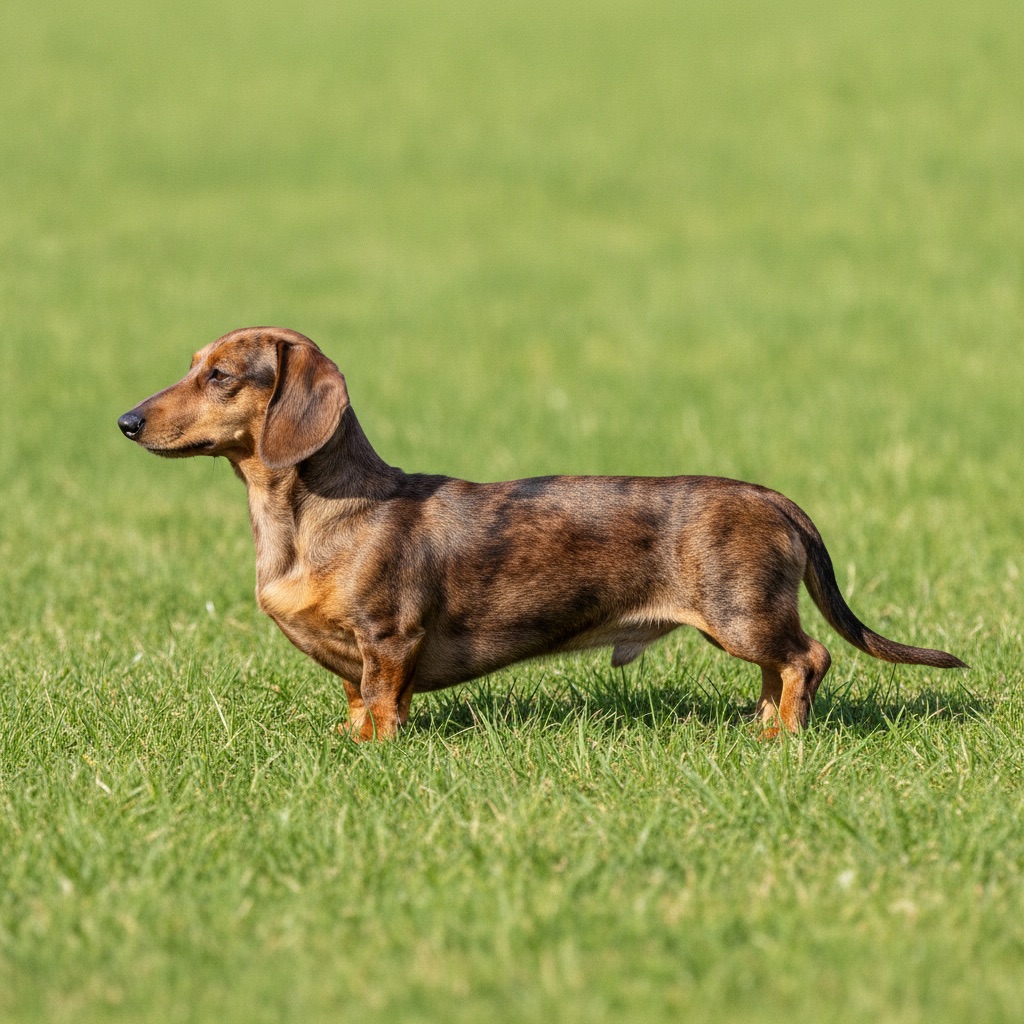
The AKC describes the Dachshund as friendly, curious and spunky.1 The breed was bred to work alone underground against a dangerous quarry, and the resulting temperament is bold, persistent and entirely self-directed.
Dachshunds are devoted to their families and often suspicious of strangers, with a bark far bigger than the dog. They are notoriously difficult to housetrain and respond poorly to correction. Digging, burrowing under blankets and following scent are all instinctive and largely unmodifiable.
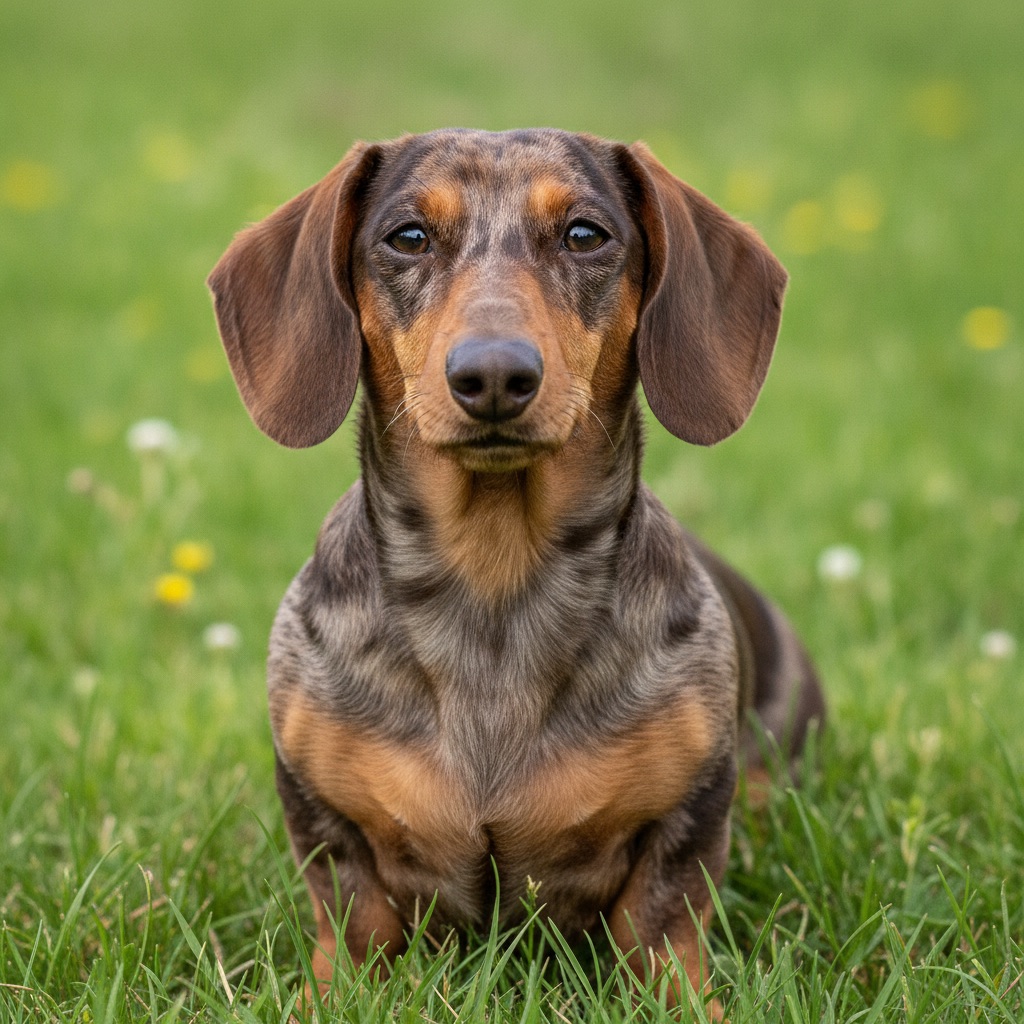
Waldi, a Dachshund, was the first official Olympic mascot, created for the 1972 Munich Games — chosen for the resilience and tenacity the organisers wanted to associate with the event.2
Roughly one in four Dachshunds will experience intervertebral disc disease. Prohibit jumping on and off furniture, use ramps, and support the whole body when lifting.4
Excess weight is the single largest modifiable risk factor for disc disease in this breed. Ribs should be easily felt.
Repeated stair use loads the spine. Carry puppies and older dogs.
The breed is well known for slow housetraining. Crate routine and consistency, not correction.
This guide is educational and is not veterinary advice. Breed standards, measurements and health information are drawn from the sources listed above; consult your veterinarian for guidance specific to your dog.
Prestige Breed makes a small breed multivitamin designed for breeds like the Dachshund — see the Dachshund Multivitamin.