Developed as a unified herding breed at the end of the nineteenth century, the German Shepherd became the world's definitive working dog and remains among the most numerous breeds in the West.
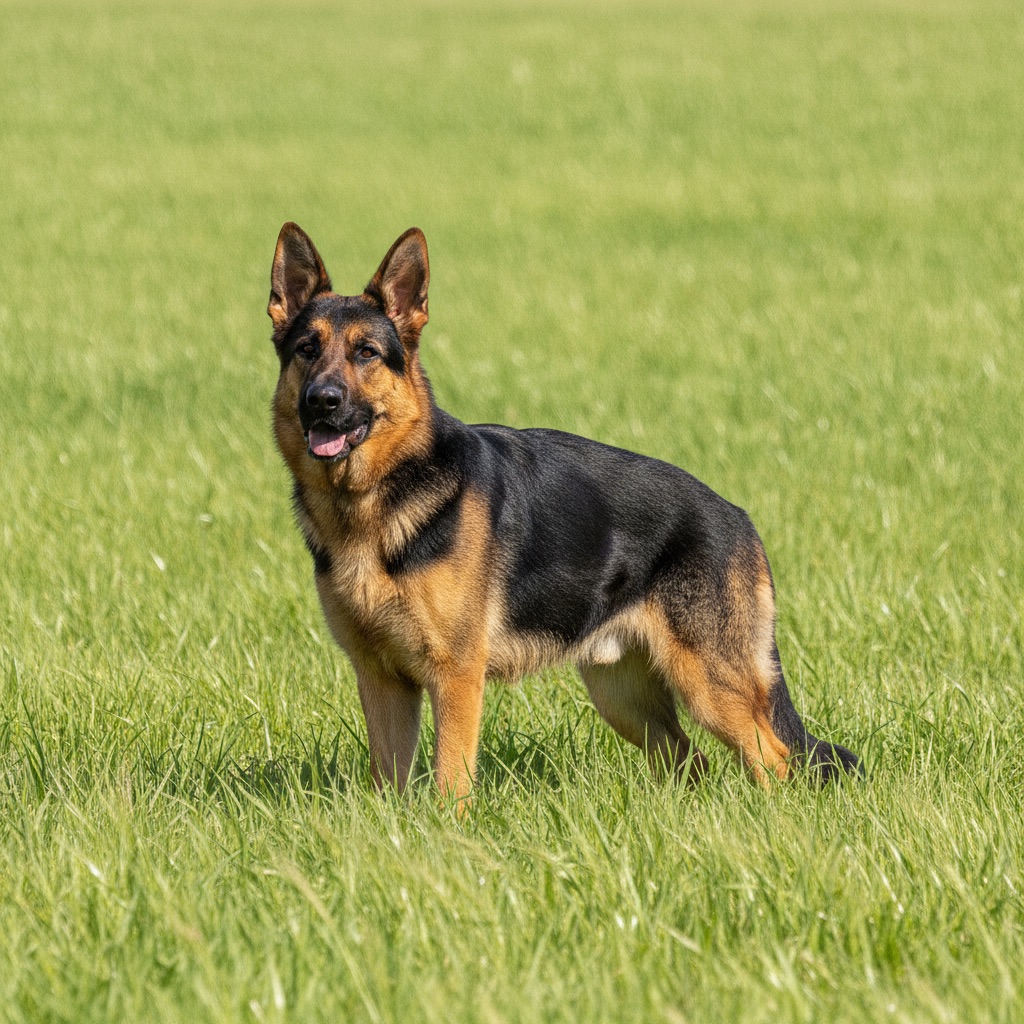

Max von Stephanitz, a former cavalry officer, set out in the 1890s to consolidate Germany's regional herding dogs into a single standardised working breed judged on utility rather than appearance. In 1899 he purchased a dog named Hektor Linksrhein, renamed him Horand von Grafrath, registered him as the first German Shepherd Dog, and founded the Verein für Deutsche Schäferhunde (SV).2
As industrialisation reduced the demand for herding, von Stephanitz successfully promoted the breed to German police and military services, establishing the working role it still occupies.1 The breed reached Britain and America after the First World War, where anti-German sentiment briefly renamed it the "Alsatian Wolf Dog." Its subsequent visibility owed much to the film careers of Strongheart and Rin Tin Tin.2
The name is purely functional — Deutscher Schäferhund, "German shepherd dog" — chosen by von Stephanitz to describe the breed's purpose rather than a place of origin. The Kennel Club in Britain registered it as the Alsatian, after the Alsace-Lorraine border region, from 1919 until 1977; the AKC retains the formal name German Shepherd Dog.2
| Life expectancy | 7–10 years |
|---|---|
| Height — male | 24–26 in (61–66 cm) |
| Height — female | 22–24 in (56–61 cm) |
| Weight — male | 65–90 lb (29–41 kg) |
| Weight — female | 50–70 lb (23–32 kg) |
| Coat type & colors | Double coat, medium length; most commonly black and tan, also sable, bicolour, black |
| Shedding | Heavy, with two major seasonal moults |
| Exercise needs | High — physical and mental daily |
| Country of origin | Germany |
| AKC group | Herding Group (AKC) |
| Prestige Breed size class | Large Breed · Over 60 lbs |
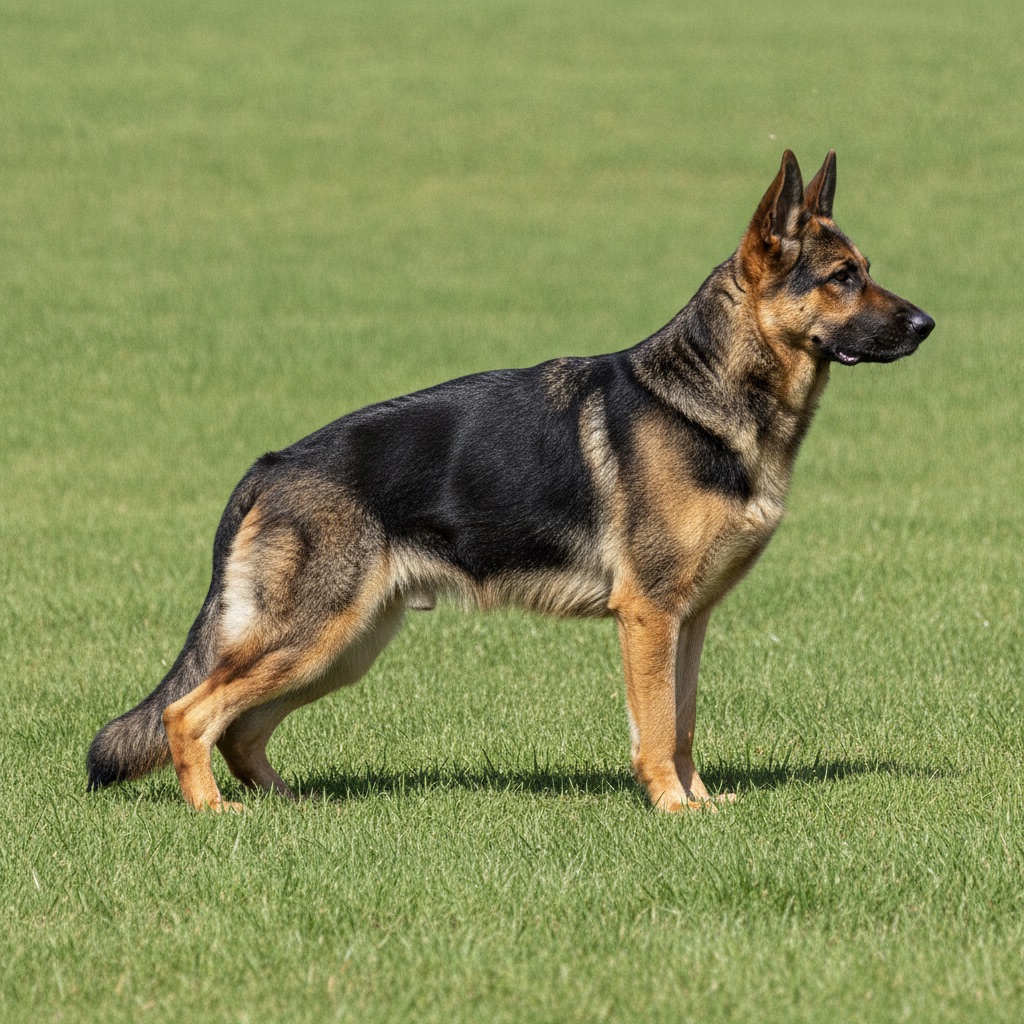
The AKC characterises the breed as confident, courageous and smart.1 German Shepherds are notably biddable and were selected for a willingness to work in sustained partnership with a handler, which is why they dominate police, military, detection and assistance work worldwide.
The breed is naturally aloof with strangers and forms deep, specific attachments. Without early socialisation and clear structure, that aloofness can slide into reactivity. German Shepherds are also highly vocal and observant; they tend to alert to everything and must be taught when not to.
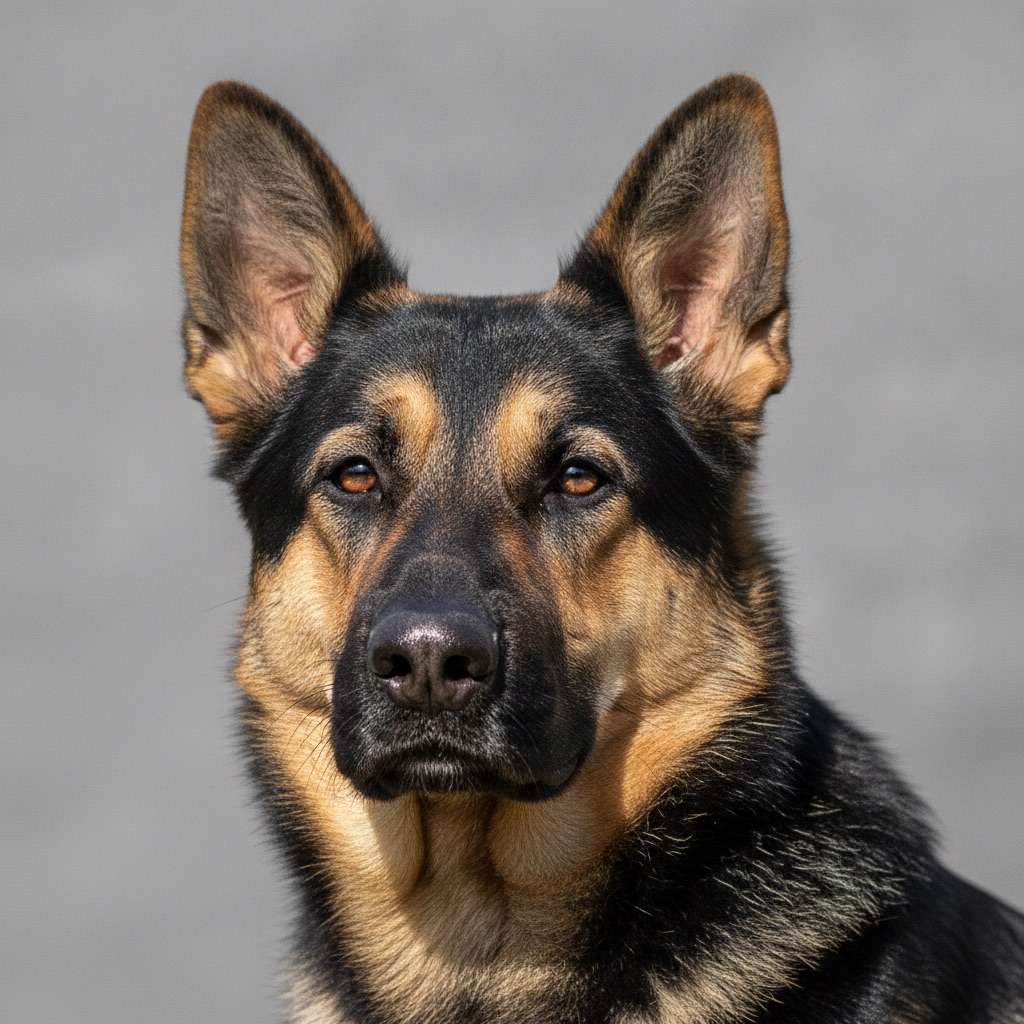
Every registered German Shepherd traces to a single dog: Horand von Grafrath, registered as SZ 1 in 1899.2
Hip and elbow dysplasia are the breed's best-known structural problems. Buy only from breeders who provide OFA or equivalent evaluations for both parents.3
Show and working lines differ markedly in topline and rear angulation. Discuss the differences with breeders and choose the type suited to your intended activity.
The double coat sheds continuously and blows out twice a year. Weekly brushing year-round, daily during a moult, is realistic.
A German Shepherd will work until it drops. Teaching settled, calm behaviour indoors is as important as teaching commands.
This guide is educational and is not veterinary advice. Breed standards, measurements and health information are drawn from the sources listed above; consult your veterinarian for guidance specific to your dog.
Prestige Breed makes a large breed multivitamin designed for breeds like the German Shepherd — see the German Shepherd Multivitamin.