A twentieth-century reconstruction of the toy spaniel of the Stuart court, the Cavalier combines a genuine spaniel temperament with a companion dog's size and devotion.
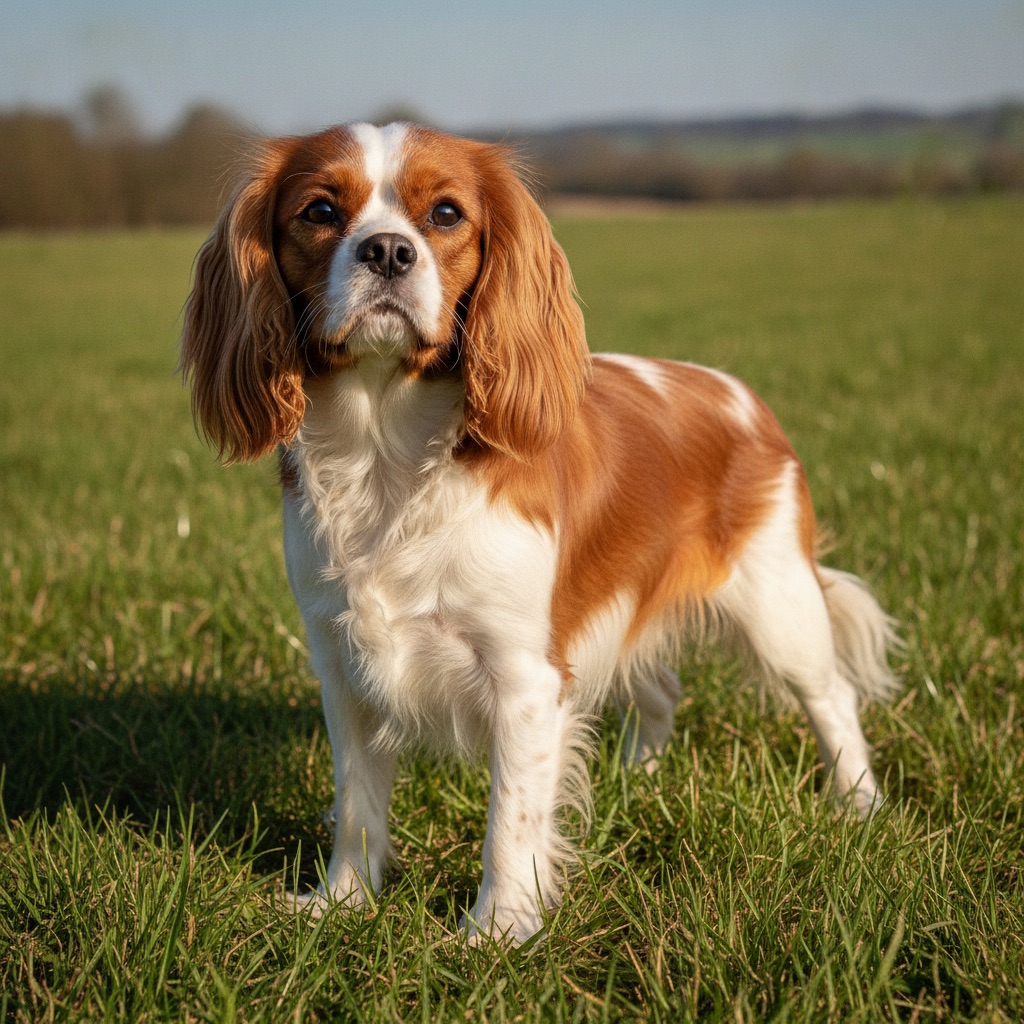

Small spaniels were court companions across Tudor and Stuart England; Charles II was so attached to his that the type acquired his name, and the dogs appear throughout seventeenth-century portraiture with longer muzzles than the modern King Charles Spaniel.2
Nineteenth-century crossing with Pugs and other short-faced breeds flattened the muzzle. In 1926 the American Roswell Eldridge offered prizes at Crufts for dogs of the old, longer-nosed type shown in Van Dyck's paintings; breeders responded, and the reconstructed variety was named the Cavalier King Charles Spaniel to distinguish it.2 The Kennel Club recognised it in 1945 and the AKC in 1995.1
"King Charles" for Charles II, whose attachment to the toy spaniels of his court gave the type its name; "Cavalier" for the Royalist faction of the English Civil War, chosen in 1928 to distinguish the reconstructed long-nosed variety from the flat-faced King Charles Spaniel.2
| Life expectancy | 12–15 years |
|---|---|
| Height — male | 12–13 in (30–33 cm) |
| Height — female | 12–13 in (30–33 cm) |
| Weight — male | 13–18 lb (6–8 kg) |
| Weight — female | 13–18 lb (6–8 kg) |
| Coat type & colors | Silky, moderately long, with feathering; Blenheim, tricolour, black and tan, or ruby |
| Shedding | Moderate |
| Exercise needs | Moderate — daily walks and play |
| Country of origin | United Kingdom |
| AKC group | Toy Group (AKC) |
| Prestige Breed size class | Small Breed · Under 25 lbs |
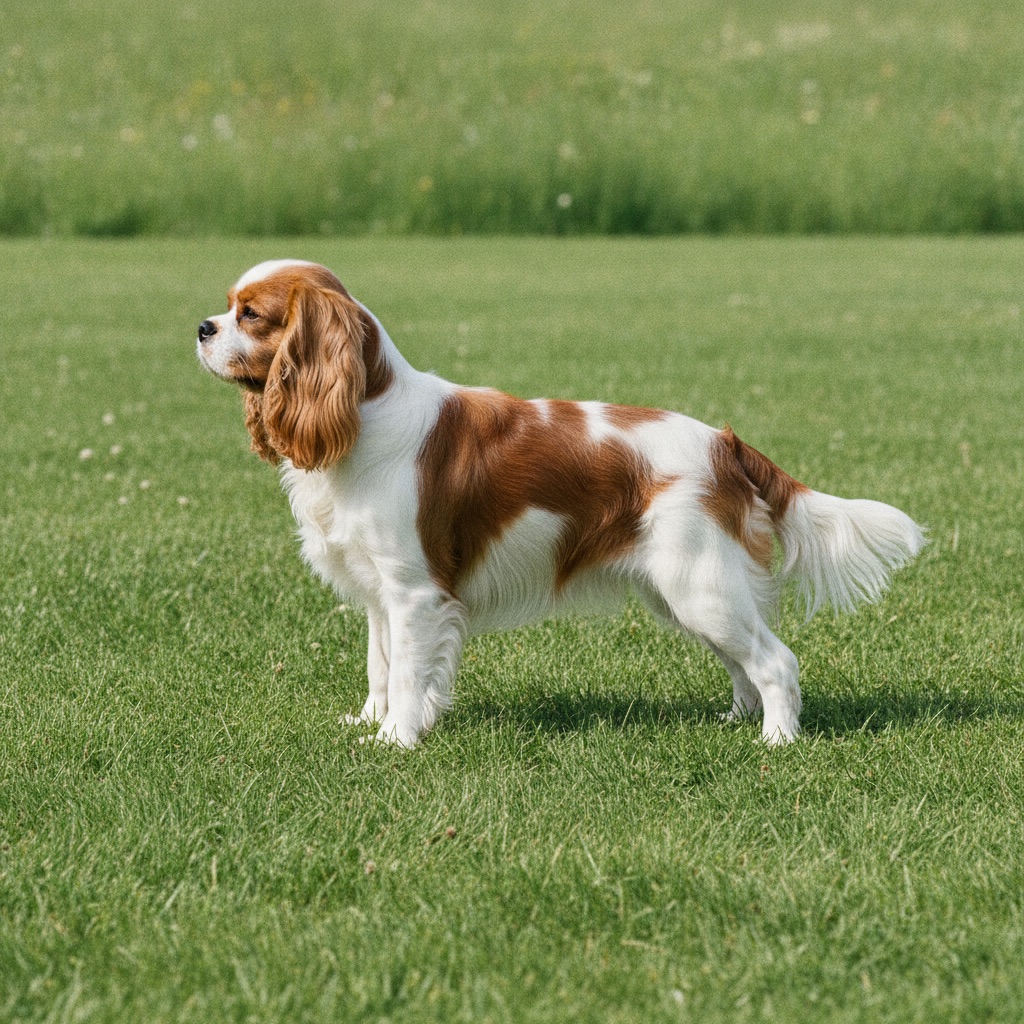
The AKC describes the Cavalier as affectionate, gentle and graceful.1 The breed is unusually adaptable — content to walk for hours or to sit on a lap all afternoon — and is among the most consistently friendly of all dogs, with strangers, children and other animals alike.
Cavaliers retain spaniel instincts, including a tendency to chase birds and to follow scent without regard for traffic, so recall should not be assumed. They are strongly attached to their people and prone to separation distress; this is not a breed that copes with being alone all day.
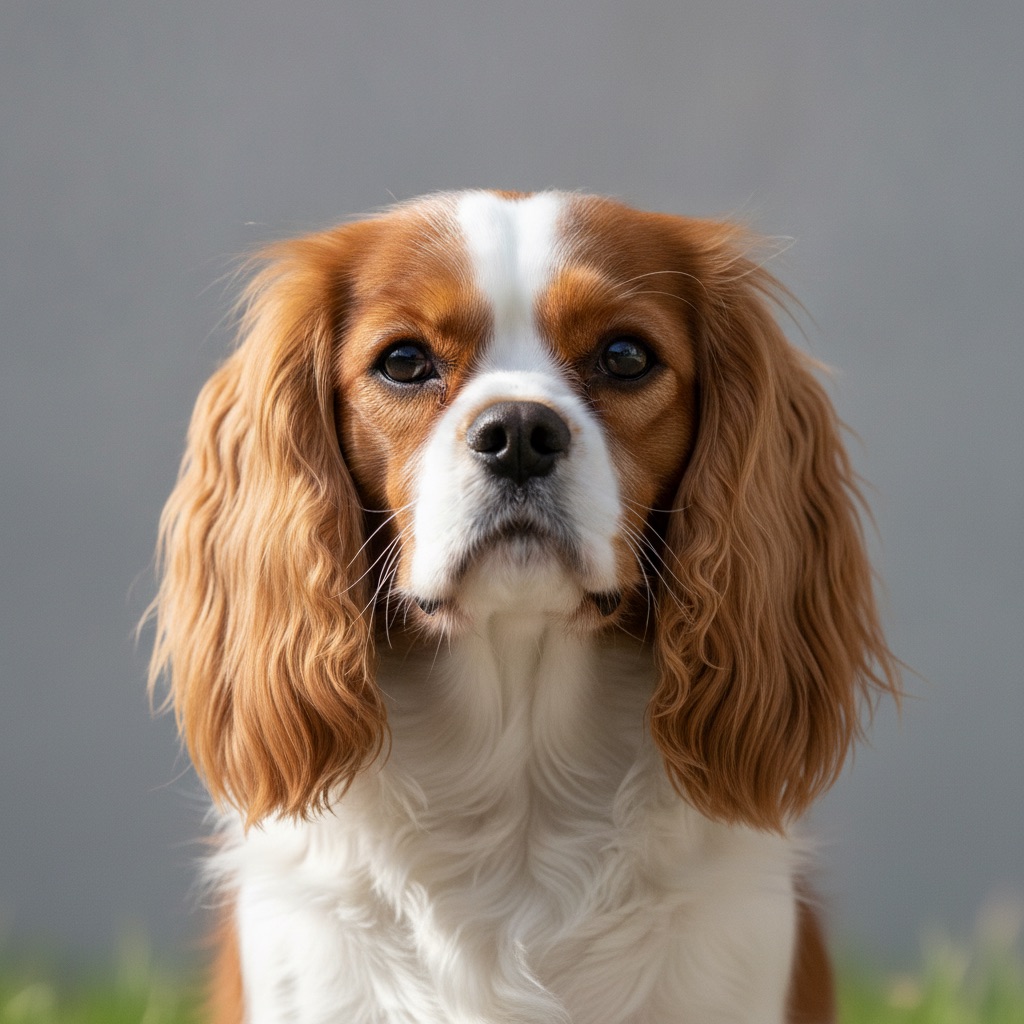
The Blenheim colour and the "Blenheim spot" — a chestnut mark on the crown — are named for Blenheim Palace, where the Dukes of Marlborough bred red-and-white toy spaniels for generations.2
Mitral valve disease affects the breed at exceptionally high rates and early onset. Breeding protocols require cardiologist auscultation of parents; ask for documentation.4
Chiari-like malformation and syringomyelia are documented in the breed. MRI screening of breeding stock is recommended by the parent clubs.3
Cavaliers gain weight easily, and excess weight compounds cardiac disease.
Ear feathering mats and drop ears trap moisture. Brush several times weekly and check ears.
This guide is educational and is not veterinary advice. Breed standards, measurements and health information are drawn from the sources listed above; consult your veterinarian for guidance specific to your dog.
Prestige Breed makes a small breed multivitamin designed for breeds like the Cavalier King Charles Spaniel — see the Cavalier King Charles Spaniel Multivitamin.