A German working breed of medium-large build, the Boxer pairs an athletic, square-proportioned frame with an unusually expressive face and a long adolescence.
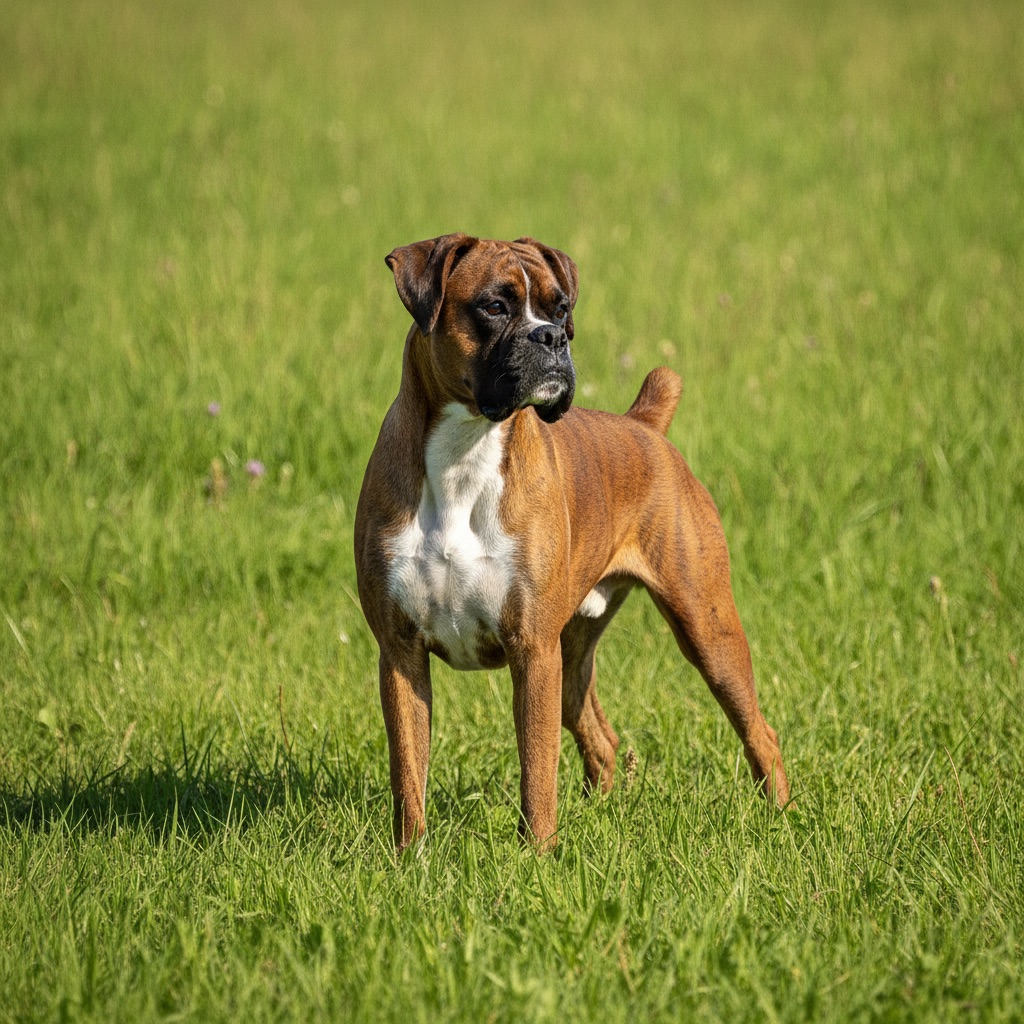

The Boxer descends from the Bullenbeisser, a now-extinct German holding dog used by hunters to seize and pin large game such as boar and bison until the hunter arrived.1 As estate hunting declined through the nineteenth century, the Bullenbeisser type was crossed with imported English Bulldogs to produce a lighter, quicker dog suited to butchers' work and cattle driving.2
Three dogs registered in Munich in the 1890s — chiefly a bitch named Flora and the dog Lechner's Box — form the documented base of the modern breed. The Deutscher Boxer Club was founded in Munich in 1896 and published the first standard in 1904.2 The Boxer served extensively as a German military messenger, pack and guard dog in both World Wars, and returning American servicemen carried the breed into a period of intense popularity in the United States through the 1950s.1
The etymology is unsettled. The most commonly repeated explanation holds that the dog appears to "box" with its front paws when playing or sparring, a habit widely observed in the breed. Other accounts trace the word to Boxl or Boxel, a German diminutive applied to the Bullenbeisser type, or suggest it was simply borrowed from English during the period when English Bulldogs were being crossed into the line.2
| Life expectancy | 10–12 years |
|---|---|
| Height — male | 22.5–25 in (57–63 cm) |
| Height — female | 21–23.5 in (53–60 cm) |
| Weight — male | 65–80 lb (29–36 kg) |
| Weight — female | 50–65 lb (23–29 kg) |
| Coat type & colors | Short, tight, smooth; fawn or brindle, usually with white flashings and a black mask |
| Shedding | Moderate, year-round |
| Exercise needs | High — two substantial sessions daily |
| Country of origin | Germany |
| AKC group | Working Group (AKC) |
| Prestige Breed size class | Large Breed · Over 60 lbs |
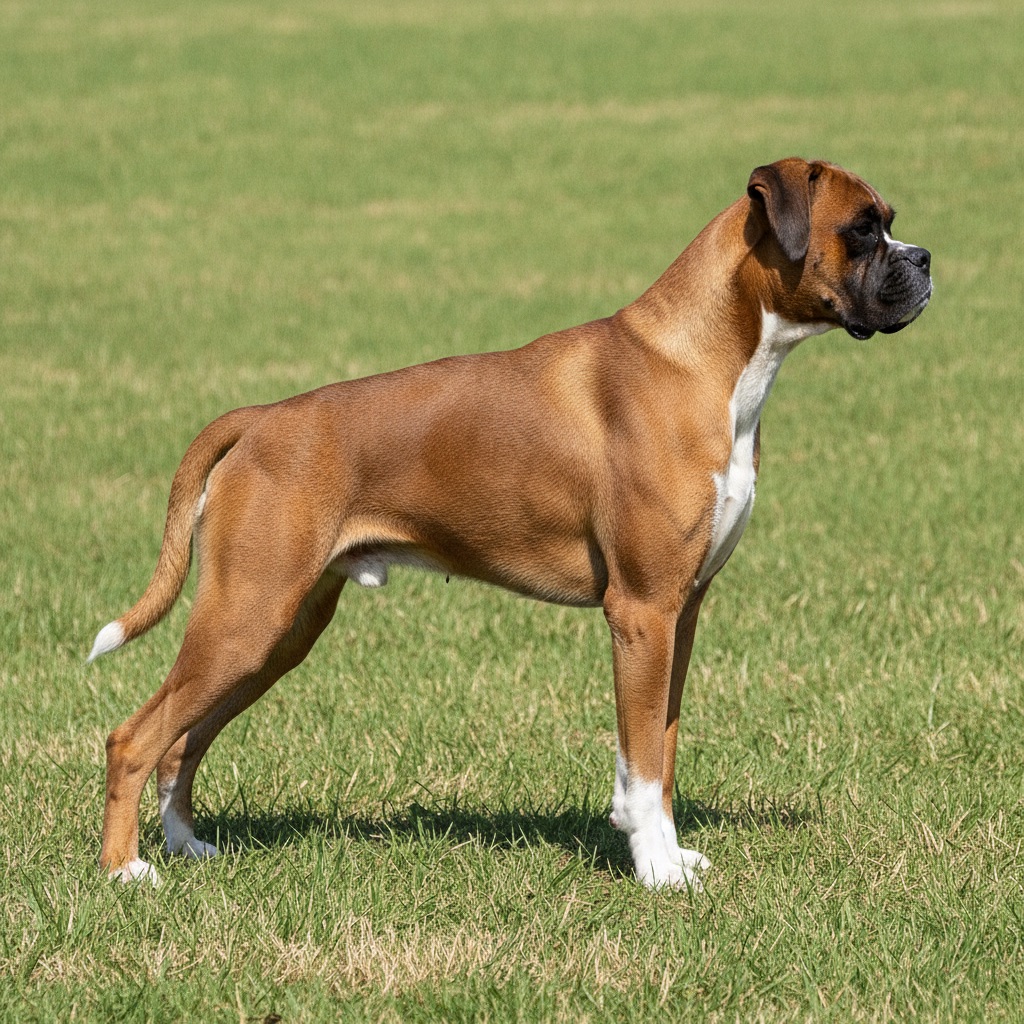
The breed standard describes a dog that is fundamentally patient with children yet wary on first meeting a stranger, and the AKC characterises the Boxer as bright, fun-loving and active.1 Boxers mature slowly; many remain behaviourally adolescent until roughly three years of age, which accounts for the breed's reputation for exuberance well past puppyhood.
Boxers were bred to work in close contact with people and are poorly suited to long hours alone. They are typically demonstrative, physically affectionate and inclined to lean, paw and vocalise. Training responds far better to consistency and reward than to force; the breed is intelligent but independent-minded, and repetitive drilling tends to produce boredom rather than compliance.
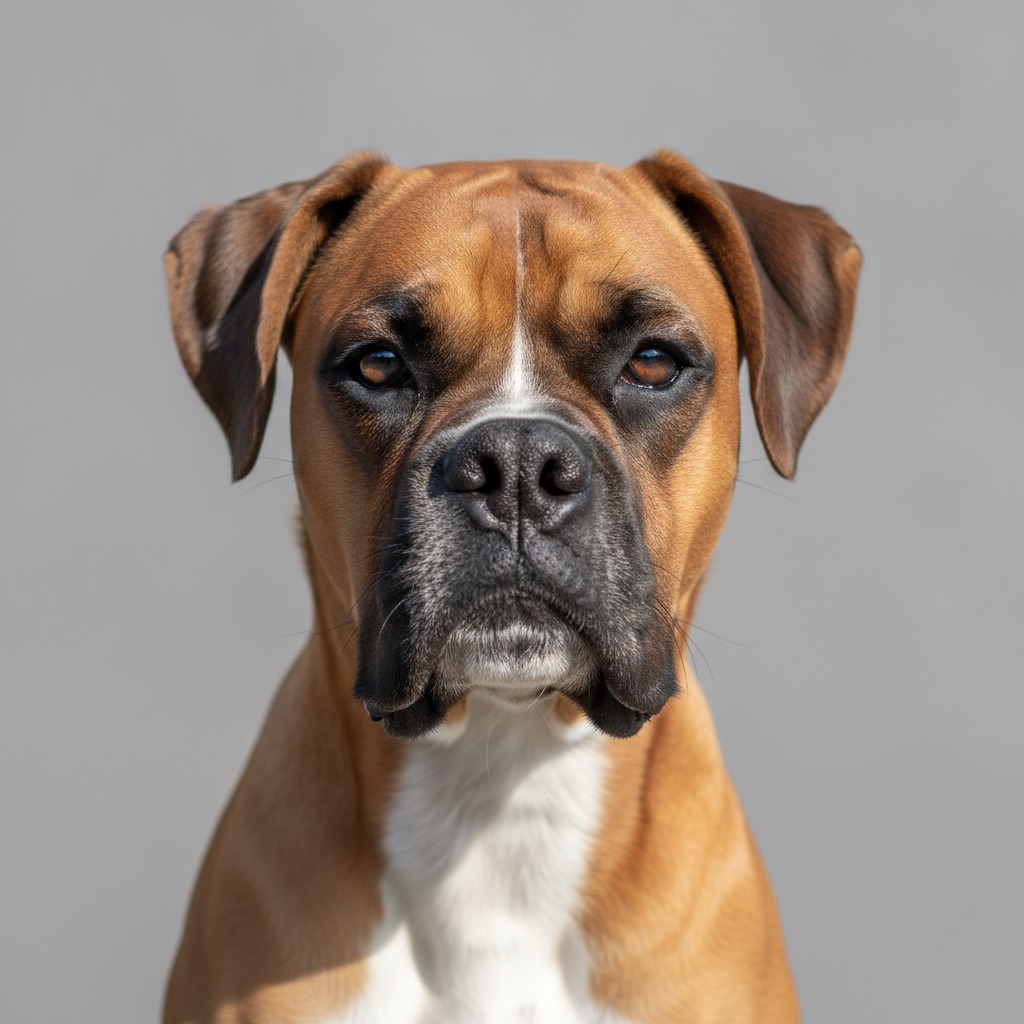
The Boxer's undershot jaw and upturned nose are not cosmetic accidents — the bite was selected so the dog could keep a firm hold on game while still breathing freely through its nose.
The Boxer is a brachycephalic breed with a shortened muzzle, which limits its ability to cool itself by panting. Exercise in the cool parts of the day and avoid exertion in humid heat.
Boxer cardiomyopathy and aortic stenosis are documented concerns in the breed. Ask a breeder for cardiac clearances and discuss periodic auscultation or Holter monitoring with your veterinarian.
Scent games, obedience, agility and structured play prevent the destructive boredom that under-exercised Boxers reliably develop.
The breed's natural reserve with strangers is best shaped in the first year through calm, varied exposure to people, dogs and environments.
This guide is educational and is not veterinary advice. Breed standards, measurements and health information are drawn from the sources listed above; consult your veterinarian for guidance specific to your dog.
Prestige Breed makes a large breed multivitamin designed for breeds like the Boxer — see the Boxer Multivitamin.