A versatile continental gundog bred to point, retrieve and track on both land and water, the German Shorthaired Pointer is among the most athletic and highest-energy of all sporting breeds.
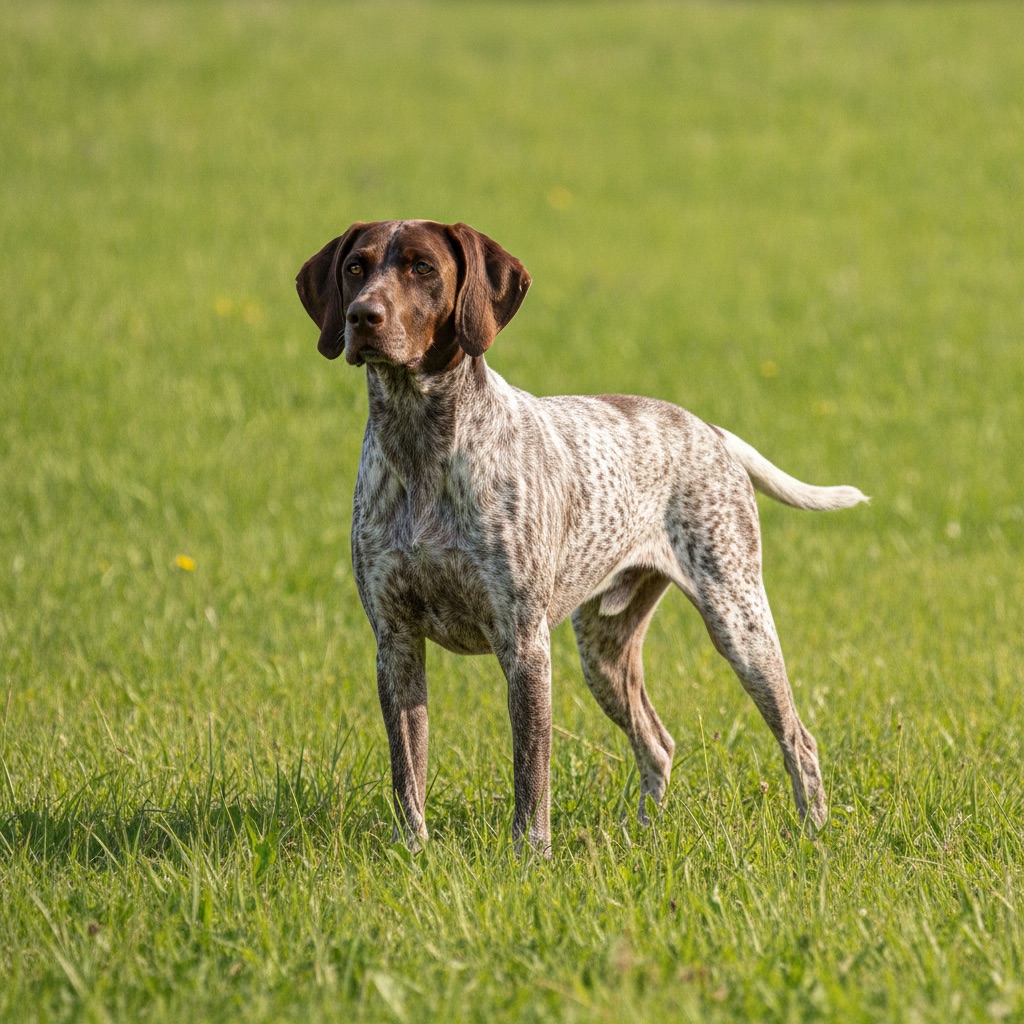

German breeders in the nineteenth century set out to create a single dog that could do the work several specialists had done — pointing birds, trailing wounded game and retrieving from water. The foundation was the old Spanish and German pointer stock, refined with English Pointer blood for style and speed and with scent-hound influence for tracking ability.2
Prince Albrecht zu Solms-Braunfels was instrumental in setting the standard around utility rather than appearance, and the German Kurzhaar studbook opened in 1872.2 The breed reached the United States in the 1920s and the AKC recognised it in 1930.1
The name is a direct English rendering of Deutsch Kurzhaar — "German short-hair" — distinguishing this variety from the German Wirehaired and German Longhaired Pointers, which share the same versatile-gundog purpose in different coats.2
| Life expectancy | 10–12 years |
|---|---|
| Height — male | 23–25 in (58–64 cm) |
| Height — female | 21–23 in (53–58 cm) |
| Weight — male | 55–70 lb (25–32 kg) |
| Weight — female | 45–60 lb (20–27 kg) |
| Coat type & colors | Short, thick, water-resistant; liver, or liver and white in patched, ticked or roan patterns |
| Shedding | Moderate |
| Exercise needs | Very high — a genuine field athlete |
| Country of origin | Germany |
| AKC group | Sporting Group (AKC) |
| Prestige Breed size class | Large Breed · Over 60 lbs |
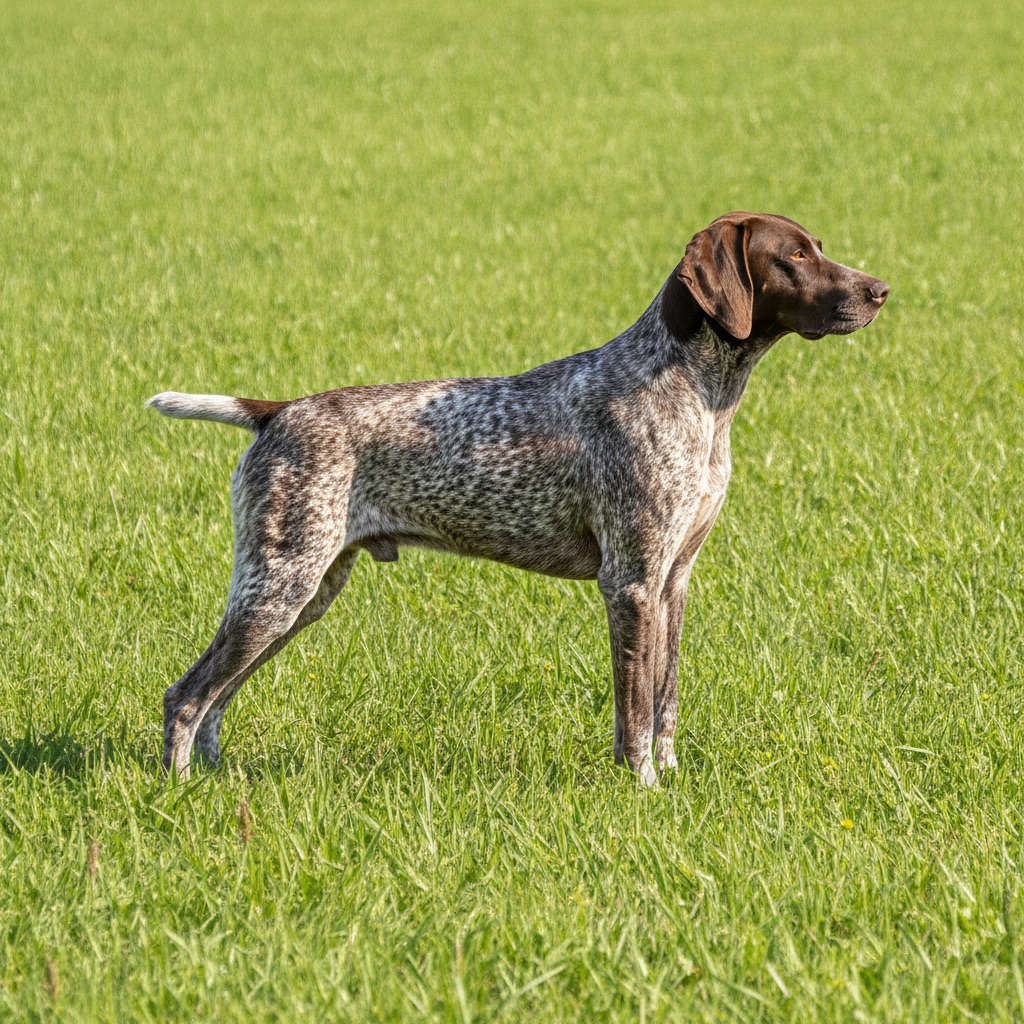
The AKC describes the GSP as friendly, smart and willing to please.1 The breed is affectionate and strongly bonded to its people, and unlike some gundogs it wants to work close and check in constantly.
Its defining characteristic is stamina. A GSP can hunt all day and will not self-regulate its exercise; a household walk is not remotely sufficient. The breed is intelligent and quick to train but easily bored, and an under-exercised GSP is a genuinely difficult house dog. Prey drive toward small animals is high.
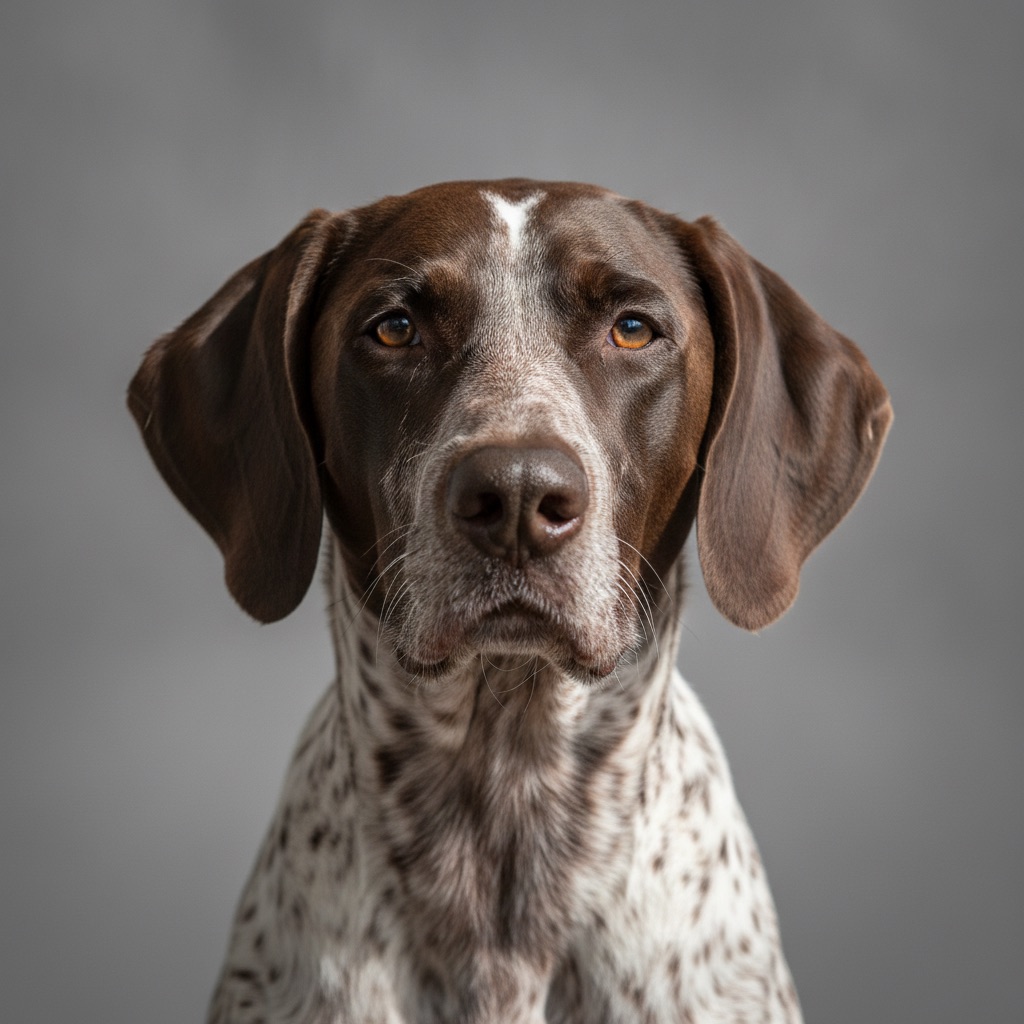
The German Shorthaired Pointer is one of the few breeds recognised as fully versatile in the continental sense — expected to point upland birds, blood-trail wounded deer, and retrieve waterfowl, all to a testable standard.3
One to two hours of hard running daily is the honest requirement, not an enthusiast's exaggeration.
Field work, tracking or scent sport tires a GSP far more effectively than distance alone.
The deep chest puts the breed at elevated GDV risk; avoid heavy exertion around meals.3
GSPs bond tightly and are prone to separation distress. They do poorly as kennel or yard dogs.
This guide is educational and is not veterinary advice. Breed standards, measurements and health information are drawn from the sources listed above; consult your veterinarian for guidance specific to your dog.
Prestige Breed makes a large breed multivitamin designed for breeds like the German Shorthaired Pointer — see the German Shorthaired Pointer Multivitamin.