A Roman drover dog that settled in the German town of Rottweil, the Rottweiler is a powerful, self-assured working breed built for driving cattle and guarding property.
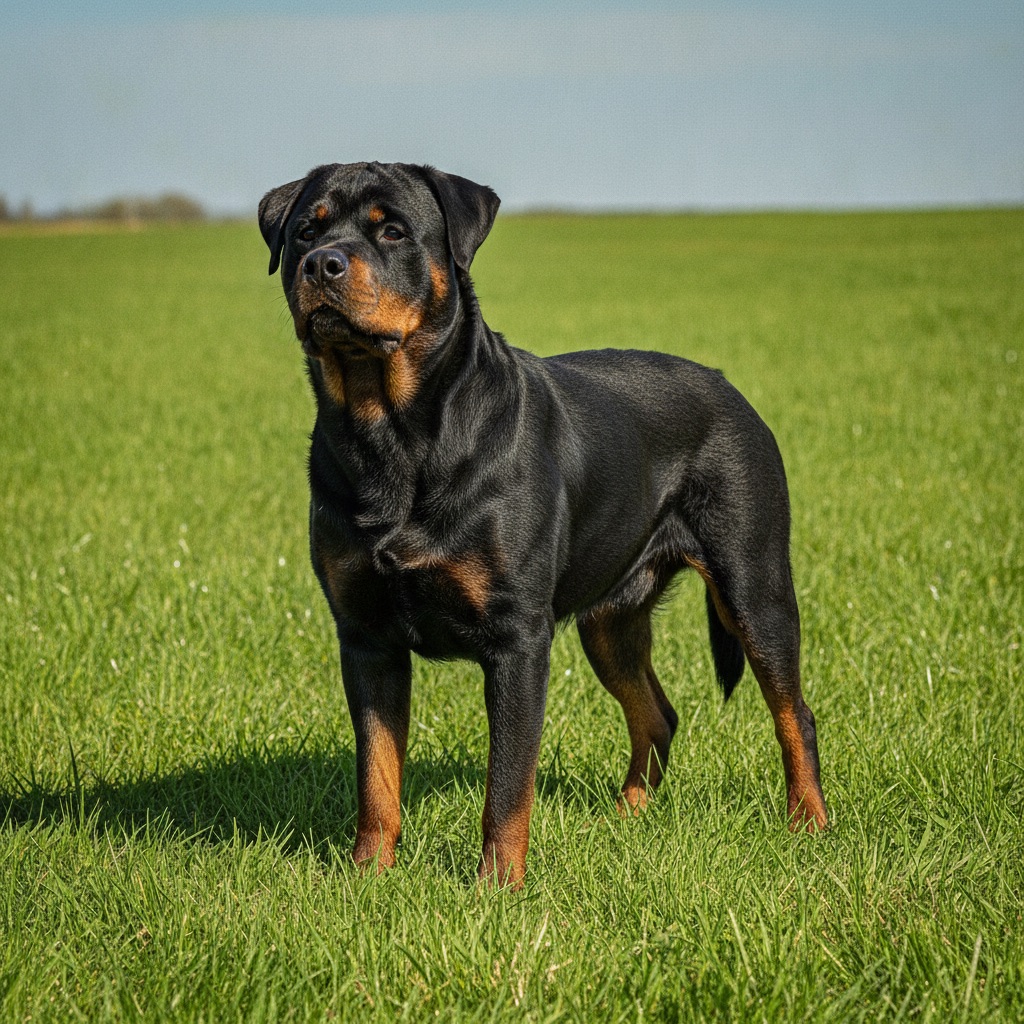

The breed's ancestors are generally held to be the mastiff-type drover dogs that accompanied Roman legions across the Alps, driving and guarding the herds that fed the army. Dogs of this type remained in the region around Rottweil, a Roman settlement in Württemberg that became a cattle-trading centre.2
Local butchers used the dogs to drive stock to market and to guard the day's takings — the money purse was reportedly tied around the dog's neck — earning the name Rottweiler Metzgerhund, "butcher's dog of Rottweil."1 Railways ended droving in the mid-nineteenth century and the breed nearly disappeared; it was revived from 1901 by German clubs and found new work in police service. AKC recognition followed in 1931.1
The breed is named for Rottweil, the town in Baden-Württemberg where it was concentrated. The town's own name derives from the red tiles — "das Rote Wil," the red villa — of the Roman villa excavated there.2
| Life expectancy | 9–10 years |
|---|---|
| Height — male | 24–27 in (61–69 cm) |
| Height — female | 22–25 in (56–64 cm) |
| Weight — male | 95–135 lb (43–61 kg) |
| Weight — female | 80–100 lb (36–45 kg) |
| Coat type & colors | Short, coarse, dense double coat; black with clearly defined rust markings |
| Shedding | Moderate to heavy |
| Exercise needs | Moderate to high — daily work and walking |
| Country of origin | Germany |
| AKC group | Working Group (AKC) |
| Prestige Breed size class | Large Breed · Over 60 lbs |
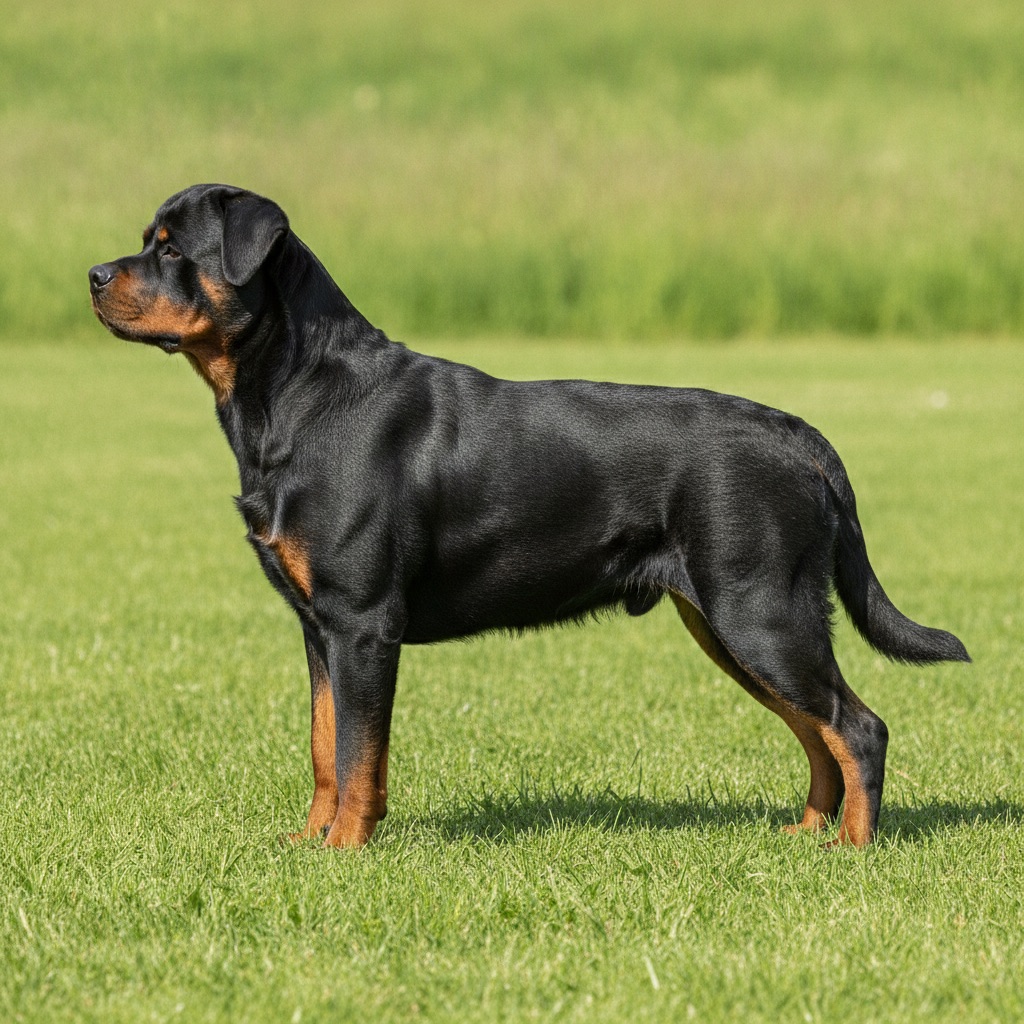
The AKC describes the Rottweiler as loyal, loving and confident guardian.1 The breed standard calls for a calm, self-assured dog that is aloof rather than immediately friendly, and that responds to new situations with watchfulness rather than reaction.
Rottweilers are intelligent and trainable but strong-willed; they test boundaries and require an owner who sets rules calmly and keeps them. The breed is physically powerful and often unaware of its own force, particularly in adolescence. Well-raised Rottweilers are affectionate and often comically attached to their families.
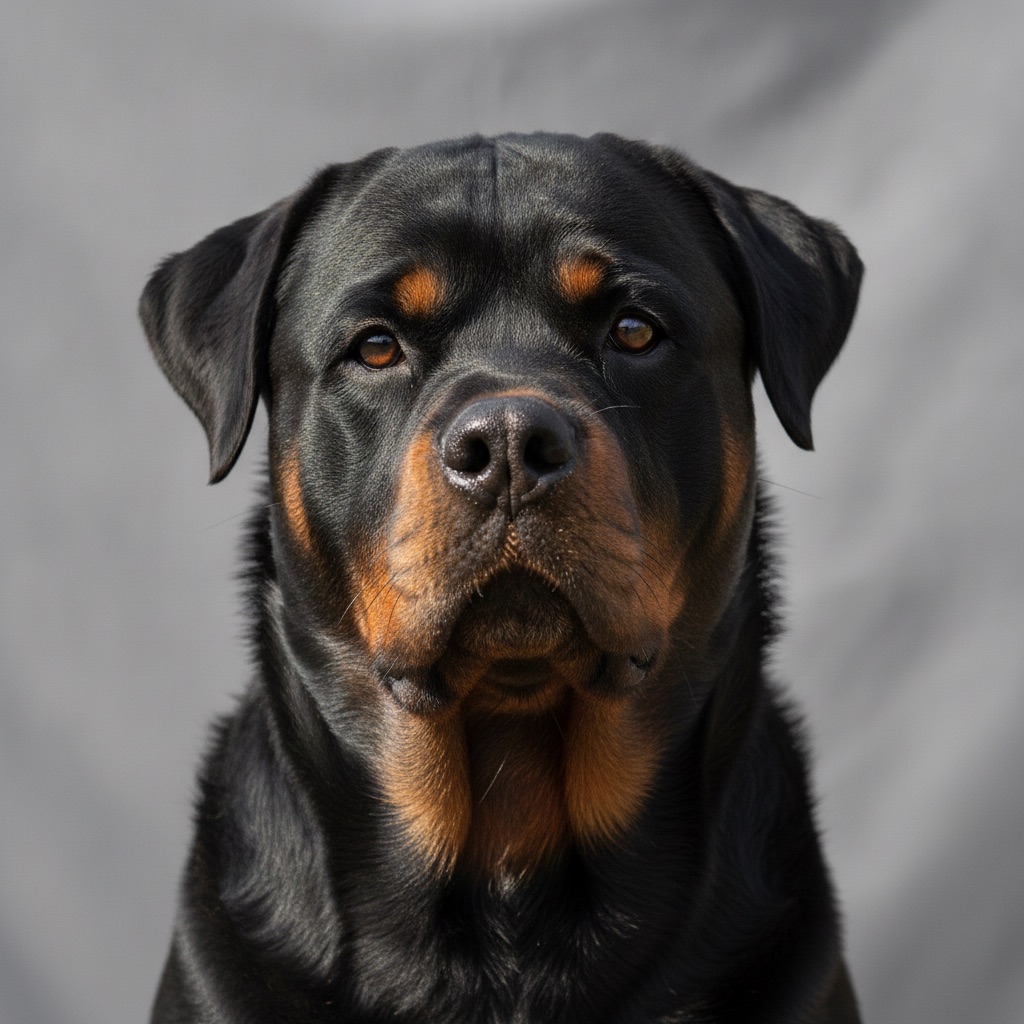
Rottweilers were among the first breeds used as guide dogs for the blind, and they served in early police and search-and-rescue programmes long before those roles were dominated by shepherds.3
The breed's natural aloofness must be shaped early into confident neutrality. Puppy classes and broad, positive exposure through the first year are essential.
Hip and elbow dysplasia and subaortic stenosis are the parent club's priority screenings; osteosarcoma also occurs at elevated rates.3
Rottweilers gain weight readily, and every extra pound accelerates joint wear in a heavy-boned breed.
Teach a dog of this strength to walk on a loose leash and to disengage on cue before it reaches full weight, not after.
This guide is educational and is not veterinary advice. Breed standards, measurements and health information are drawn from the sources listed above; consult your veterinarian for guidance specific to your dog.
Prestige Breed makes a large breed multivitamin designed for breeds like the Rottweiler — see the Rottweiler Multivitamin.