A Tibetan-derived companion dog perfected in the Chinese imperial court, the Shih Tzu was bred for one purpose — to be an indoor companion — and remains among the most purely social of breeds.
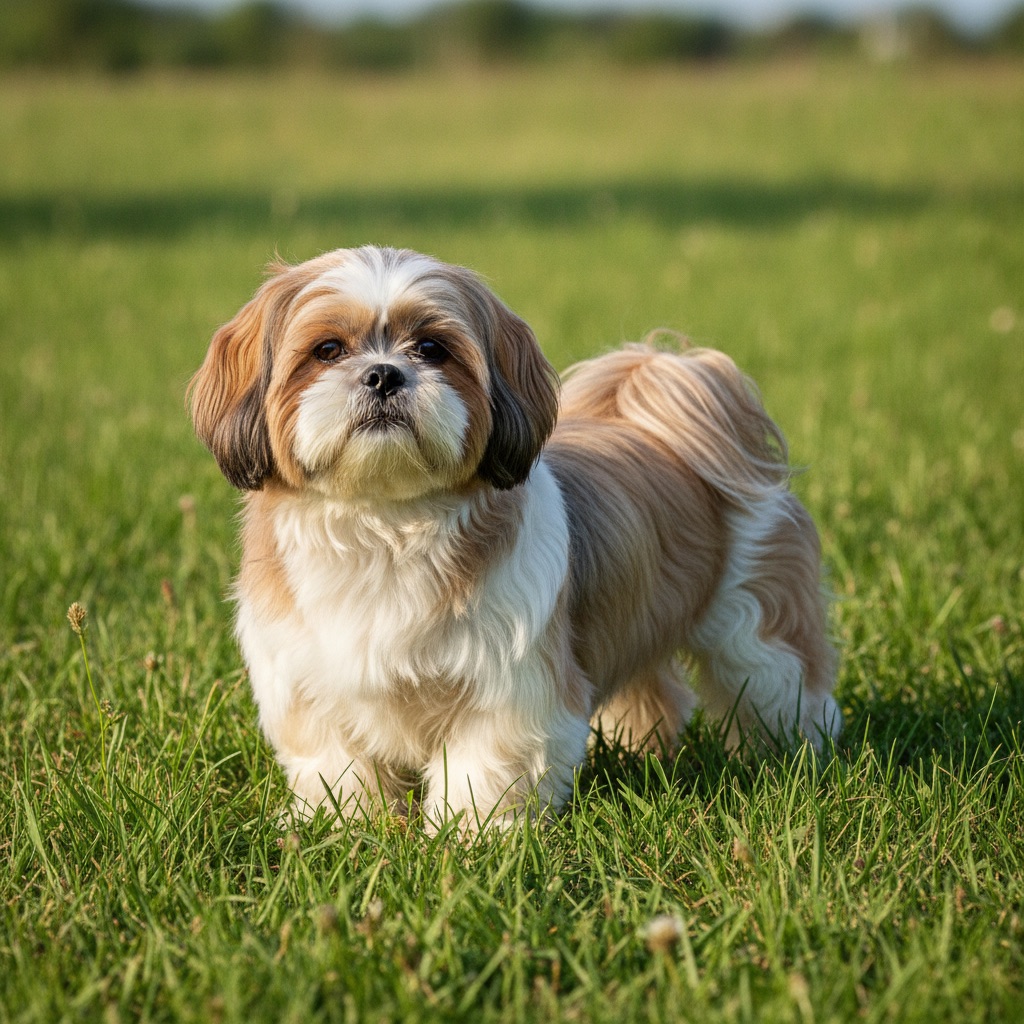

The breed's ancestors were small Tibetan lion dogs, presented as tribute to the Chinese court, where they were crossed with Pekingese and other palace dogs to produce the Shih Tzu.2 The dogs lived within the Forbidden City and were rarely seen outside it; the Dowager Empress Cixi maintained an extensive kennel until her death in 1908.
After the empress's death the palace kennels dispersed and the breed nearly disappeared during the upheavals of the following decades. Every modern Shih Tzu descends from fourteen dogs — seven males and seven females — used to rebuild the breed in Britain and Norway from the 1930s.2 The AKC recognised the Shih Tzu in 1969.1
Shih Tzu means "lion" in Mandarin — 獅子, shīzi — referring to the Buddhist lion of Tibetan and Chinese iconography, which the coated, maned dog was bred to resemble. The breed is also called the Chrysanthemum Dog, for the way the facial hair radiates outward from the nose.2
| Life expectancy | 10–18 years |
|---|---|
| Height — male | 9–10.5 in (23–27 cm) |
| Height — female | 9–10.5 in (23–27 cm) |
| Weight — male | 9–16 lb (4–7 kg) |
| Weight — female | 9–16 lb (4–7 kg) |
| Coat type & colors | Long, dense, flowing double coat; all colours |
| Shedding | Low — hair grows continuously |
| Exercise needs | Low — short daily walks |
| Country of origin | Tibet / China |
| AKC group | Toy Group (AKC) |
| Prestige Breed size class | Small Breed · Under 25 lbs |
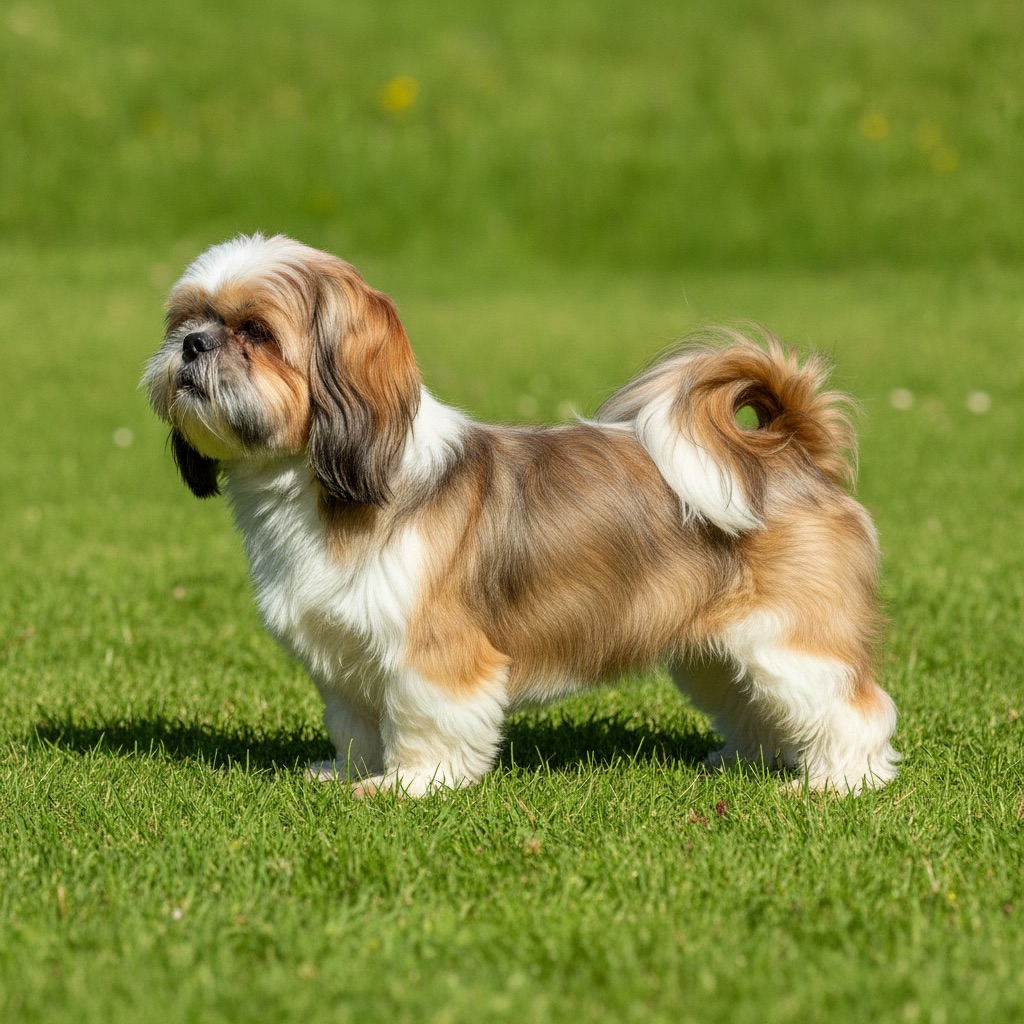
The AKC describes the Shih Tzu as affectionate, playful and outgoing.1 The breed was bred for the lap and has no herding, guarding or hunting instinct to complicate matters; Shih Tzus are typically friendly with everyone, including strangers and other animals.
They are moderately stubborn — housetraining is often slow — and they can become demanding when indulged. The breed thrives on company and does poorly when left alone for long stretches. Their small size and low exercise requirement make them well suited to apartments and to less active households.
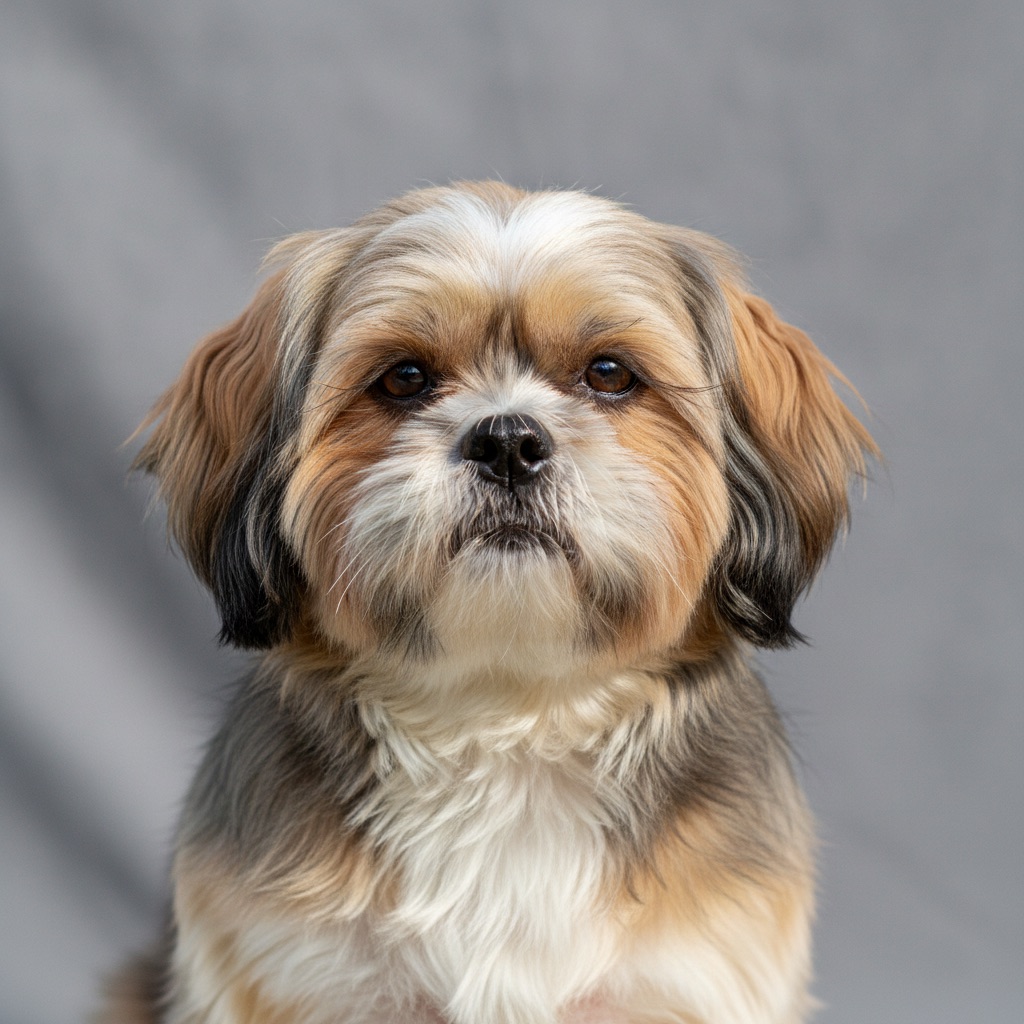
The entire modern breed traces to just fourteen dogs used in its post-imperial reconstruction, making the Shih Tzu one of the most genetically bottlenecked of the popular breeds.2
The long double coat mats quickly, particularly behind the ears and under the legs. Daily combing, or a short clip every six to eight weeks.
Large, prominent eyes are vulnerable to ulceration and irritation from facial hair. Keep the topknot tied or the face trimmed.3
Shih Tzus are brachycephalic and heat-intolerant. Avoid warm-weather exertion and use a harness rather than a collar.4
Crowded jaws and undershot bites make periodontal disease very common. Daily brushing genuinely extends life.
This guide is educational and is not veterinary advice. Breed standards, measurements and health information are drawn from the sources listed above; consult your veterinarian for guidance specific to your dog.
Prestige Breed makes a small breed multivitamin designed for breeds like the Shih Tzu — see the Shih Tzu Multivitamin.