An Italian mastiff descended from Roman war and farm dogs, the Cane Corso is a large, athletic guardian of the property and family, recognised by the AKC only in 2010.
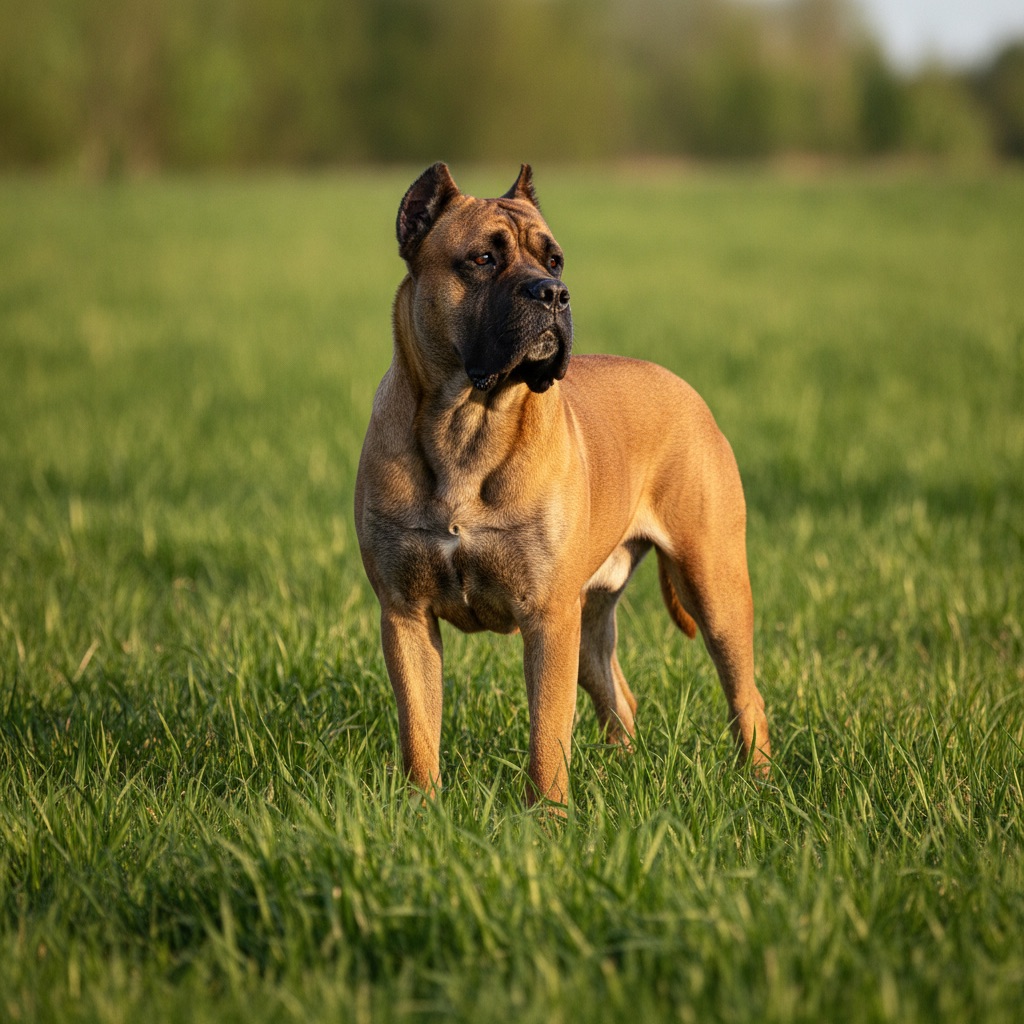

The breed descends from the Roman canis pugnax, a mastiff-type dog used in war and in the arena, which after the empire's collapse became a farm and hunting dog across southern Italy — used on wild boar, to manage cattle and to guard the homestead.2 It remained a functional rural dog with no formal registry for centuries.
Mechanisation of Italian agriculture after the Second World War almost eliminated the type. A recovery effort began in the 1970s led by Giovanni Bonnetti and Dr. Paolo Breber; the Società Amatori Cane Corso formed in 1983, the ENCI recognised the breed in 1994, and the FCI followed in 1996. The AKC admitted the Cane Corso to the Working Group in 2010.1
Cane is Italian for dog. Corso is most often traced to the Latin cohors, meaning guardian or protector of the courtyard or enclosure; an alternative derivation is from cursus, "to run," in reference to the dog's use in the hunt. The name is not related to Corsica.2
| Life expectancy | 9–12 years |
|---|---|
| Height — male | 25–27.5 in (64–70 cm) |
| Height — female | 23.5–26 in (60–66 cm) |
| Weight — male | 99–110 lb (45–50 kg) |
| Weight — female | 88–99 lb (40–45 kg) |
| Coat type & colors | Short, stiff, dense; black, grey, fawn or red, with or without brindling |
| Shedding | Moderate |
| Exercise needs | High — daily work and structured exercise |
| Country of origin | Italy |
| AKC group | Working Group (AKC) |
| Prestige Breed size class | Large Breed · Over 60 lbs |
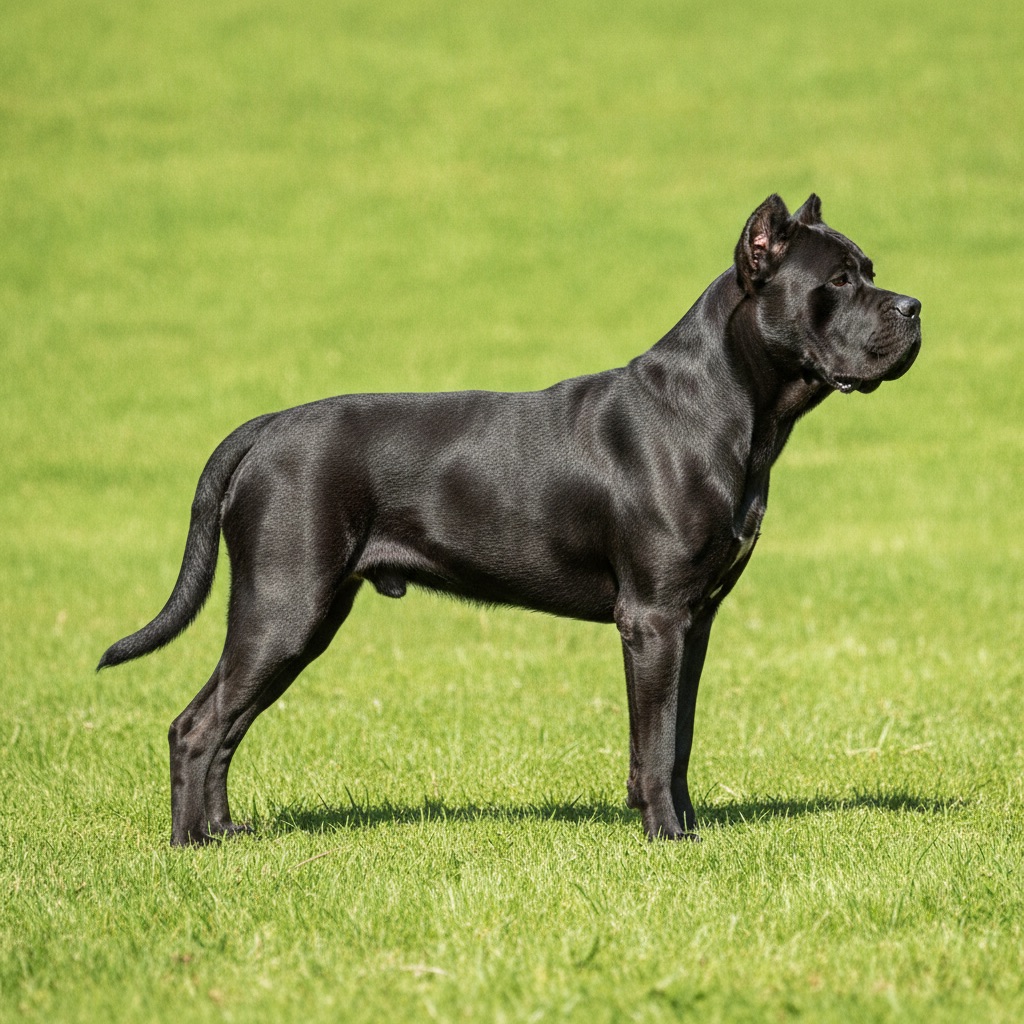
The AKC describes the Cane Corso as affectionate, intelligent and majestic.1 The breed is a discriminating guardian: attached and biddable within the family, watchful and reserved outside it.
This is a dog of serious physical power with a strong protective instinct, and the parent club is direct that it requires an experienced owner able to provide leadership without conflict.3 Cane Corsi are sensitive to their handler and train well, but their default response to an unfamiliar situation is assessment and control, which must be shaped early into confident neutrality.
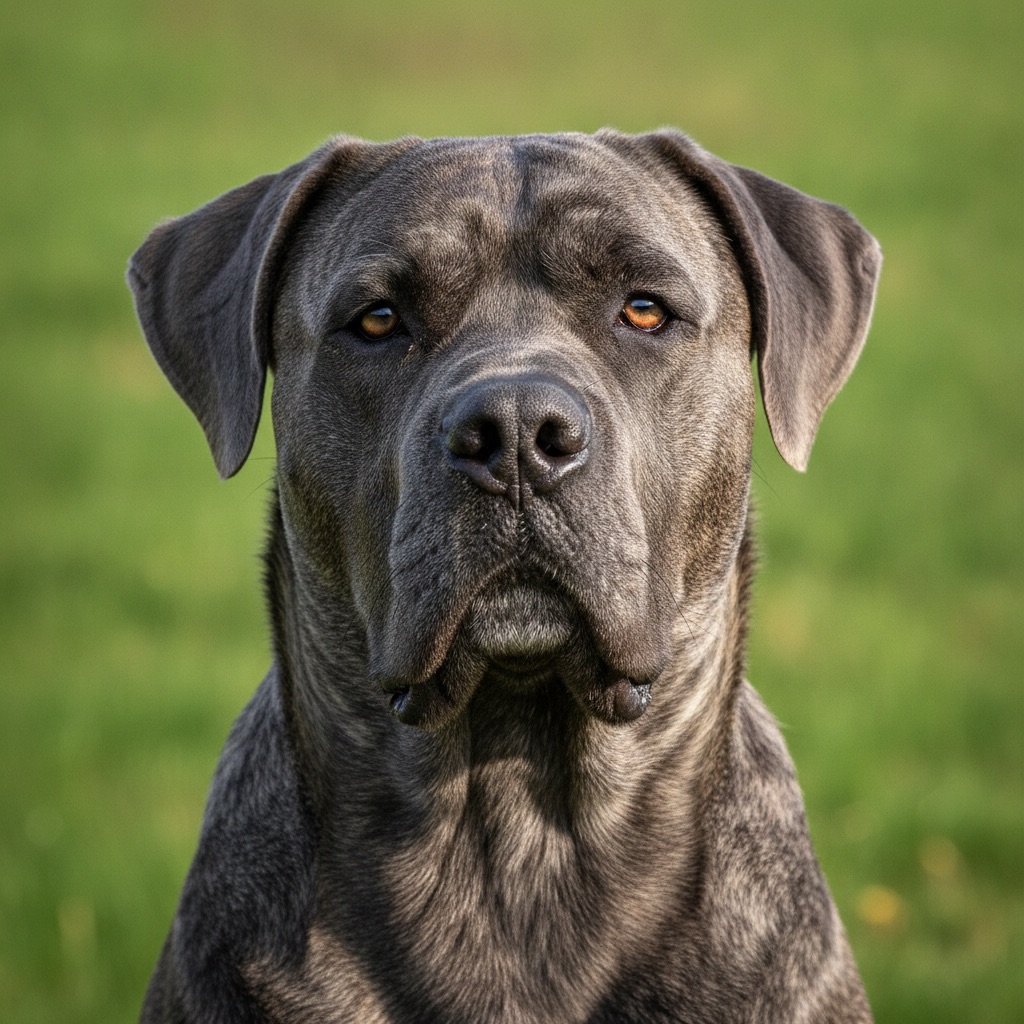
The Cane Corso appears in Italian art and record as a boar-hunting and farm dog for centuries, but it had no written breed standard until 1987 — a working animal that was described only after it nearly disappeared.2
The breed's guarding instinct matures around eighteen months. Broad, positive early exposure determines whether that instinct is discriminating or indiscriminate.
Establish leash manners, impulse control and a reliable recall while the dog is still under 60 pounds.
Hip and elbow dysplasia, entropion and eyelid problems, and idiopathic epilepsy are the parent club's stated screening priorities.3
Some jurisdictions and insurers restrict large guardian breeds. Confirm before acquiring.
This guide is educational and is not veterinary advice. Breed standards, measurements and health information are drawn from the sources listed above; consult your veterinarian for guidance specific to your dog.
Prestige Breed makes a large breed multivitamin designed for breeds like the Cane Corso — see the Cane Corso Multivitamin.