The original of the three Schnauzers, this German farm dog is a robust, wiry-coated ratter and guardian — the oldest and the archetype from which the Giant and Miniature were developed.
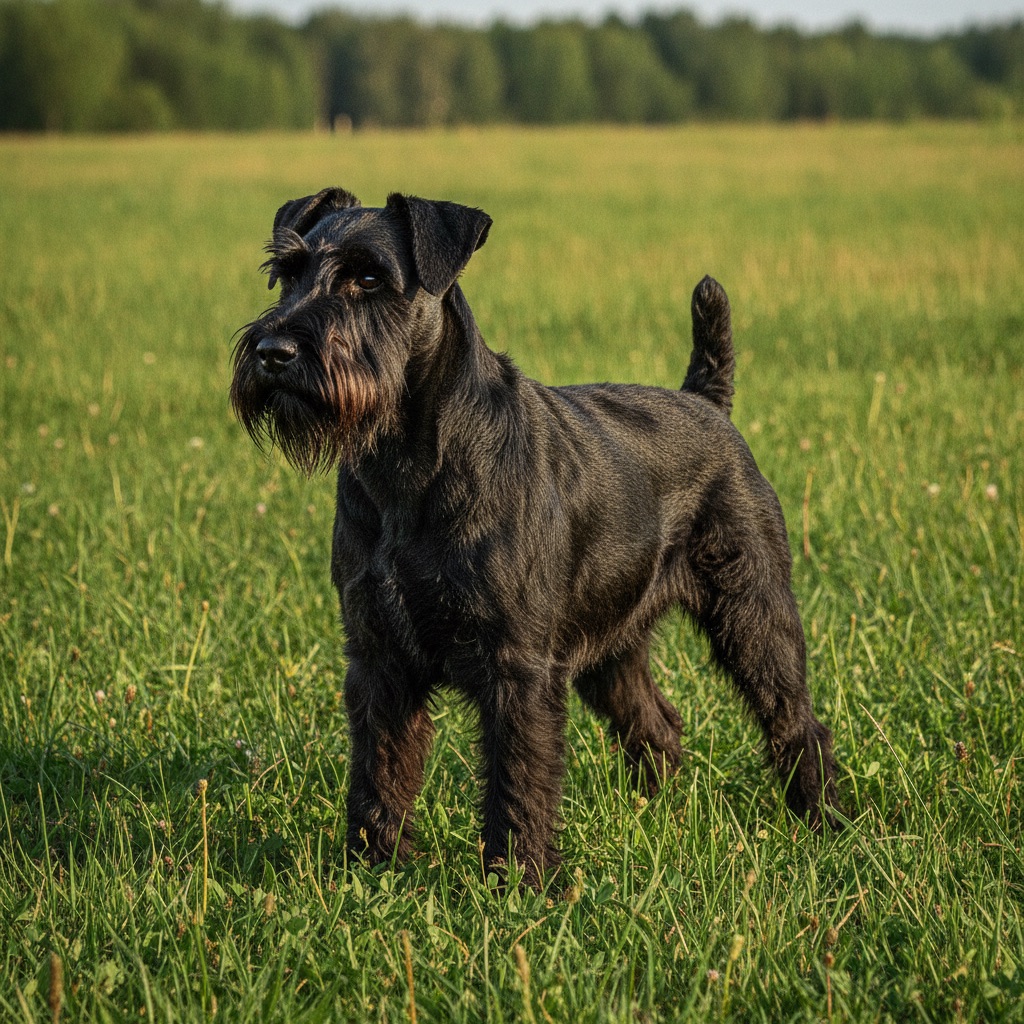

The Standard Schnauzer is a very old German farm breed, appearing in art from the fifteenth and sixteenth centuries — Dürer painted a recognisable example — where it worked as a stable ratter, drover's dog and cart guard in Bavaria and Württemberg.2
It was first exhibited in Germany in 1879 as the Wire-haired Pinscher, and the name Schnauzer was adopted from a winning dog of that name. The breed served as a German dispatch and Red Cross dog in the First World War. The Miniature was created by crossing down with the Affenpinscher, and the Giant by crossing up with larger drover stock; the AKC recognised the Standard in 1904.1
From the German Schnauze, meaning muzzle or snout — a reference to the breed's distinctive bearded, blunt muzzle. The name was transferred from an individual show dog called Schnauzer to the breed as a whole in the late nineteenth century.2
| Life expectancy | 13–16 years |
|---|---|
| Height — male | 18.5–19.5 in (47–50 cm) |
| Height — female | 17.5–18.5 in (44–47 cm) |
| Weight — male | 35–50 lb (16–23 kg) |
| Weight — female | 30–45 lb (14–20 kg) |
| Coat type & colors | Harsh, wiry double coat with beard and eyebrows; pepper-and-salt or pure black |
| Shedding | Low when hand-stripped; minimal otherwise |
| Exercise needs | Moderate to high — daily work and walking |
| Country of origin | Germany |
| AKC group | Working Group (AKC) |
| Prestige Breed size class | Medium Breed · 25 – 60 lbs |
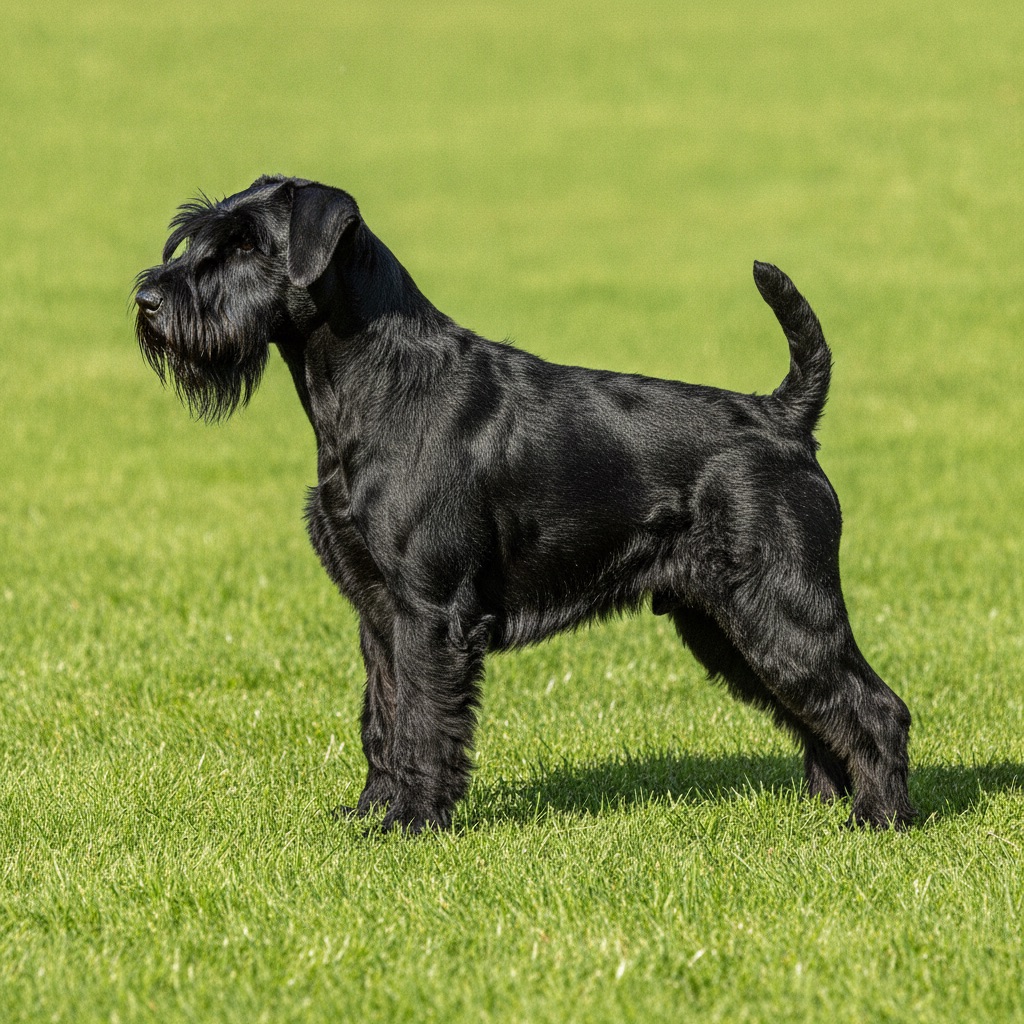
The AKC describes the Standard Schnauzer as fearless, smart and spirited.1 The breed is alert and territorial without being aggressive, and it makes a reliable watchdog that assesses before it reacts.
Schnauzers are intelligent and quick to learn but genuinely independent — they will test inconsistent handling and are known for a wry, wilful streak. Bred to kill vermin, they retain a high prey drive. They are strongly family-oriented, good with children they are raised alongside, and demand inclusion in household activity.
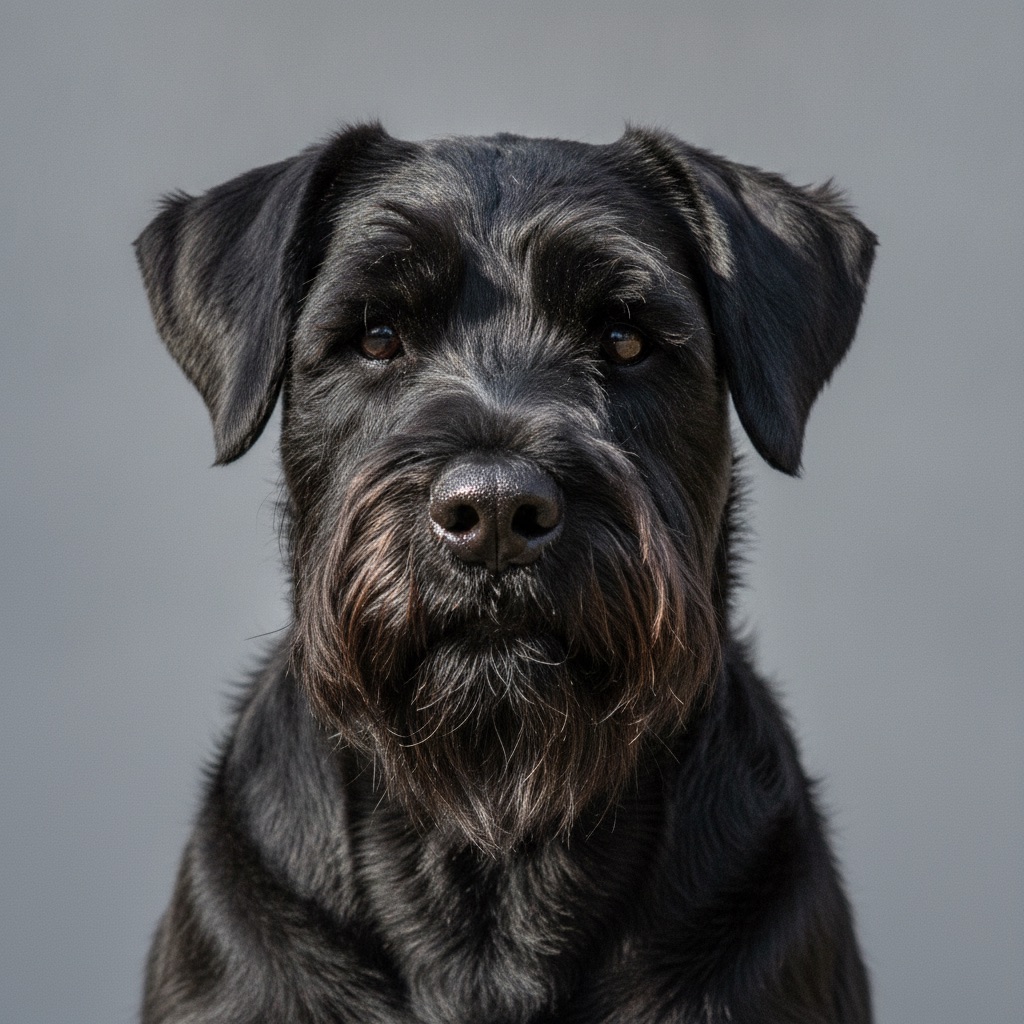
The Standard is the original Schnauzer; the Miniature and Giant were both developed from it, and the AKC places the three in three different groups — Terrier, Working and Working respectively.1
The wiry coat holds its texture and colour only when stripped rather than clipped. Clipping softens the coat and fades the pepper-and-salt.
The furnishings collect food and water at every meal. Rinse and dry the beard daily to prevent staining and skin irritation.
Schnauzers are problem-solvers. Obedience, barn hunt, agility or scent work keeps them out of trouble.
Hip dysplasia and hereditary eye disease are the parent club's core recommendations for breeding stock.3
This guide is educational and is not veterinary advice. Breed standards, measurements and health information are drawn from the sources listed above; consult your veterinarian for guidance specific to your dog.
Prestige Breed makes a medium breed multivitamin designed for breeds like the Schnauzer — see the Schnauzer Multivitamin.