The original flushing spaniel from which most modern land spaniels descend, the English Springer works close to the gun, springing game from cover and retrieving it to hand.
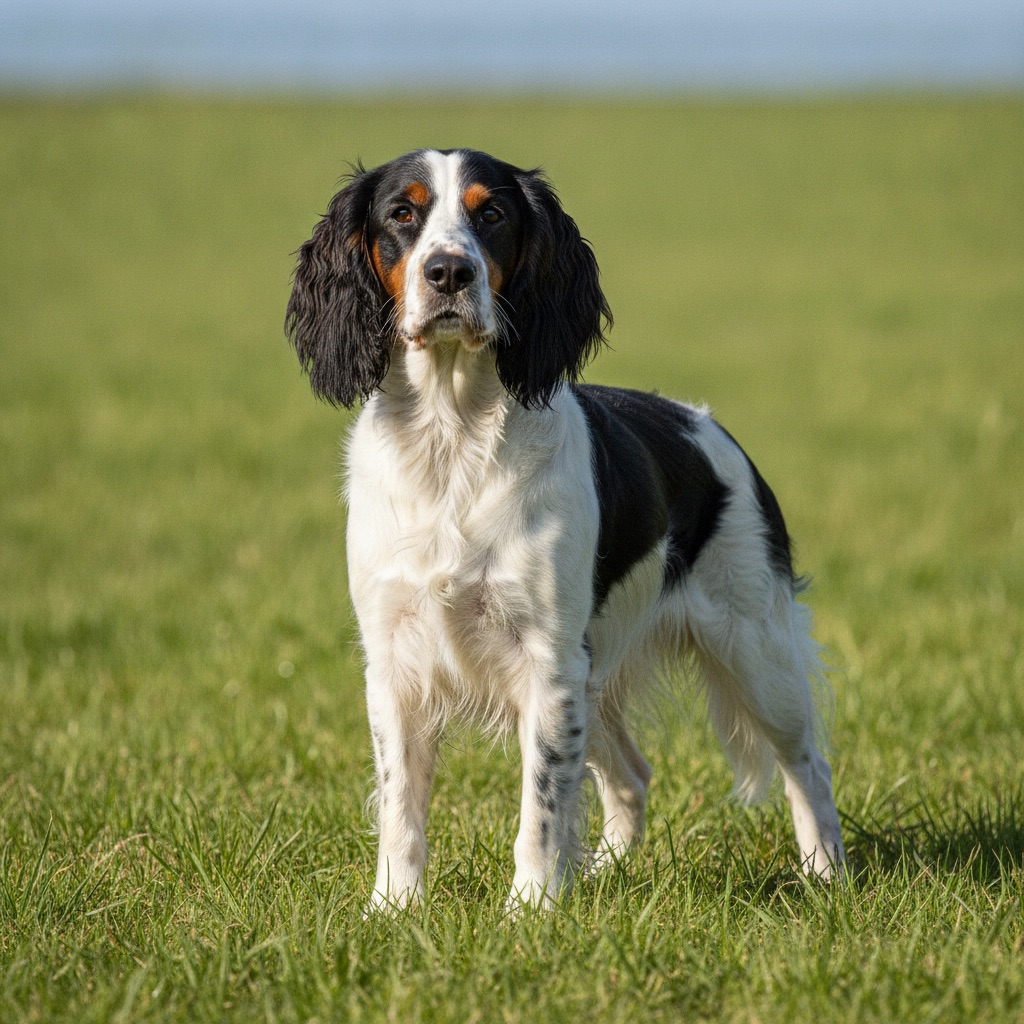

Land spaniels were divided by function rather than pedigree for centuries: the larger dogs of a litter "sprang" game for hawk, net or gun, while the smaller worked woodcock and became Cockers. The Kennel Club separated the two by size in 1902, and the English Springer Spaniel was recognised as a distinct breed.2
The Boughey family of Shropshire maintained a documented spaniel line from 1812 that is regarded as the breed's foundation.2 The AKC recognised the Springer in 1910.1 A pronounced divergence between field and show lines developed in the twentieth century and the two types now differ markedly in coat, ear length and drive.
"Springer" describes the work: the dog springs — flushes — game from cover for the hunter. "Spaniel" derives from the Old French espaigneul, "Spanish dog," reflecting a widely held belief that the spaniel family originated in Spain.2
| Life expectancy | 12–14 years |
|---|---|
| Height — male | 19–21 in (48–53 cm) |
| Height — female | 18–20 in (46–51 cm) |
| Weight — male | 50 lb (23 kg) |
| Weight — female | 40 lb (18 kg) |
| Coat type & colors | Medium-length double coat with feathering; black or liver with white, or tricolour |
| Shedding | Moderate to heavy |
| Exercise needs | High — daily field-level activity |
| Country of origin | United Kingdom |
| AKC group | Sporting Group (AKC) |
| Prestige Breed size class | Medium Breed · 25 – 60 lbs |
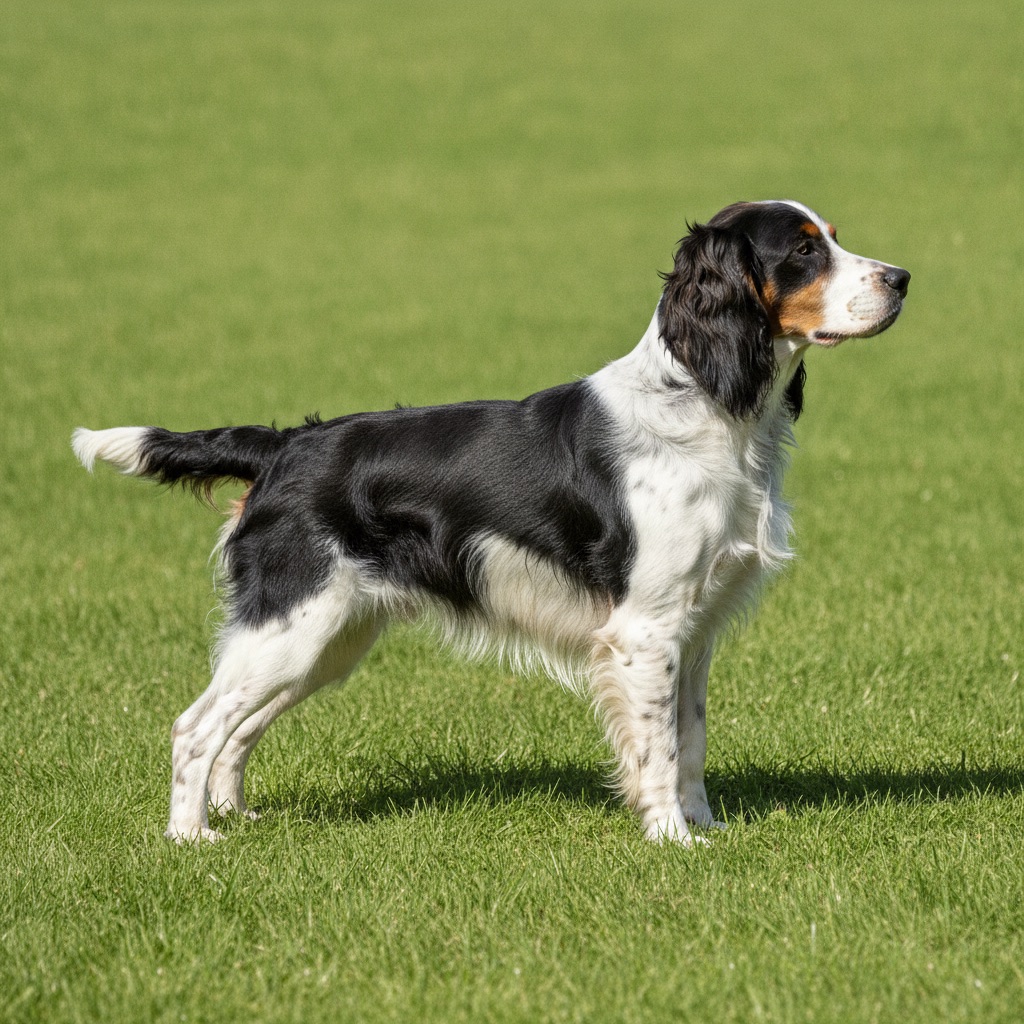
The AKC describes the English Springer Spaniel as friendly, playful and obedient.1 The breed is a close-working partner by design — Springers check in constantly and are among the more biddable gundogs.
They are affectionate and sociable, generally good with children and other dogs, and strongly disinclined to be left alone; separation distress is common. Field-bred lines are markedly higher-drive than show lines, and buyers should be clear about which they are getting.
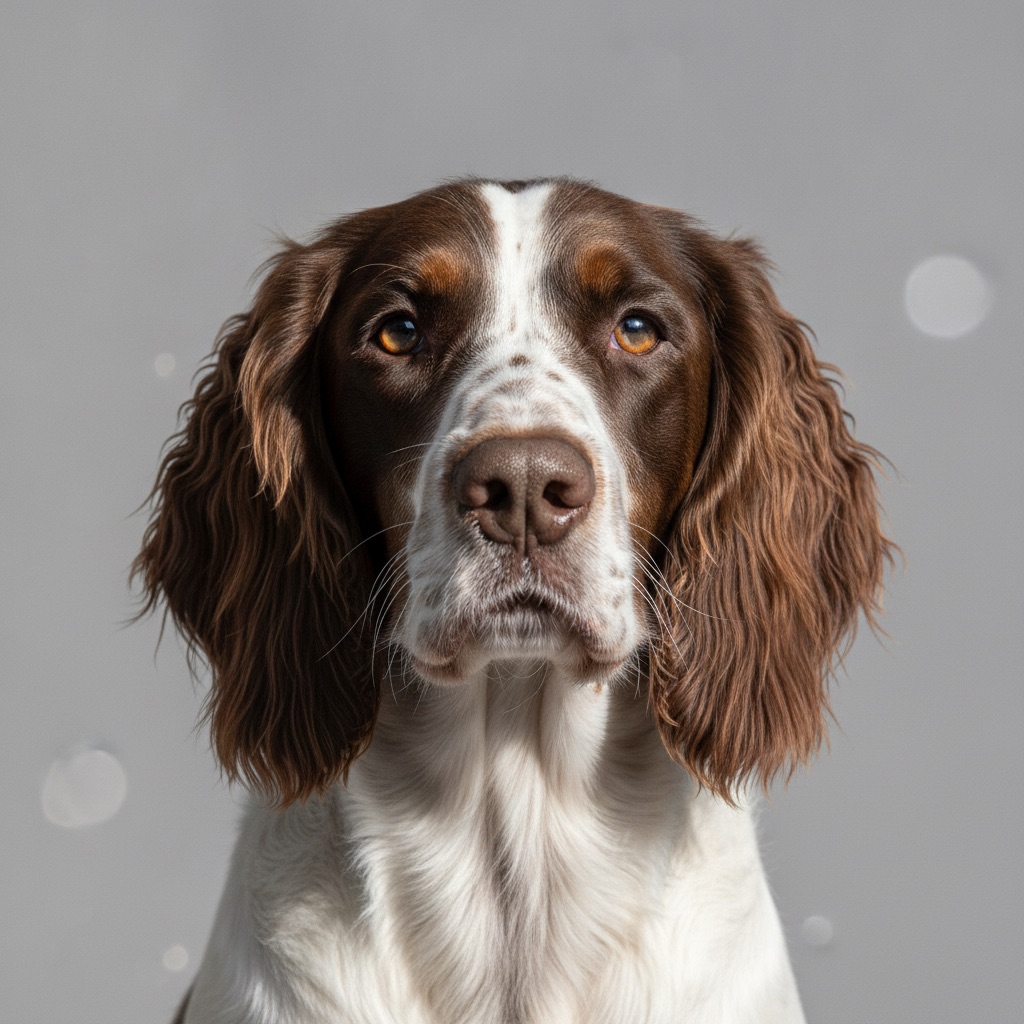
Springers are the most widely used sniffer dogs in British police and military service, valued for their size, stamina and willingness to work in confined spaces.2
Field-bred and show-bred Springers differ substantially in energy and coat. Match the type to your household honestly.
Heavy drop ears with feathering trap moisture; weekly inspection prevents chronic infection.
Progressive retinal atrophy, hip dysplasia and phosphofructokinase deficiency all have screening or DNA tests in the breed.3
Feathering on legs, ears and belly collects seed and mats. Brush two or three times weekly.
This guide is educational and is not veterinary advice. Breed standards, measurements and health information are drawn from the sources listed above; consult your veterinarian for guidance specific to your dog.
Prestige Breed makes a medium breed multivitamin designed for breeds like the Springer Spaniel — see the Springer Spaniel Multivitamin.