A short-legged working terrier bred to go to ground after fox, the Russell Terrier is small, rectangular in outline, and possessed of an intensity out of all proportion to its size.
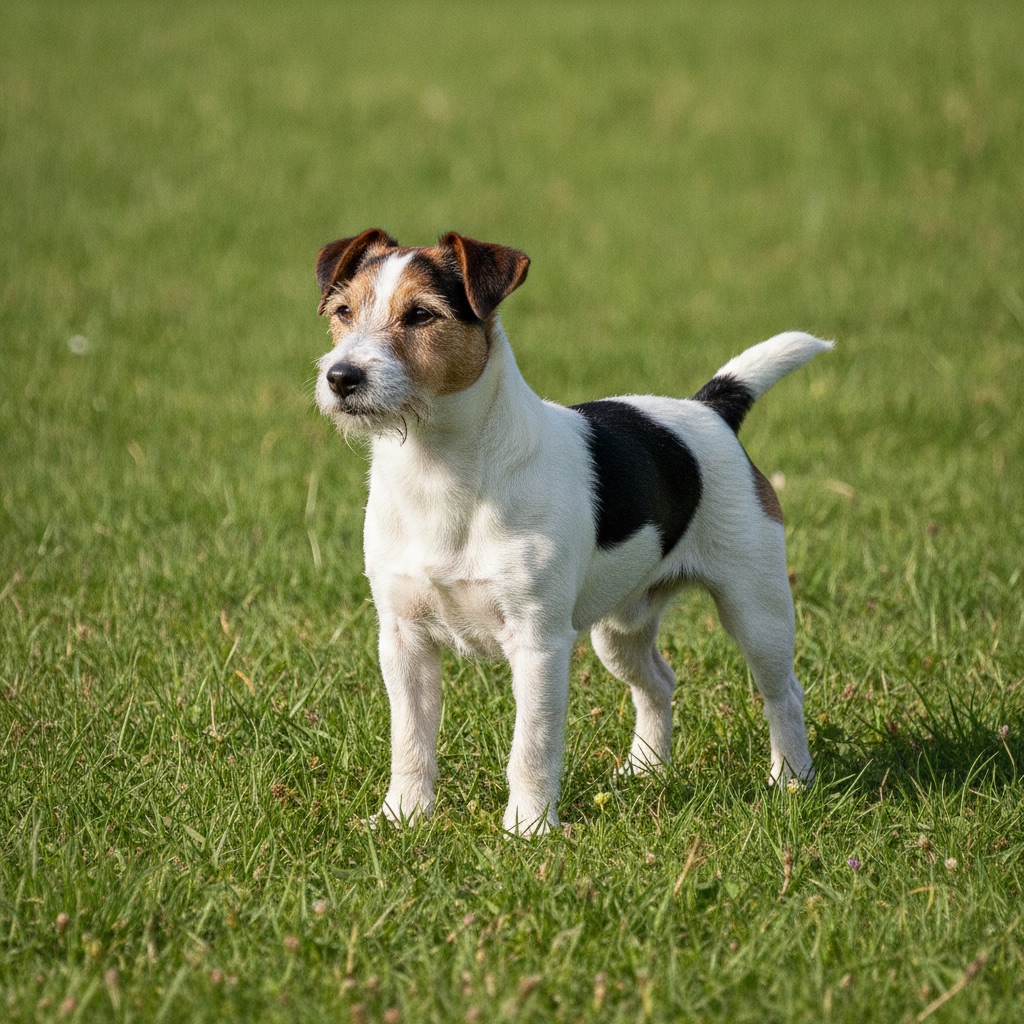

The type traces to the fox-working terriers of the Reverend John Russell, a Devon parson and hunting enthusiast who from the 1820s bred white-bodied terriers capable of running with hounds and then bolting fox from earth.2 His foundation bitch, Trump, purchased from a milkman in 1819, is the origin story of the whole Russell family of terriers.
The type was developed further in Australia into a shorter-legged, rectangular dog, and it is this Australian development that the AKC recognised as the Russell Terrier in 2012 — distinct from the taller, squarer Parson Russell Terrier and from the unregistered working Jack Russell.1 The Jack Russell Terrier Club of America continues to oppose conformation registration on working grounds.
Named for the Reverend John Russell (1795–1883), known as "the Sporting Parson," whose Devon terriers founded the type. The AKC uses "Russell Terrier" for the shorter-legged variety and "Parson Russell Terrier" for the taller one; "Jack Russell" remains in general use for both and for working dogs outside the registries.2
| Life expectancy | 12–14 years |
|---|---|
| Height — male | 10–12 in (25–30 cm) |
| Height — female | 10–12 in (25–30 cm) |
| Weight — male | 9–15 lb (4–7 kg) |
| Weight — female | 9–15 lb (4–7 kg) |
| Coat type & colors | Smooth, broken or rough; predominantly white with black, tan or tricolour markings |
| Shedding | Moderate |
| Exercise needs | High — a working terrier in a small body |
| Country of origin | United Kingdom / Australia |
| AKC group | Terrier Group (AKC) |
| Prestige Breed size class | Small Breed · Under 25 lbs |
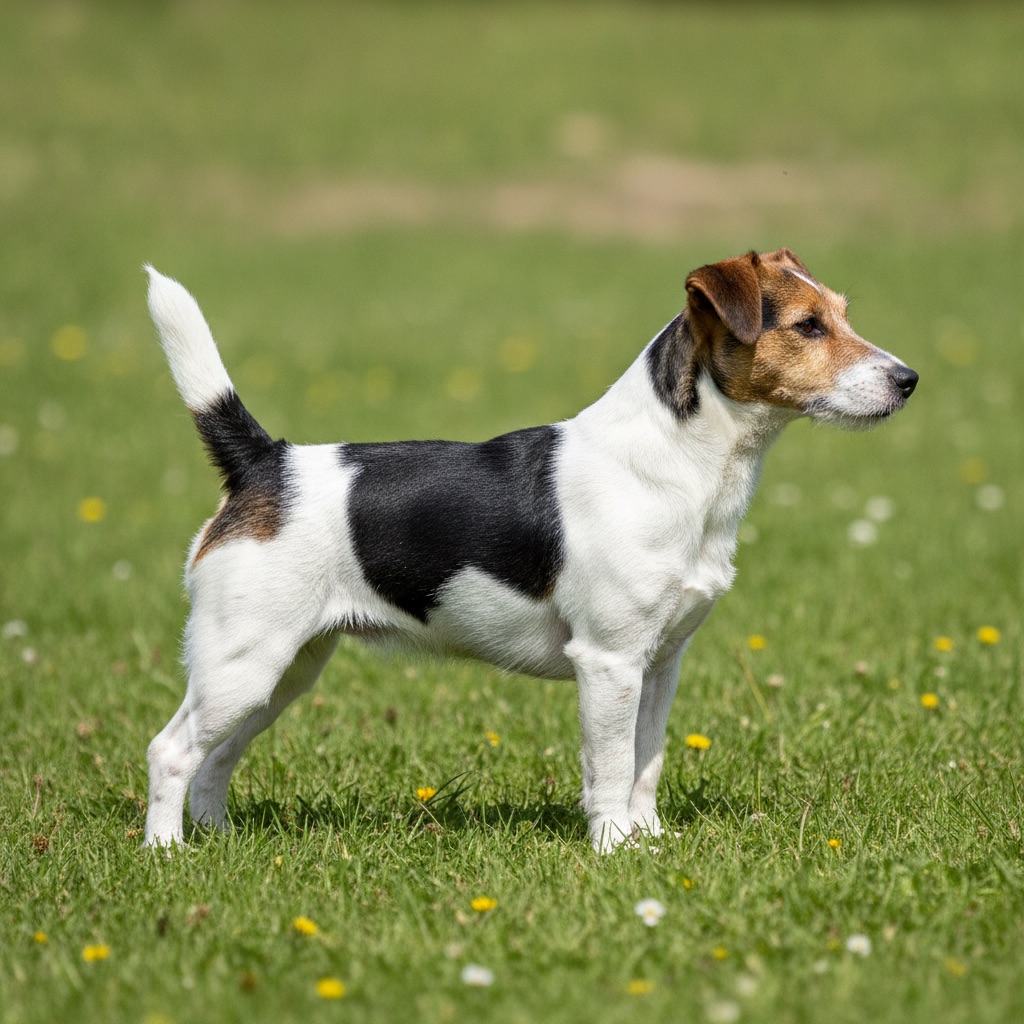
The AKC describes the Russell Terrier as alert, inquisitive and lively.1 The breed is a genuine earth-working terrier: bold, tenacious, tireless and entirely convinced of its own capability.
Prey drive is extremely high and largely unmodifiable — Russells are unsafe with small pets and will pursue vermin without regard to recall. They dig, they bark, and they need considerably more exercise and mental work than their size suggests. They are affectionate and comic with their families but do not suit quiet or sedentary households.
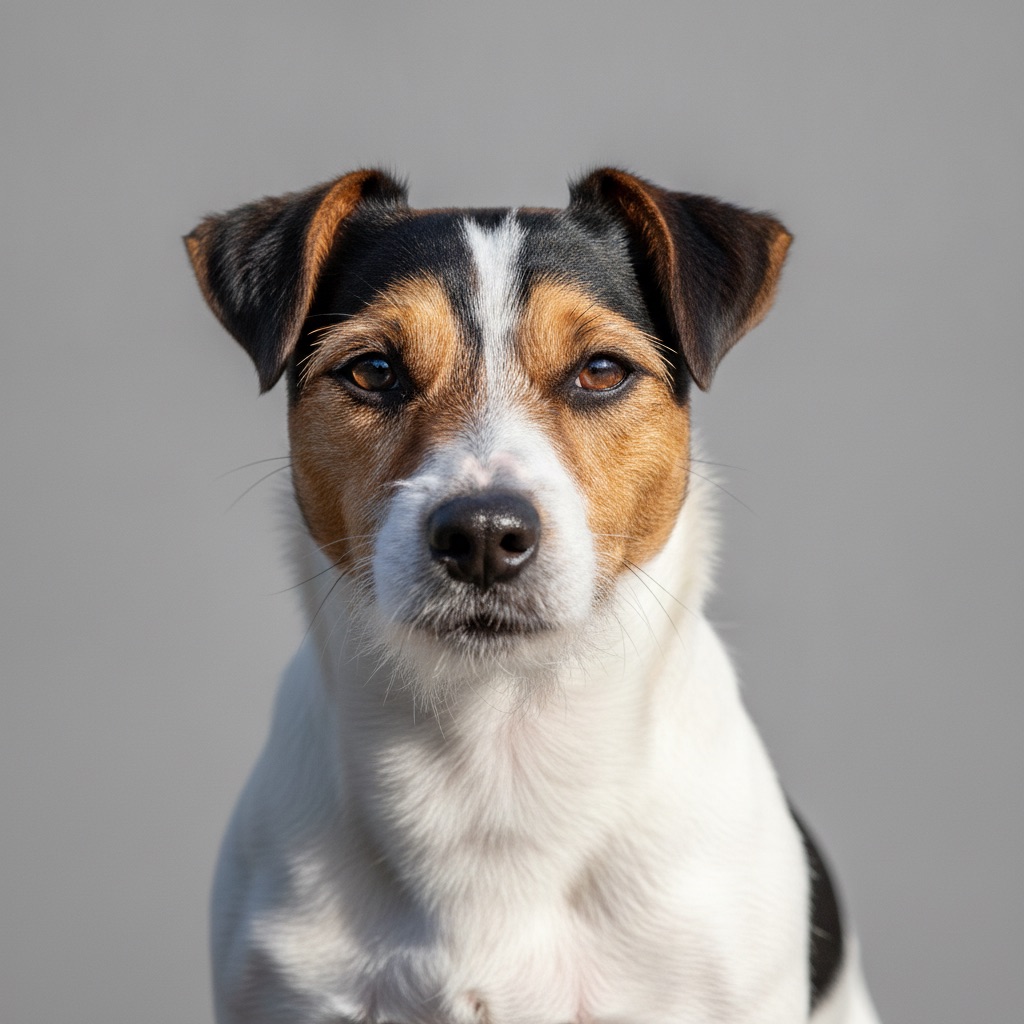
Every Russell-type terrier traces conceptually to Trump, the small white-and-tan bitch John Russell bought from a Devon milkman in 1819; a portrait of her hangs at the Kennel Club in London.2
A Russell needs an hour or more of real activity daily plus mental work. Boredom produces digging, barking and escape.
Prey drive toward rodents, rabbits and sometimes cats is instinctive and not trainable away. Manage the environment.
Determined diggers and climbers. Check fence lines and footings.
Primary lens luxation has a DNA test in the breed, and patellar luxation and deafness are also screened by responsible breeders.3
This guide is educational and is not veterinary advice. Breed standards, measurements and health information are drawn from the sources listed above; consult your veterinarian for guidance specific to your dog.
Prestige Breed makes a small breed multivitamin designed for breeds like the Russell Terrier — see the Russell Terrier Multivitamin.