A Chinese imperial lapdog with a wrinkled face and curled tail, the Pug has been bred purely for companionship for well over two thousand years and shows it in every aspect of its temperament.
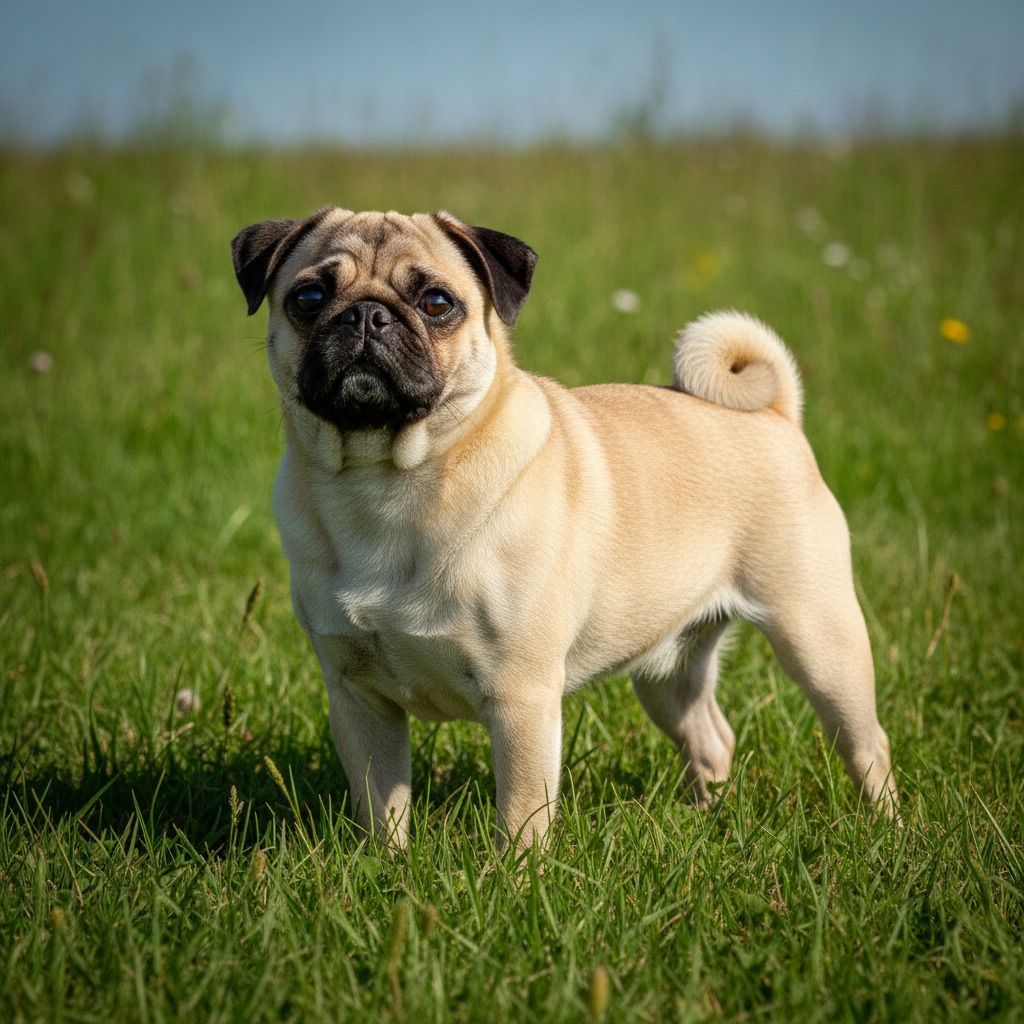

Short-muzzled companion dogs were kept by Chinese emperors from the Han dynasty, housed in luxury and sometimes guarded by soldiers.2 Dutch traders brought the type to Europe in the sixteenth century, where it became the official dog of the House of Orange after a Pug reportedly alerted William the Silent to an assassination attempt in 1572.
Pugs appear throughout European portraiture — Hogarth painted his own, Trump — and were kept by Marie Antoinette and Josephine Bonaparte.2 British soldiers brought further Chinese Pugs to Europe after the sacking of the Imperial Palace in 1860, which reintroduced the shorter muzzle. The AKC recognised the breed in 1885.1
The etymology is uncertain. The most commonly cited explanation is the Latin pugnus, "fist," describing the shape of the head. "Pug" was also an affectionate term for a marmoset monkey in eighteenth-century England, and the transfer to the dog may have followed a perceived resemblance. The Chinese name Lo-sze and the traditional motto multum in parvo — "much in little" — long predate the English name.2
| Life expectancy | 13–15 years |
|---|---|
| Height — male | 10–13 in (25–33 cm) |
| Height — female | 10–13 in (25–33 cm) |
| Weight — male | 14–18 lb (6–8 kg) |
| Weight — female | 14–18 lb (6–8 kg) |
| Coat type & colors | Short, smooth, glossy; fawn with a black mask, or solid black |
| Shedding | Heavy for the size, year-round |
| Exercise needs | Low — short walks in cool conditions |
| Country of origin | China |
| AKC group | Toy Group (AKC) |
| Prestige Breed size class | Small Breed · Under 25 lbs |
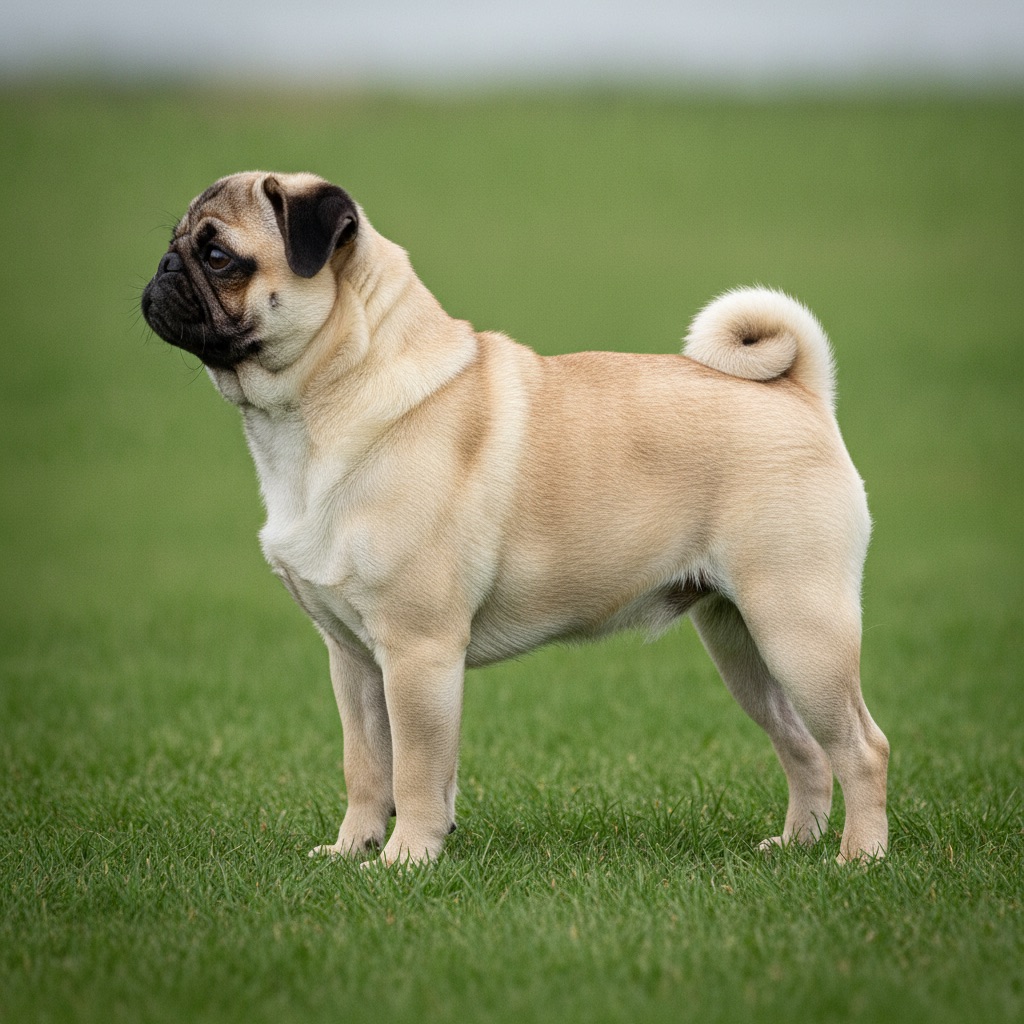
The AKC describes the Pug as charming, mischievous and loving.1 The breed is a companion animal without qualification — it has no working history and wants nothing more than to be with people.
Pugs are even-tempered, comic, generally good with children and other animals, and rarely aggressive. They are also stubborn in training, highly food-motivated, and prone to obesity. The breed does not tolerate solitude well and is unusually attuned to household activity.
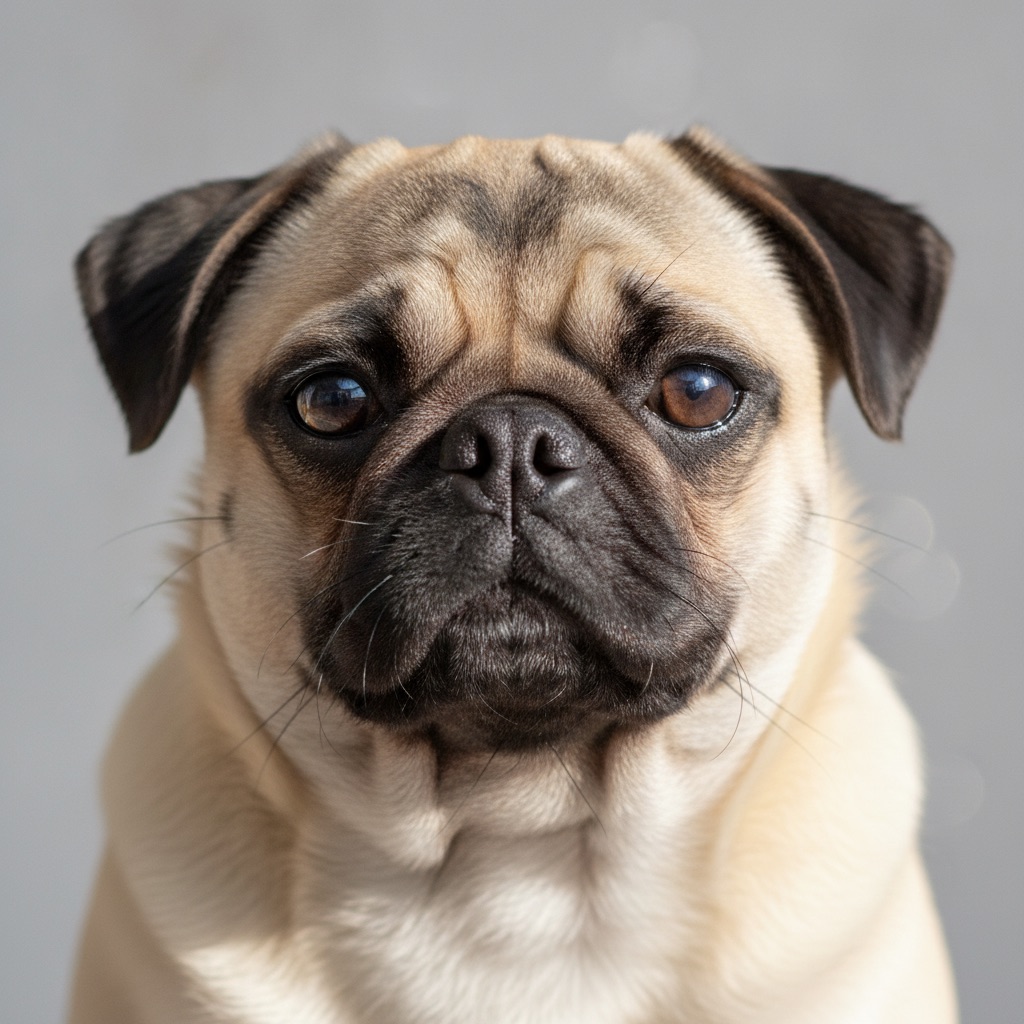
A group of Pugs is called a "grumble" — one of the few breed-specific collective nouns in general use.2
Brachycephalic obstructive airway syndrome is widespread in the breed. Persistent noisy breathing, snorting and exercise intolerance should be assessed by a veterinarian, not accepted as normal.4
Pugs cannot cool themselves effectively and die in heat that other breeds tolerate. Avoid warm weather exertion entirely.
Wrinkles trap moisture and debris. Wipe and dry them several times a week to prevent fold dermatitis.
Prominent eyes are prone to ulceration and proptosis, and obesity worsens every other breed problem. Both are largely preventable.3
This guide is educational and is not veterinary advice. Breed standards, measurements and health information are drawn from the sources listed above; consult your veterinarian for guidance specific to your dog.
Prestige Breed makes a small breed multivitamin designed for breeds like the Pug — see the Pug Multivitamin.