A tall, elegant bird dog in a distinctive mahogany coat, the Irish Setter was bred to range wide and fast across Irish moorland, and remains one of the most exuberant of the gundogs.
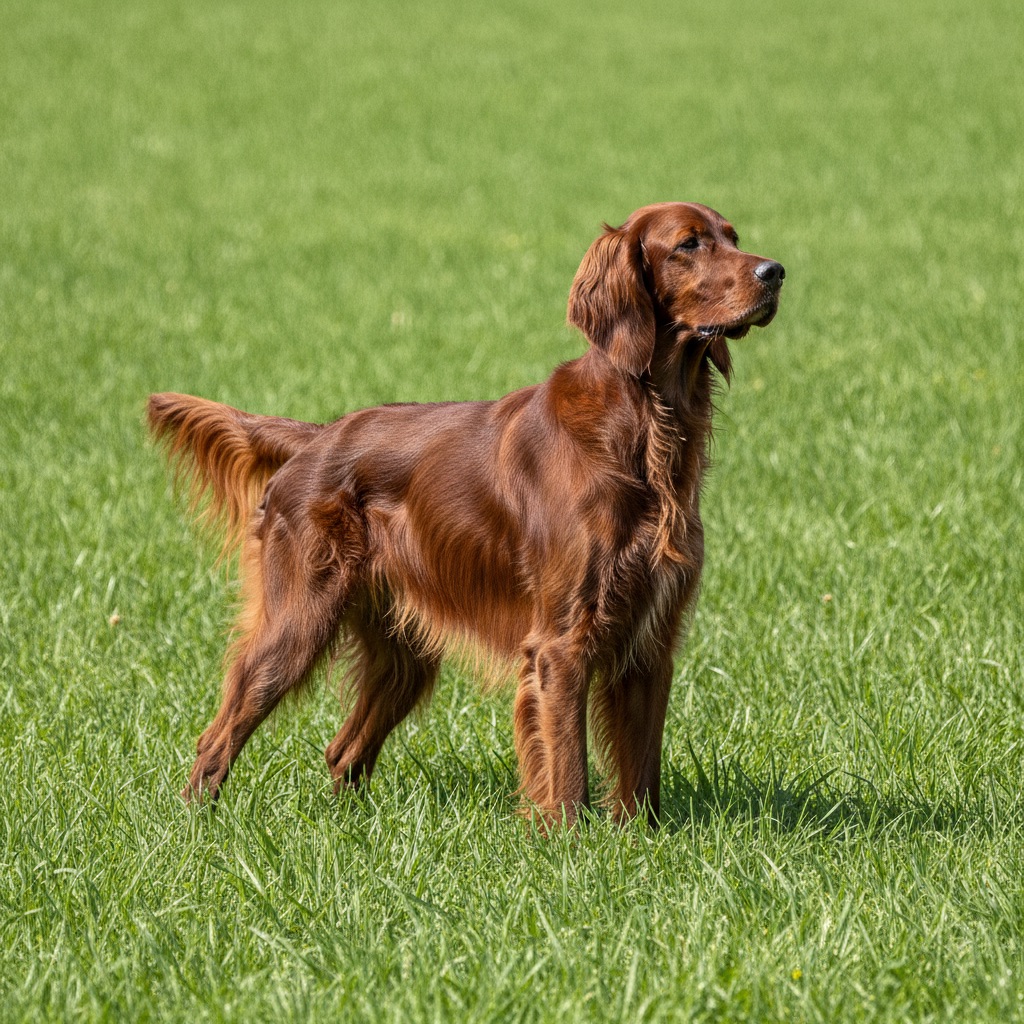

Setters developed in Ireland from spaniel, pointer and setter crosses, initially as red-and-white dogs whose colour made them visible to hunters at a distance. Through the eighteenth and nineteenth centuries Irish breeders increasingly favoured the solid red dog, and the two diverged into separate breeds — the Irish Setter and the Irish Red and White Setter.2
The Irish Red Setter Club was founded in Dublin in 1882 and published a standard and a field trial system.2 The breed was popular in America from the late nineteenth century; the AKC recognised it in 1878.1 A twentieth-century split between show and field lines produced the heavier-coated show dog and the lighter, faster field Setter.
"Setter" describes the working method: the dog located game birds and then "set" — crouched low — so a net could be drawn over both dog and covey, a technique that predates shooting flying. "Irish" distinguishes the red dog from the English and Gordon Setters.2
| Life expectancy | 12–15 years |
|---|---|
| Height — male | 27 in (69 cm) |
| Height — female | 25 in (64 cm) |
| Weight — male | 70 lb (32 kg) |
| Weight — female | 60 lb (27 kg) |
| Coat type & colors | Moderately long, silky, flat with substantial feathering; rich chestnut to mahogany red |
| Shedding | Moderate |
| Exercise needs | High — long daily runs |
| Country of origin | Ireland |
| AKC group | Sporting Group (AKC) |
| Prestige Breed size class | Large Breed · Over 60 lbs |
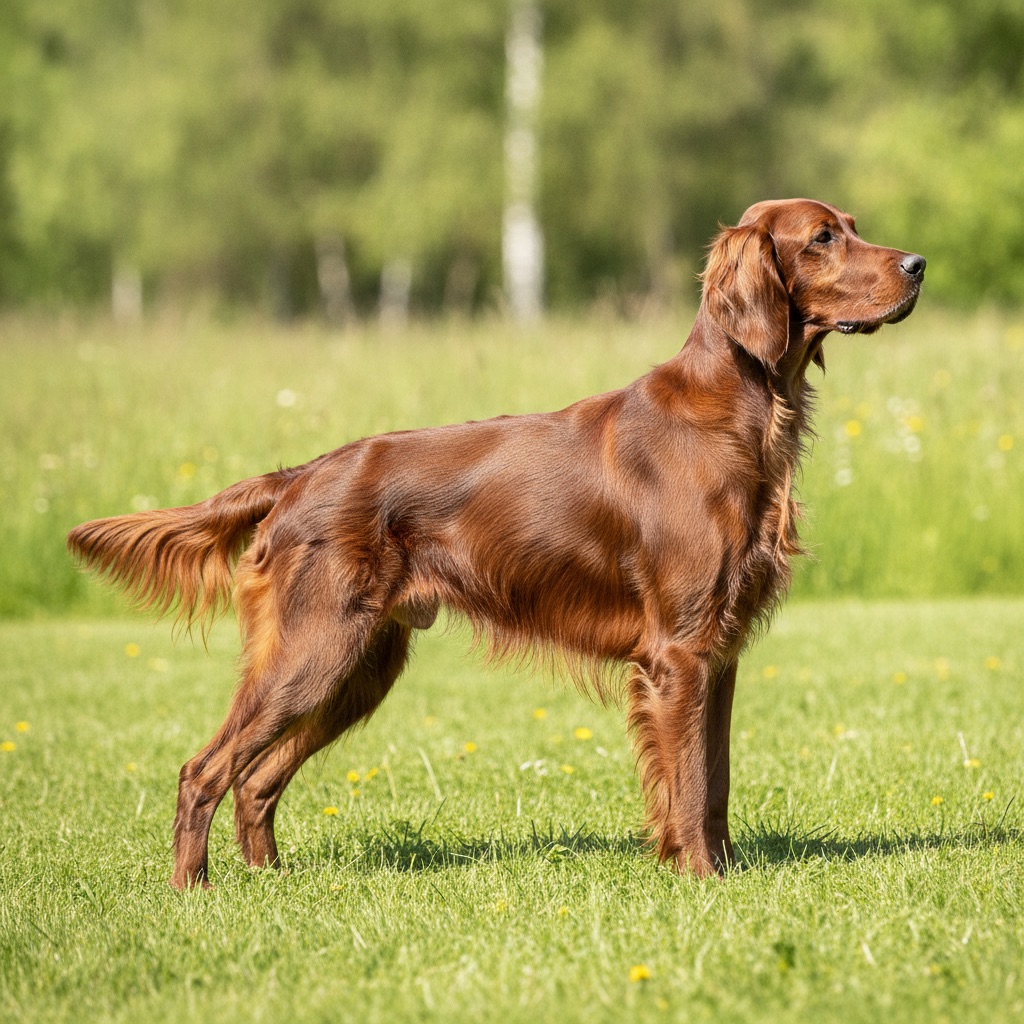
The AKC describes the Irish Setter as active, outgoing and sweet-natured.1 The breed is exceptionally sociable, indiscriminately friendly and demonstrative, with no guarding instinct to speak of.
Irish Setters mature slowly, often remaining adolescent in behaviour until three years old, and they are easily distracted in training. They are not stubborn so much as enthusiastic; short, upbeat sessions work far better than repetition. They are poorly suited to being left alone and are prone to nuisance behaviour when bored.

The solid red Irish Setter was bred deliberately away from its red-and-white ancestor in the nineteenth century; the Irish Red and White Setter then became so rare it required a dedicated revival effort in the 1920s to survive.2
A Setter that has not run will not concentrate. Physical outlet first, then short training sessions.
The feathering on ears, chest, legs and tail mats readily. Brush two or three times weekly and trim the ear fringes.
Progressive retinal atrophy has a known genetic test in the breed, and hip dysplasia and canine leukocyte adhesion deficiency are also screened by responsible breeders.3
Deep-chested and large, the Irish Setter is at elevated GDV risk; avoid strenuous activity around meals.3
This guide is educational and is not veterinary advice. Breed standards, measurements and health information are drawn from the sources listed above; consult your veterinarian for guidance specific to your dog.
Prestige Breed makes a large breed multivitamin designed for breeds like the Irish Setter — see the Irish Setter Multivitamin.