A Chukchi sled dog of northeastern Siberia, the Siberian Husky was bred for endurance freighting over long distances on minimal food — a specification that still governs everything about the breed.
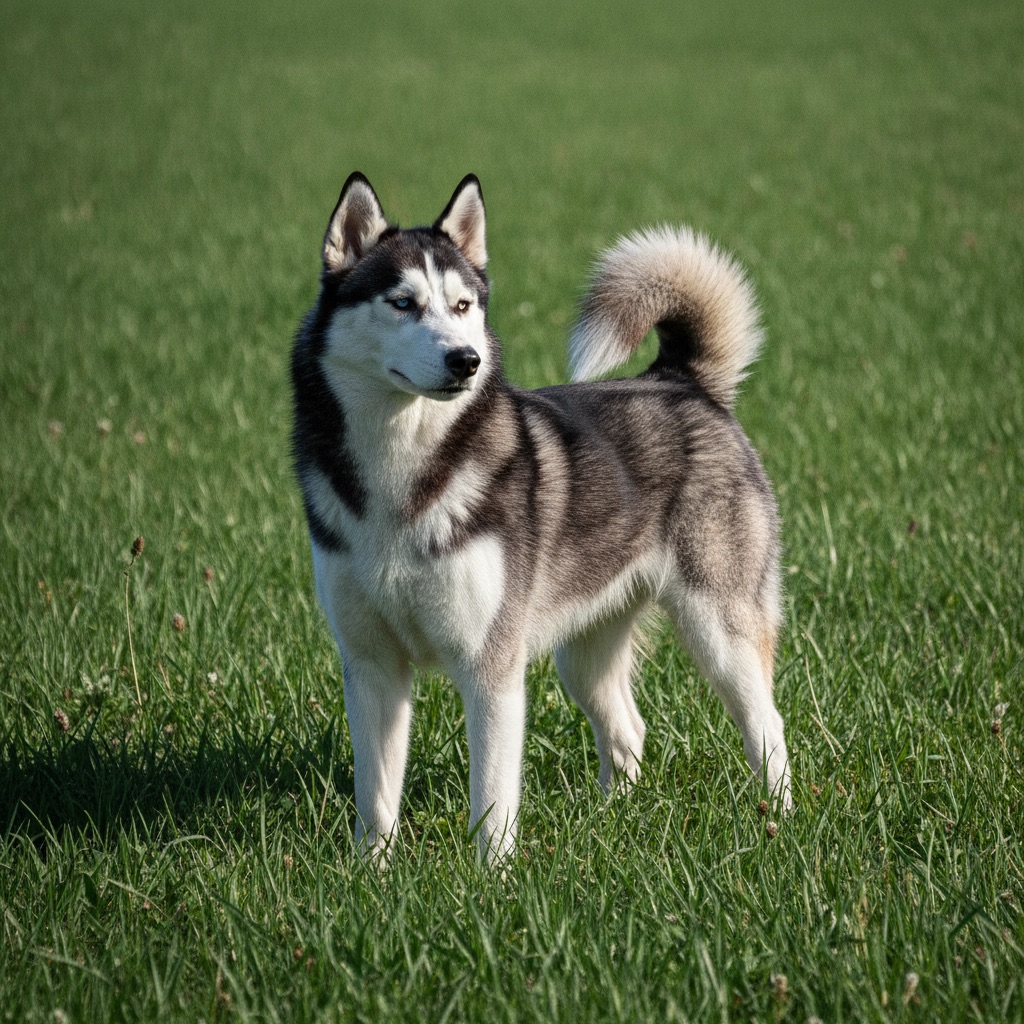

The Chukchi people of the Chukotka Peninsula developed the breed over centuries as a light, efficient sled dog capable of hauling modest loads across great distances in extreme cold. The dogs lived in close contact with families and were selected for tractability as well as stamina.2
A Russian fur trader, William Goosak, imported a team to Nome, Alaska, in 1908 for the All Alaska Sweepstakes; the small "Siberian rats," as they were initially dismissed, proved dominant in distance racing. The breed's public reputation was made in 1925 when relay teams carried diphtheria antitoxin 674 miles to Nome, a run commemorated by the statue of the lead dog Balto in Central Park.1 The AKC recognised the breed in 1930.1
"Husky" is a general English term for northern sled dogs, most plausibly a corruption of "Eskie" or "Huskemaw," early English renderings of Eskimo. "Siberian" distinguishes this specific Chukchi-derived breed from the Alaskan Malamute, the Alaskan husky and other northern types that share the descriptor.2
| Life expectancy | 12–14 years |
|---|---|
| Height — male | 21–23.5 in (53–60 cm) |
| Height — female | 20–22 in (51–56 cm) |
| Weight — male | 45–60 lb (20–27 kg) |
| Weight — female | 35–50 lb (16–23 kg) |
| Coat type & colors | Dense double coat, medium length; all colours from black to pure white, with striking facial masks |
| Shedding | Very heavy — two dramatic annual coat blows |
| Exercise needs | Very high — sustained daily running or pulling |
| Country of origin | Siberia (Russia) |
| AKC group | Working Group (AKC) |
| Prestige Breed size class | Large Breed · Over 60 lbs |
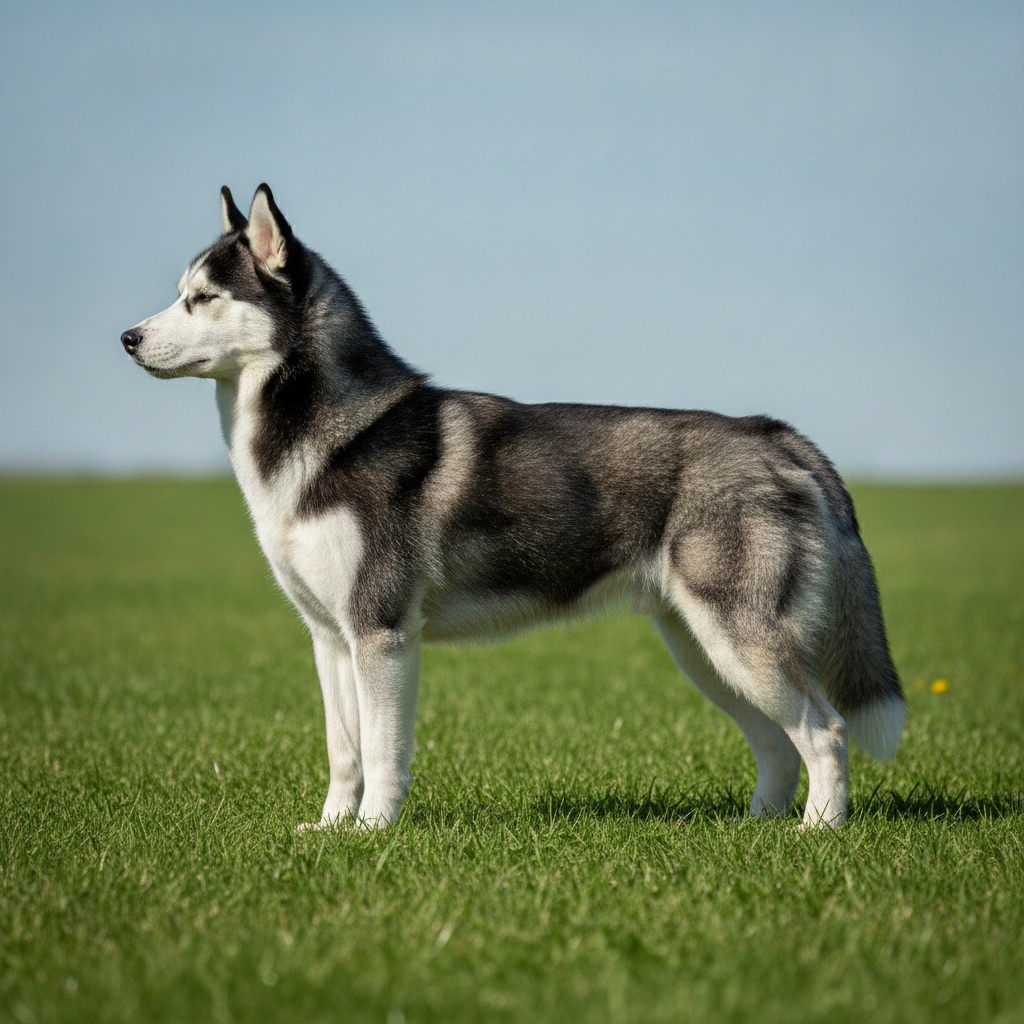
The AKC describes the Siberian Husky as loyal, mischievous and outgoing.1 Uncommonly for a working breed, the Husky is not a guard dog: the Chukchi had no use for territorial aggression, and the breed greets strangers with indiscriminate friendliness.
The breed is independent rather than biddable. Huskies were selected to run, and recall is notoriously unreliable — most owners never work them off-leash in unfenced space. They are also accomplished escape artists, capable of climbing, digging under and opening gates, and they howl rather than bark.
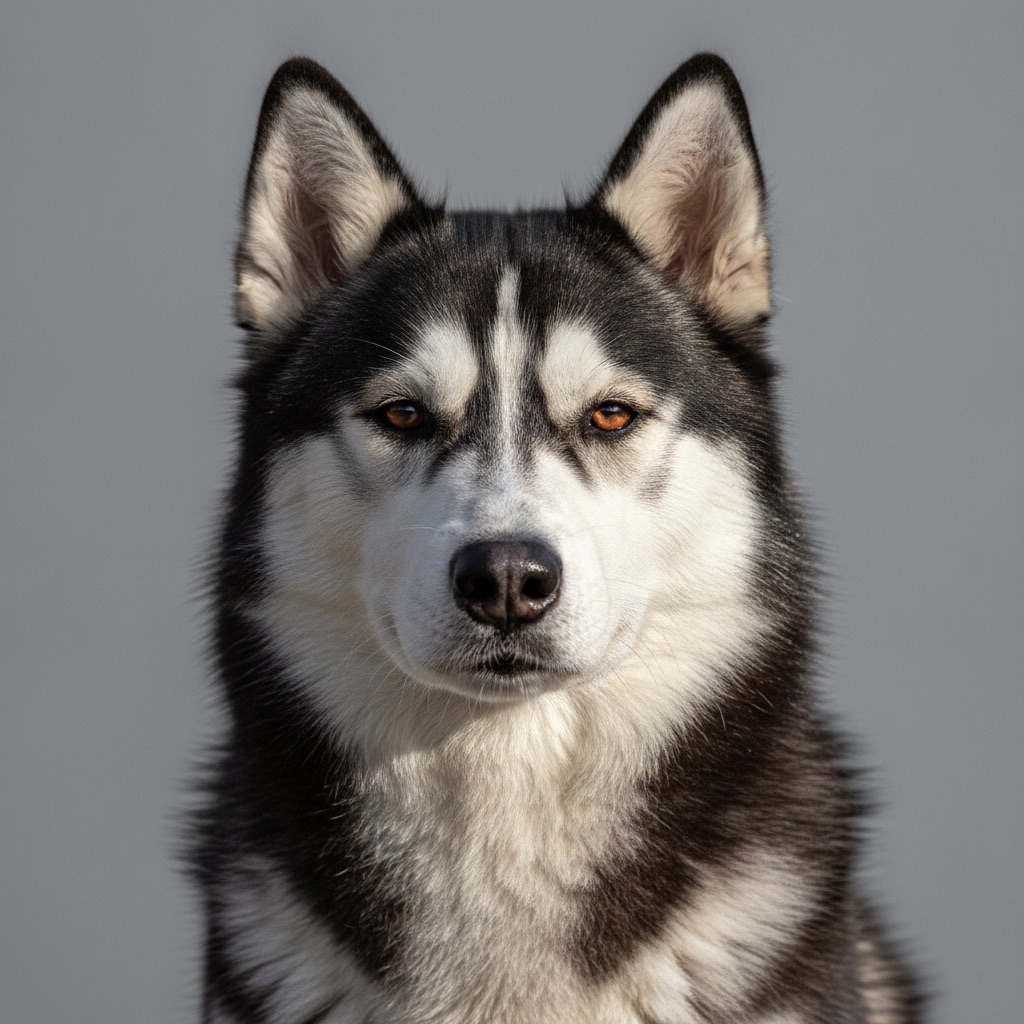
The 1925 serum run to Nome covered 674 miles in five and a half days across a blizzard; the final leg was run by Gunnar Kaasen's team led by Balto, but the longest and most dangerous stretch was driven by Leonhard Seppala behind Togo.2
Six-foot fencing with dig protection is the standard recommendation. Huskies escape enclosures that hold other breeds without difficulty.
The double coat insulates against heat as well as cold. Shaving destroys that function and risks sunburn. Rake the undercoat out instead.
Walking is insufficient. Canicross, bikejoring, scootering or sledding meet the breed's needs; a bored Husky redecorates.
Juvenile cataracts, corneal dystrophy and progressive retinal atrophy occur in the breed; annual ophthalmic examination is advised by the parent club.3
This guide is educational and is not veterinary advice. Breed standards, measurements and health information are drawn from the sources listed above; consult your veterinarian for guidance specific to your dog.
Prestige Breed makes a large breed multivitamin designed for breeds like the Husky — see the Husky Multivitamin.