A German boarhound refined into a giant companion, the Great Dane combines extraordinary height with a temperament the breed standard calls "spirited, courageous, and dependable."
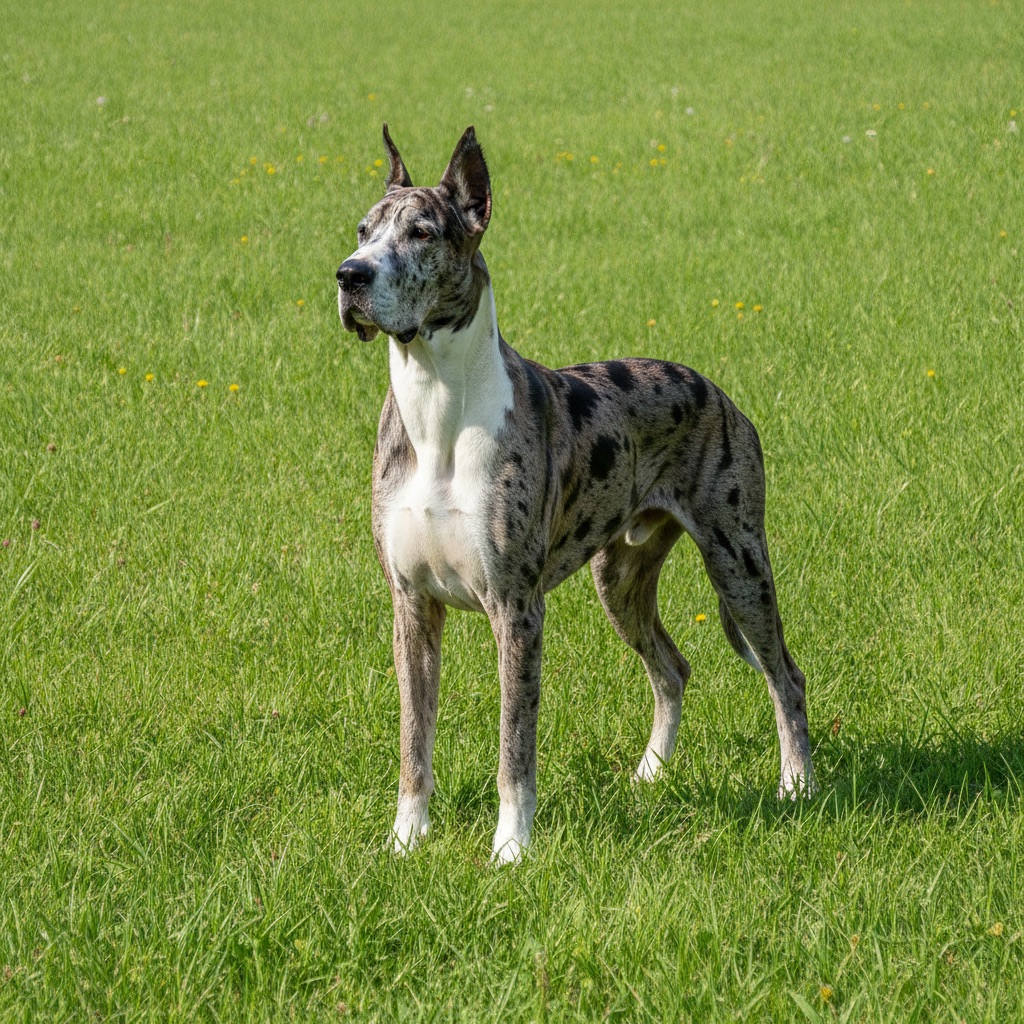

Large boar-hunting dogs of Mastiff and sighthound type were kept by German nobility from at least the sixteenth century, used in packs to hold wild boar. As firearms made the hunting role obsolete, the type was kept on as a Kammerhund — a chamber dog housed indoors with the household.2
German breeders consolidated the regional types in the 1870s, declaring the dog a national breed and settling on the name Deutsche Dogge. The breed reached the United States late in the nineteenth century and the German Boarhound Club of America, later the Great Dane Club of America, was formed in 1889.3
The English name is a historical misnomer: the breed is German, not Danish. It appears to descend from the eighteenth-century French naturalist Buffon's "grand Danois," a label he applied to a large dog he encountered in Denmark, which passed into English usage and stuck despite Germany's formal adoption of Deutsche Dogge in 1876.2
| Life expectancy | 7–10 years |
|---|---|
| Height — male | 30–34 in (76–86 cm) |
| Height — female | 28–32 in (71–81 cm) |
| Weight — male | 140–175 lb (64–79 kg) |
| Weight — female | 110–140 lb (50–64 kg) |
| Coat type & colors | Short, thick, glossy; fawn, brindle, blue, black, harlequin, mantle, merle |
| Shedding | Moderate |
| Exercise needs | Moderate — controlled, low-impact while growing |
| Country of origin | Germany |
| AKC group | Working Group (AKC) |
| Prestige Breed size class | Large Breed · Over 60 lbs |
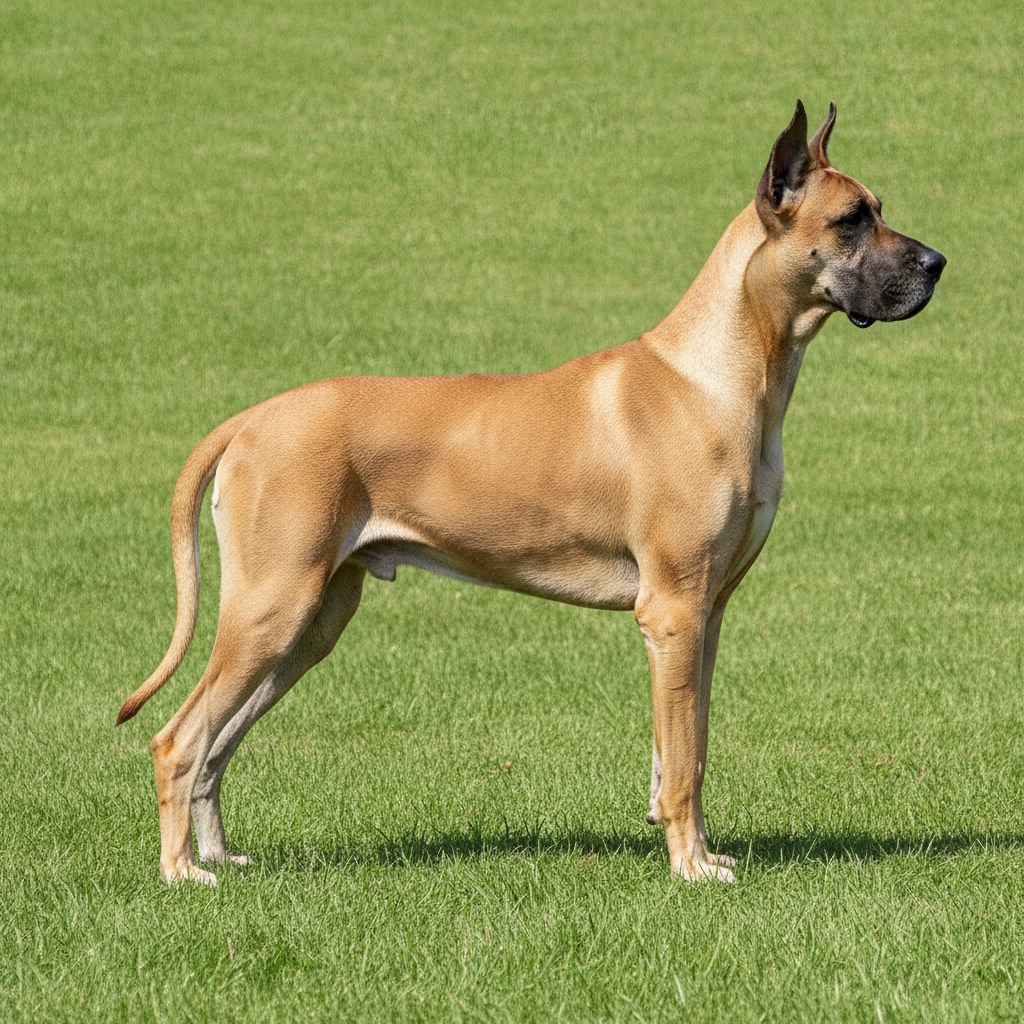
The AKC describes the Great Dane as friendly, patient and dependable.1 The breed is often called a "gentle giant," and well-bred Danes are notably steady and undemonstrative — they are not typically reactive or excitable dogs.
Danes are, however, strongly attached to their people and genuinely believe themselves to be lap dogs. Their size makes early leash training and impulse control non-optional; an untrained adult Dane can outweigh its handler. They are quiet indoors and adapt to smaller homes better than their dimensions suggest, provided they get daily exercise.
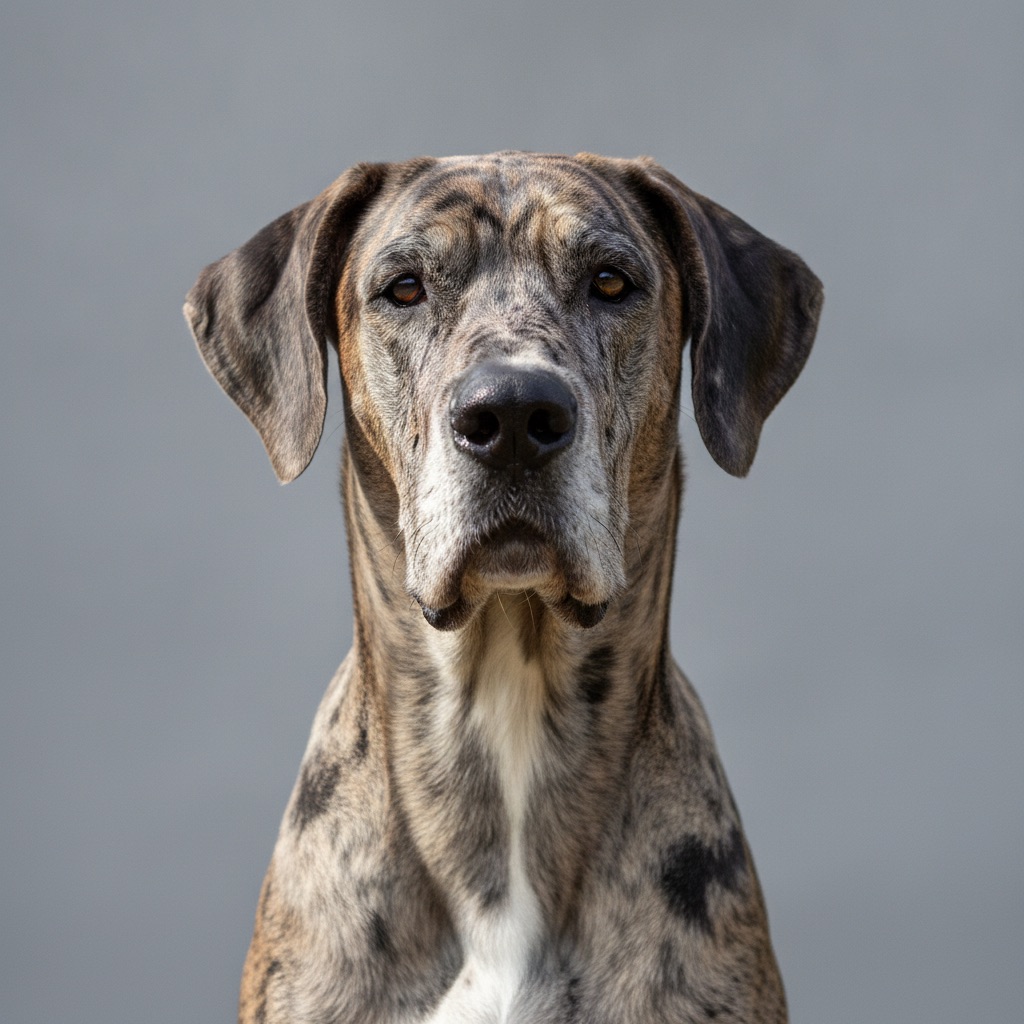
The tallest dog ever recorded, Zeus, was a Great Dane measuring 44 inches at the shoulder — roughly 3 feet 8 inches standing on four legs.2
Gastric dilatation-volvulus is the leading cause of death in the breed. Know the symptoms — unproductive retching, distended abdomen, restlessness — and discuss prophylactic gastropexy with your veterinarian.3
Giant breeds grow for eighteen to twenty-four months. Forced running, stairs and jumping during that window damage developing joints.
A large-breed puppy diet with controlled calcium and calorie density reduces developmental orthopaedic disease. Ask your vet for a specific target growth curve.
Seven to ten years is the realistic range. Preventive care, cardiac screening and weight control are the levers that matter most.
This guide is educational and is not veterinary advice. Breed standards, measurements and health information are drawn from the sources listed above; consult your veterinarian for guidance specific to your dog.
Prestige Breed makes a large breed multivitamin designed for breeds like the Great Dane — see the Great Dane Multivitamin.