A deliberate cross between the Golden Retriever and the Poodle, the Goldendoodle is a popular companion type rather than a standardised breed, and its traits vary considerably from dog to dog.
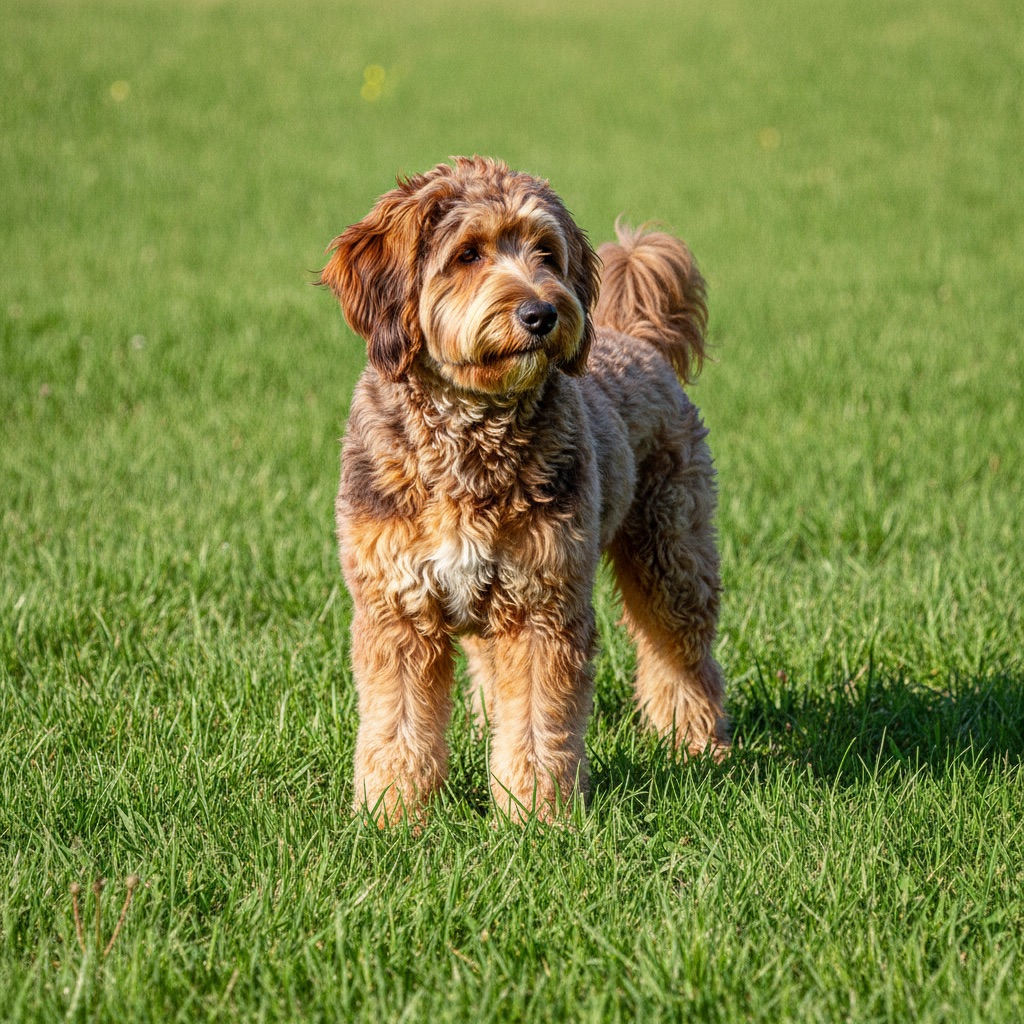

Poodle crosses were popularised in the late 1980s when Wally Conron, breeding manager for the Royal Guide Dogs Association of Australia, crossed a Standard Poodle with a Labrador to produce a guide dog for a client whose husband was allergic — creating the Labradoodle and, with it, a market.2 The Golden Retriever cross followed in North America in the 1990s.
The Goldendoodle is not recognised by the AKC, the Kennel Club or the FCI, and has no breed standard; individual dogs are described by generation — F1 for a first cross, F1b for a backcross to Poodle, and so on. Conron himself later expressed regret at the commercial breeding boom his cross set off.2
A portmanteau of "Golden Retriever" and "Poodle," following the pattern set by "Labradoodle." The suffix -doodle has since been applied to dozens of Poodle crosses.2
| Life expectancy | 10–15 years |
|---|---|
| Height — male | 20–26 in (51–66 cm), standard |
| Height — female | 19–24 in (48–61 cm), standard |
| Weight — male | 50–90 lb (23–41 kg), standard |
| Weight — female | 45–75 lb (20–34 kg), standard |
| Coat type & colors | Highly variable — straight, wavy or curly; cream, apricot, red, chocolate, black |
| Shedding | Variable — low in curly coats, moderate in straight |
| Exercise needs | High — inherits working-dog energy from both parents |
| Country of origin | Australia / North America |
| AKC group | Not recognised by the AKC |
| Prestige Breed size class | Medium Breed · 25 – 60 lbs |
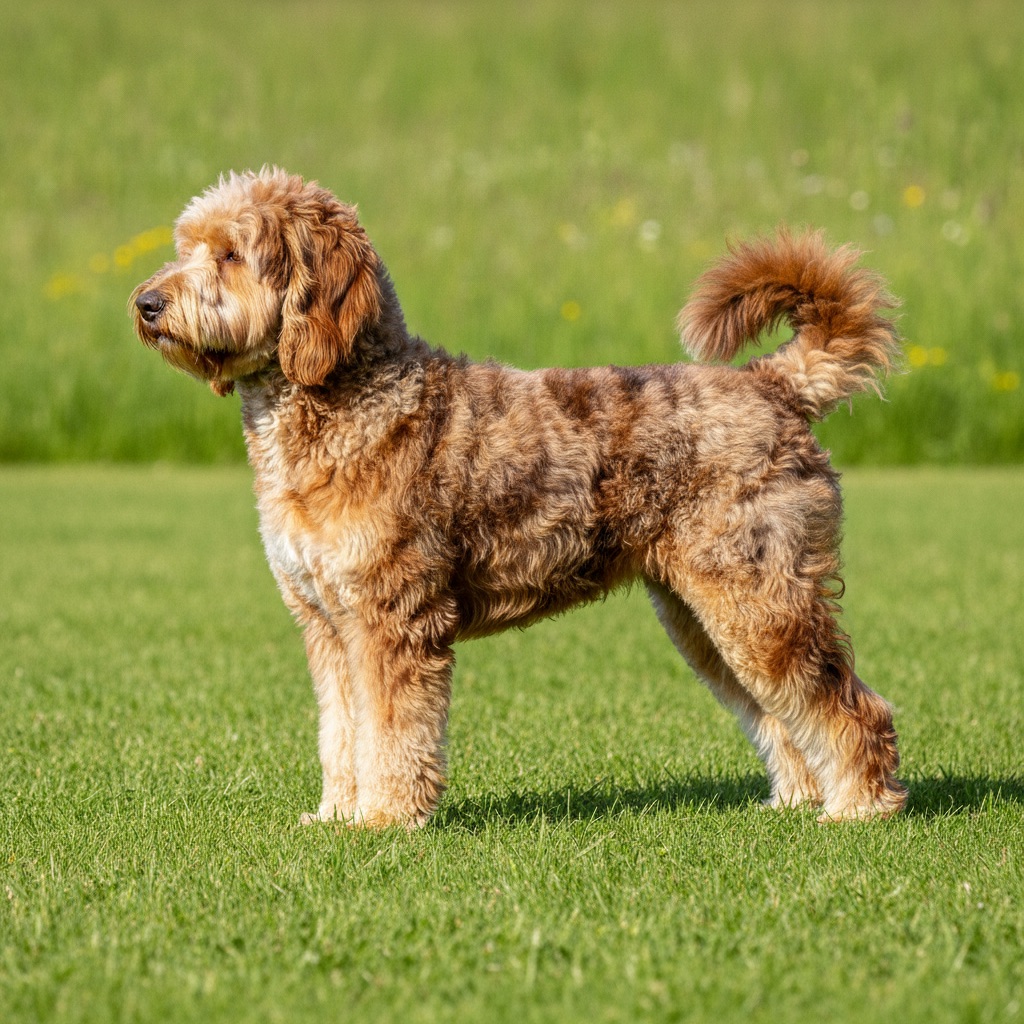
Because the Goldendoodle is a cross rather than a fixed breed, temperament varies with the individual and the generation. Most inherit the Golden Retriever's sociability and the Poodle's intelligence, producing a friendly, highly trainable and people-focused dog.3
Both parent breeds are active working animals, and the cross is frequently underestimated on exercise needs. Goldendoodles are typically poor at being left alone and are prone to separation distress. Coat type is the least predictable trait and has the largest practical consequences for the owner.
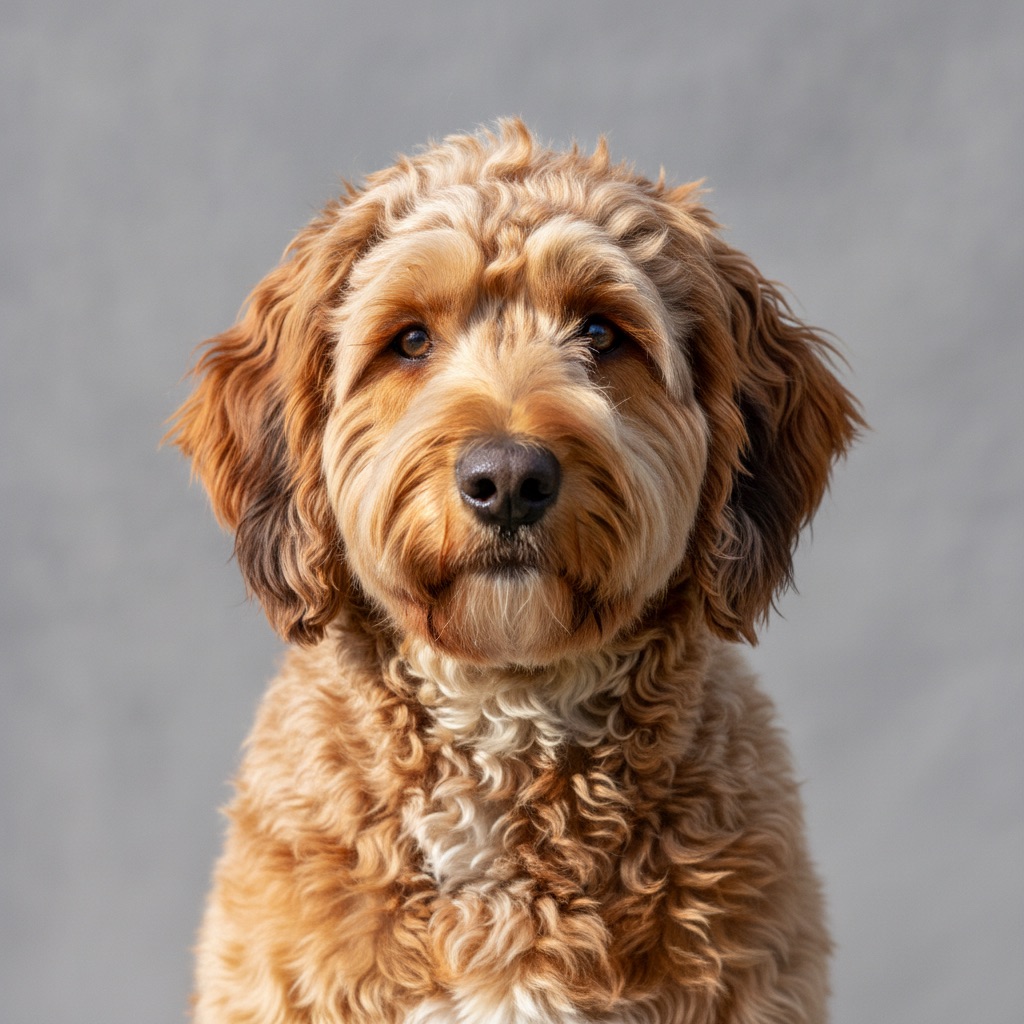
No Poodle cross is genuinely hypoallergenic. Allergic reactions are driven mainly by the Can f 1 protein in dander and saliva, which every dog produces; low-shedding coats reduce the spread of allergen, but do not eliminate it.4
A cross inherits the risks of both breeds. Request hip, elbow, eye and cardiac clearances plus PRA and von Willebrand DNA results for both parents.
A wavy or curly non-shedding coat mats close to the skin and requires brushing several times a week plus clipping every six to eight weeks.
If allergies are the reason for the choice, spend extended time with an adult dog of the same coat type before committing.4
Retriever plus Poodle is an athletic combination. Plan for an hour or more of activity daily.
This guide is educational and is not veterinary advice. Breed standards, measurements and health information are drawn from the sources listed above; consult your veterinarian for guidance specific to your dog.
Prestige Breed makes a medium breed multivitamin designed for breeds like the Goldendoodle — see the Goldendoodle Multivitamin.