A deliberately engineered guardian created in Germany in the 1890s, the Doberman is among the most recently developed of the major working breeds and among the most athletic.
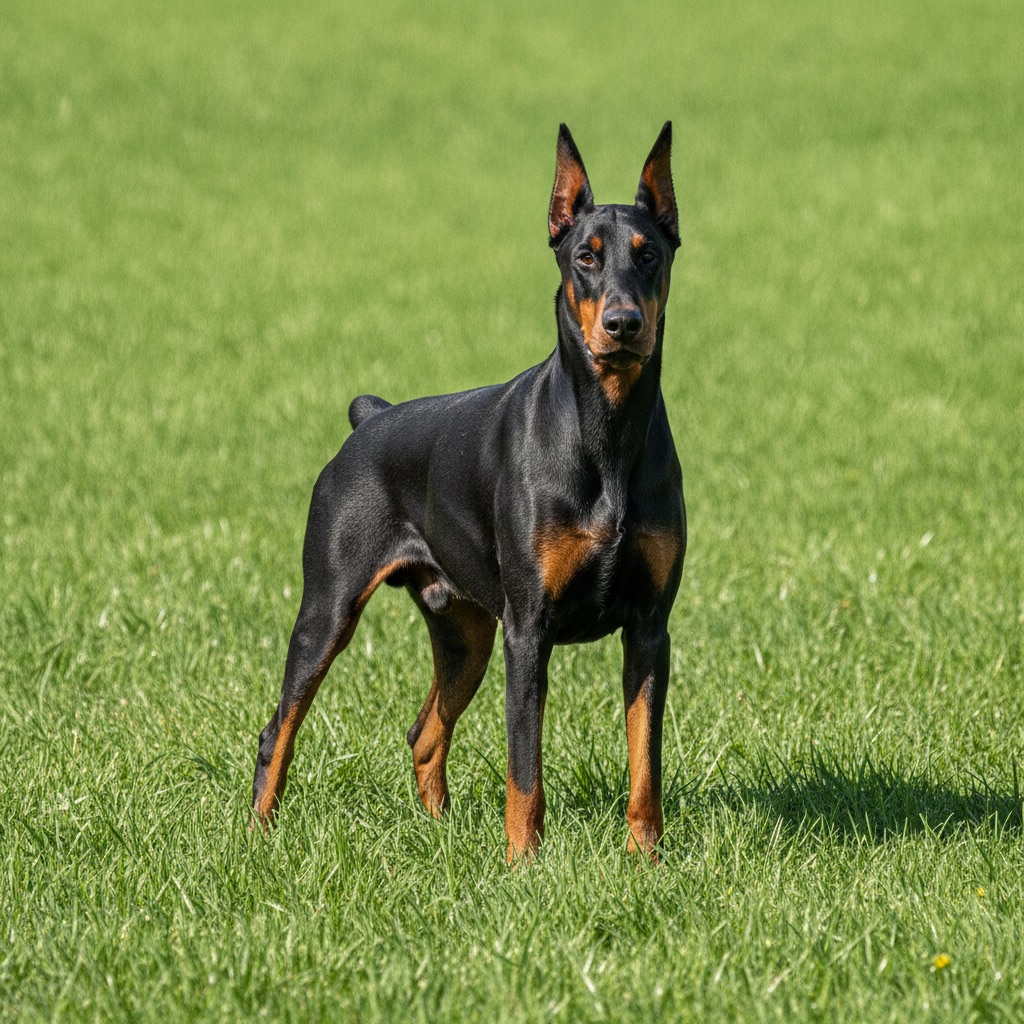

The breed is attributed to Karl Friedrich Louis Dobermann, a tax collector and night watchman in Apolda, Thuringia, who wanted a medium-large dog of unmistakable presence to accompany him on his rounds.2 Beginning around 1890 he drew on the local Thuringian stock available to him — the old German Pinscher, the Rottweiler, and probably Weimaraner, Greyhound and Black and Tan Terrier blood, though he kept no records.1
Otto Goeller refined and standardised the result after Dobermann's death, and the German breed club was formed in 1899. The Doberman was recognised by the AKC in 1908 and served widely as a police, military and search dog; the United States Marine Corps used Dobermans extensively in the Pacific during the Second World War.1 Post-war breeding has moderated the breed's early sharpness considerably.
The breed carries its creator's surname. "Pinscher," retained in the American name, is a German term historically applied to terrier-like biting or gripping dogs; Germany itself dropped the suffix in 1949, and the breed is known there and under FCI rules simply as the Dobermann.2
| Life expectancy | 10–12 years |
|---|---|
| Height — male | 26–28 in (66–71 cm) |
| Height — female | 24–26 in (61–66 cm) |
| Weight — male | 75–100 lb (34–45 kg) |
| Weight — female | 60–90 lb (27–41 kg) |
| Coat type & colors | Short, smooth, hard; black, red, blue or fawn with rust markings |
| Shedding | Moderate |
| Exercise needs | High — daily vigorous work |
| Country of origin | Germany |
| AKC group | Working Group (AKC) |
| Prestige Breed size class | Large Breed · Over 60 lbs |
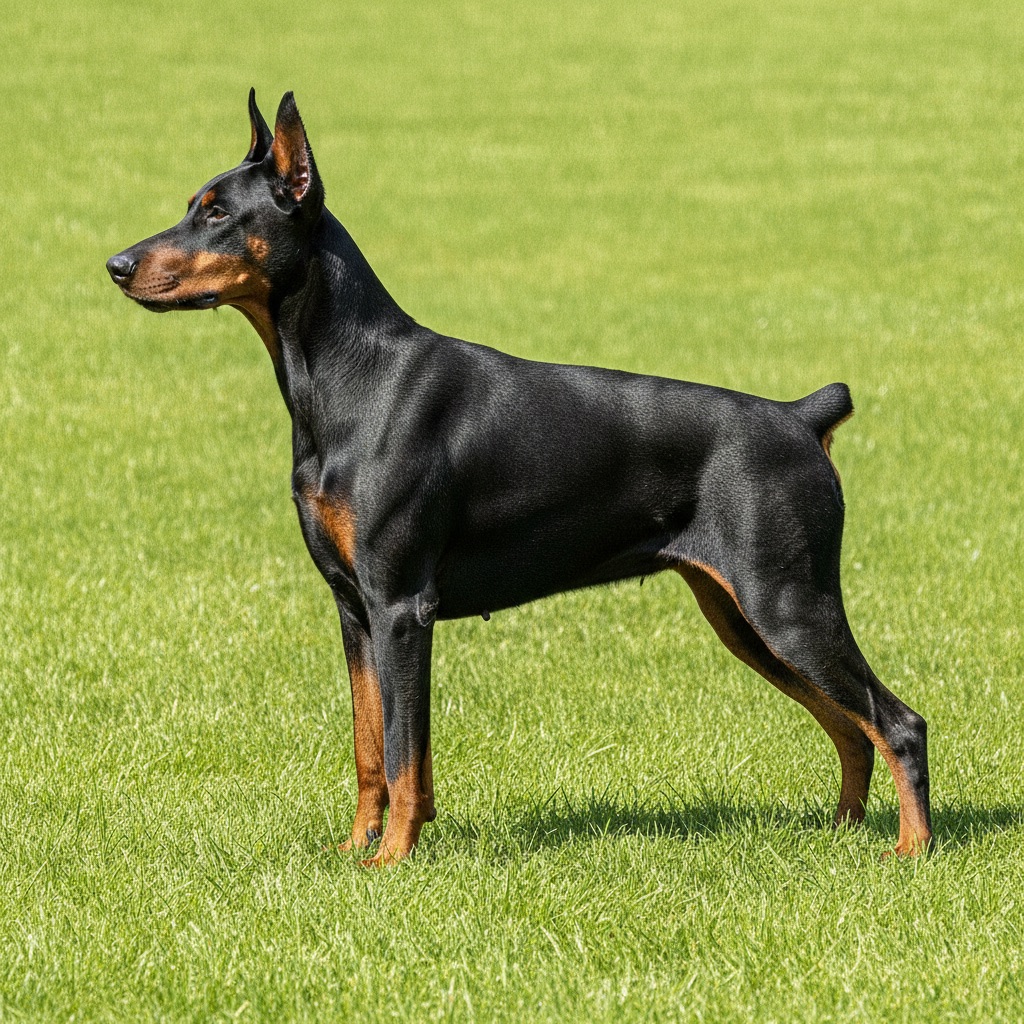
The AKC describes the Doberman as alert, fearless and loyal.1 The breed is highly trainable and consistently ranks among the most responsive working dogs, but it is also unusually attentive to its handler's state — Dobermans read household tension quickly and react to it.
Modern well-bred Dobermans are people-oriented to the point of being called "velcro dogs," following their owners from room to room. Their guarding instinct is discriminating rather than indiscriminate: properly socialised, a Doberman is expected to assess before it reacts. Harsh handling produces anxiety, not reliability.
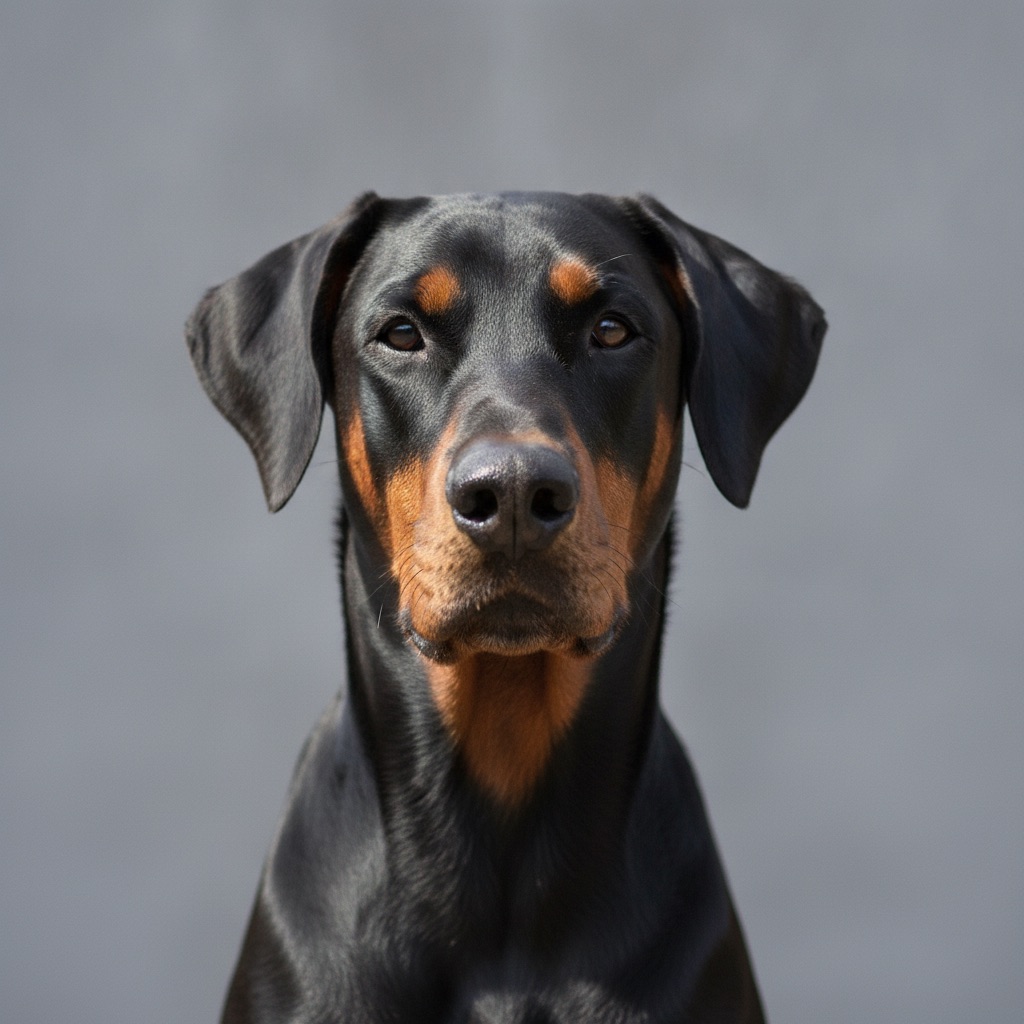
Cropped ears and docked tails are a cosmetic convention, not a natural feature; both procedures are now prohibited in much of Europe, and the FCI standard depicts the breed with natural, drop ears.4
Dilated cardiomyopathy is the most significant health concern in the breed. Annual echocardiography and Holter monitoring from middle age are commonly recommended; ask breeders for cardiac and DCM genetic testing.3
Von Willebrand disease, an inherited clotting disorder, is prevalent enough in Dobermans that DNA testing of breeding stock is standard practice.3
Obedience, tracking, protection sport or structured scent work satisfy the breed far better than raw exercise alone.
A single short coat and low body fat make Dobermans genuinely cold-sensitive. A coat in winter is practical, not decorative.
This guide is educational and is not veterinary advice. Breed standards, measurements and health information are drawn from the sources listed above; consult your veterinarian for guidance specific to your dog.
Prestige Breed makes a large breed multivitamin designed for breeds like the Doberman Pinscher — see the Doberman Pinscher Multivitamin.