The only spotted breed of its kind, the Dalmatian is a lean, high-endurance coach dog whose distinctive markings develop only after birth.
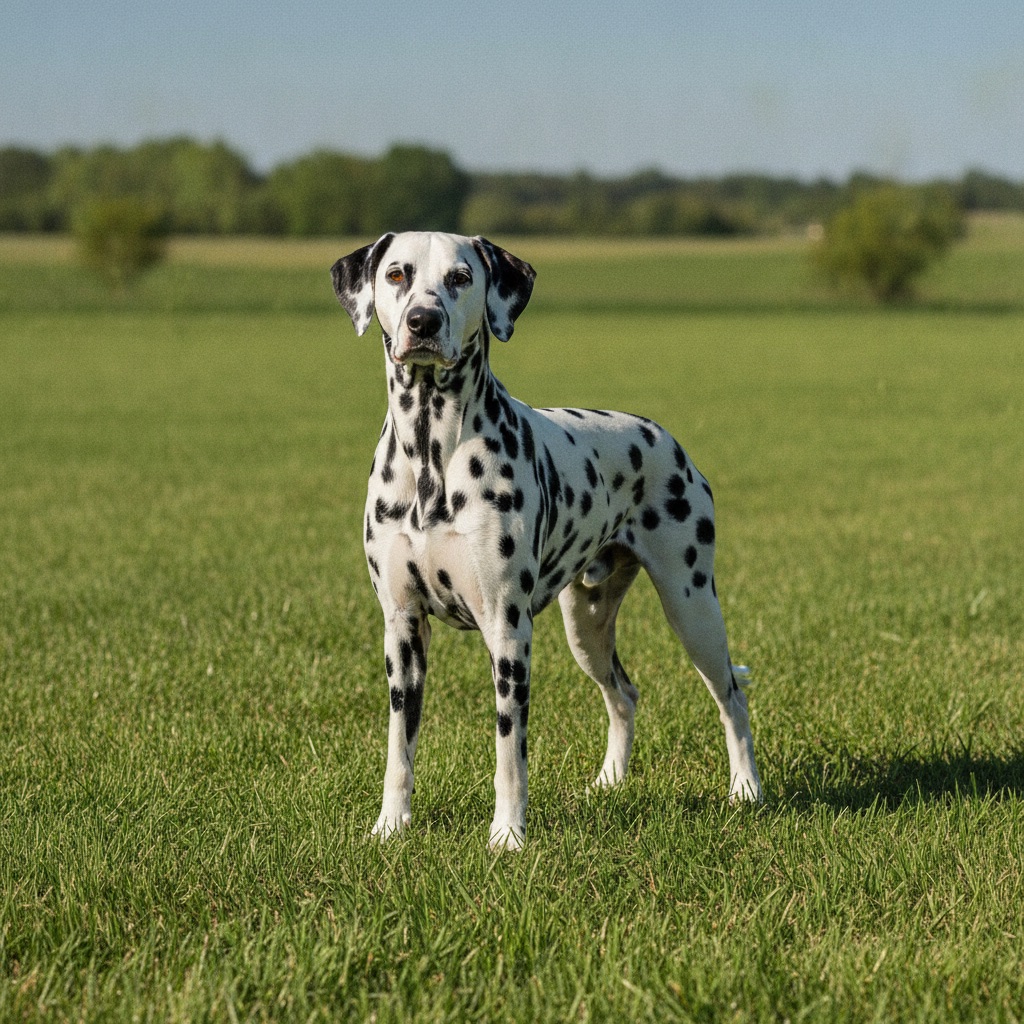

Spotted dogs running alongside horse-drawn vehicles appear in European art for several centuries, and the breed takes its name from Dalmatia, a coastal region of present-day Croatia, where dogs of this type were recorded in the eighteenth century.2 The Dalmatian's defining historical role was as a carriage or coach dog: it ran with the horses, cleared the road ahead, and guarded the rig and stable at rest.
That affinity for horses carried the breed into nineteenth-century American firehouses, where horse-drawn pumpers were the standard and the Dalmatian both accompanied the team and kept the stable clear of vermin. The association survived the transition to motorised engines as a mascot tradition.1 The AKC recognised the breed in 1888.1
The name derives from Dalmatia, the Adriatic coastal province where the breed was first firmly documented and from which early written descriptions and paintings originate.2 Earlier and regional names for the same type include the English "coach dog," "carriage dog," "plum pudding dog," and "spotted Dick" — all descriptive rather than geographic.3
| Life expectancy | 11–13 years |
|---|---|
| Height — male | 19–24 in (48–61 cm) |
| Height — female | 19–24 in (48–61 cm) |
| Weight — male | 45–70 lb (20–32 kg) |
| Weight — female | 45–70 lb (20–32 kg) |
| Coat type & colors | Short, dense, glossy; pure white with black or liver-brown round spots |
| Shedding | Heavy, year-round |
| Exercise needs | Very high — a running or working breed |
| Country of origin | Croatia (Dalmatia) |
| AKC group | Non-Sporting Group (AKC) |
| Prestige Breed size class | Large Breed · Over 60 lbs |
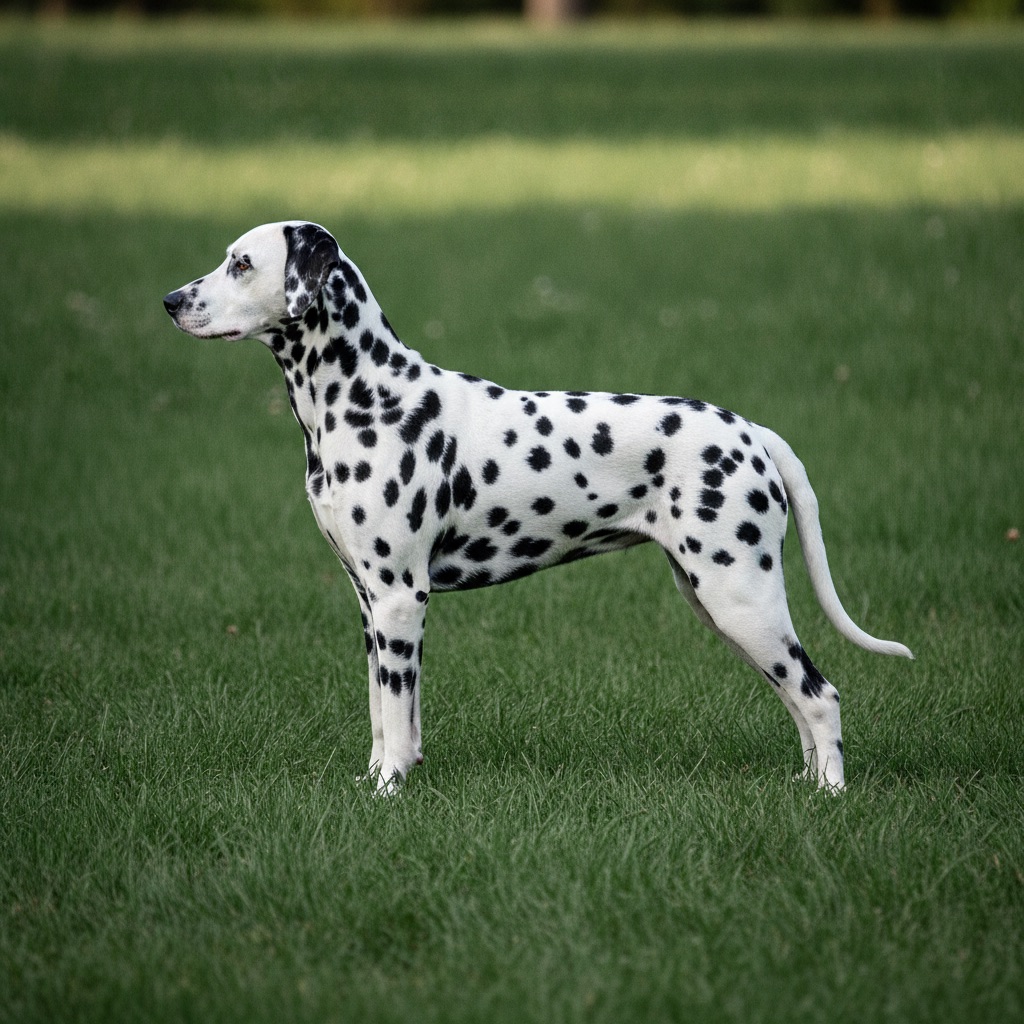
Dalmatians are described by the AKC as dignified, smart and outgoing.1 Bred to work at a distance from the driver for hours at a time, they are independent, alert to their surroundings and inclined to make their own decisions — traits that read as stubbornness in a household with inconsistent rules.
The breed forms strong attachments and is generally poor at being left alone for long periods. Its stamina is exceptional and largely non-negotiable: a Dalmatian without an outlet is one of the more difficult companion dogs to live with, while a well-exercised one is calm and companionable indoors.
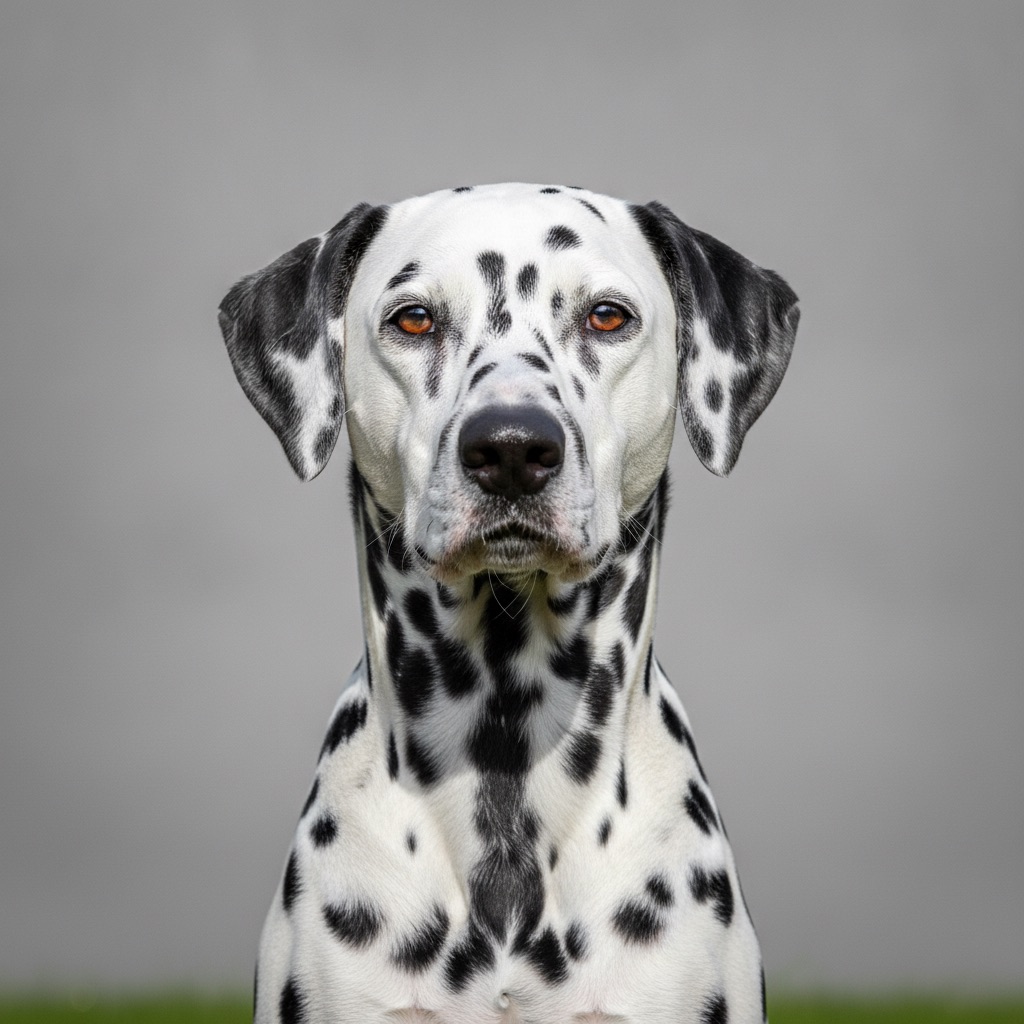
Dalmatian puppies are born pure white. Their spots begin to appear at around two to three weeks of age and continue developing for several months.2
Dalmatians have a unique purine metabolism that produces uric acid rather than allantoin, predisposing them to urate stones. Constant access to fresh water and veterinary guidance on diet are important.2
Congenital deafness is well documented in the breed and affects a meaningful share of puppies. Responsible breeders BAER-test litters; ask to see the results.3
This is a breed built to trot beside a carriage. Two long, vigorous outings a day are a floor, not an enrichment programme.
The short, stiff white hairs weave into fabric and shed constantly. Frequent brushing with a rubber curry reduces but does not eliminate it.
This guide is educational and is not veterinary advice. Breed standards, measurements and health information are drawn from the sources listed above; consult your veterinarian for guidance specific to your dog.
Prestige Breed makes a large breed multivitamin designed for breeds like the Dalmatian — see the Dalmatian Multivitamin.