The Scottish herding dog of the Highlands, refined into a graceful show and companion breed, the Collie is known for its sensitivity, its wedge-shaped head and its rough, abundant coat.
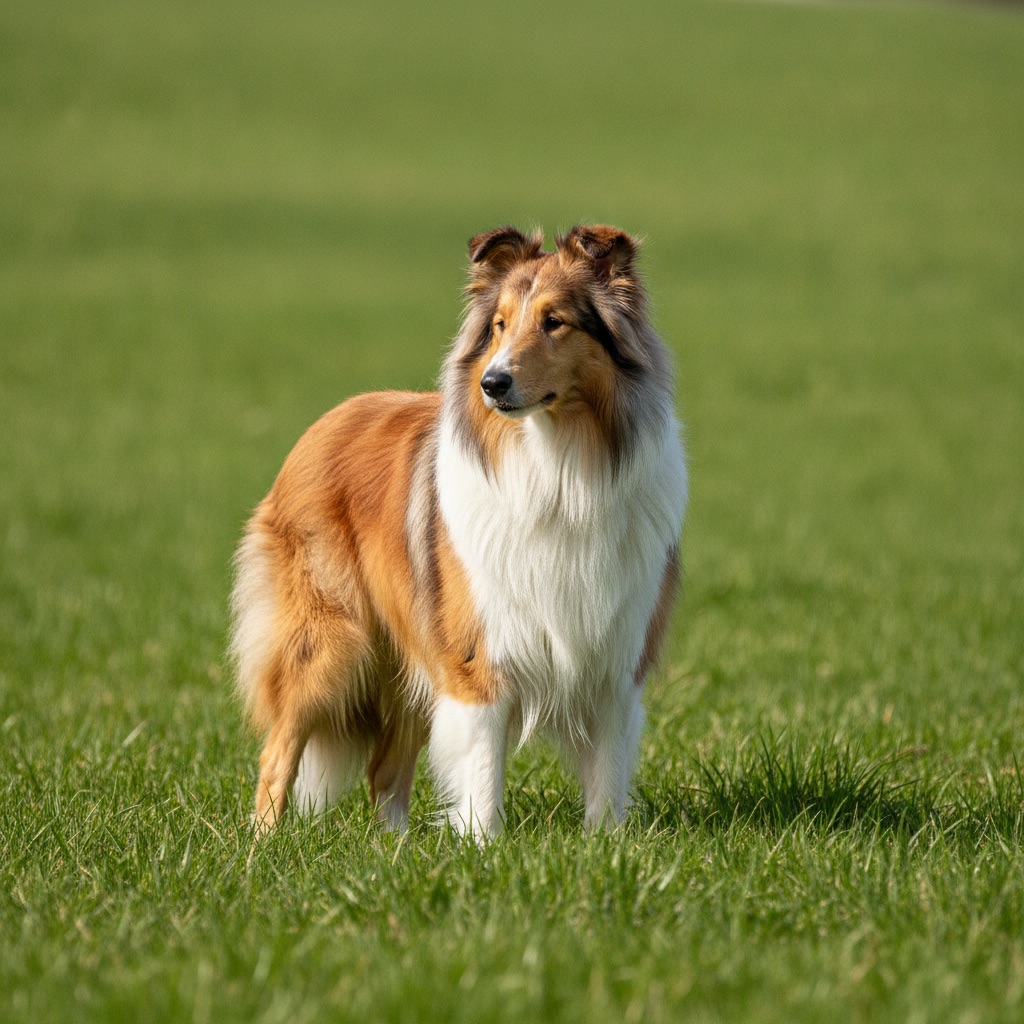

Collies worked sheep and cattle in Scotland and northern England for centuries as regional landrace herders — smaller, plainer and more varied than the modern dog.2 Queen Victoria encountered them at Balmoral in 1860 and became an enthusiastic owner, which moved the breed rapidly from hillside to drawing room.
Victorian breeders, notably through outcrosses to the Borzoi, lengthened the head and refined the coat into the modern show Collie. The AKC recognised the breed in 1885.1 Its twentieth-century fame owes overwhelmingly to Eric Knight's 1940 novel Lassie Come-Home and the films and television series that followed.2
The etymology is disputed. The most widely accepted derivation is from the Anglo-Saxon col, meaning black or coal — the early Scottish dogs were often dark, and "colley" was also a Scots term for black-faced mountain sheep, making the collie literally the sheep's dog. Alternative derivations trace it to the Gaelic càilean, meaning useful.2
| Life expectancy | 12–14 years |
|---|---|
| Height — male | 24–26 in (61–66 cm) |
| Height — female | 22–24 in (56–61 cm) |
| Weight — male | 60–75 lb (27–34 kg) |
| Weight — female | 50–65 lb (23–29 kg) |
| Coat type & colors | Rough (long, harsh outer, dense under) or Smooth; sable and white, tricolour, blue merle, white |
| Shedding | Heavy, with major seasonal moults |
| Exercise needs | Moderate — daily walks plus mental work |
| Country of origin | Scotland |
| AKC group | Herding Group (AKC) |
| Prestige Breed size class | Large Breed · Over 60 lbs |
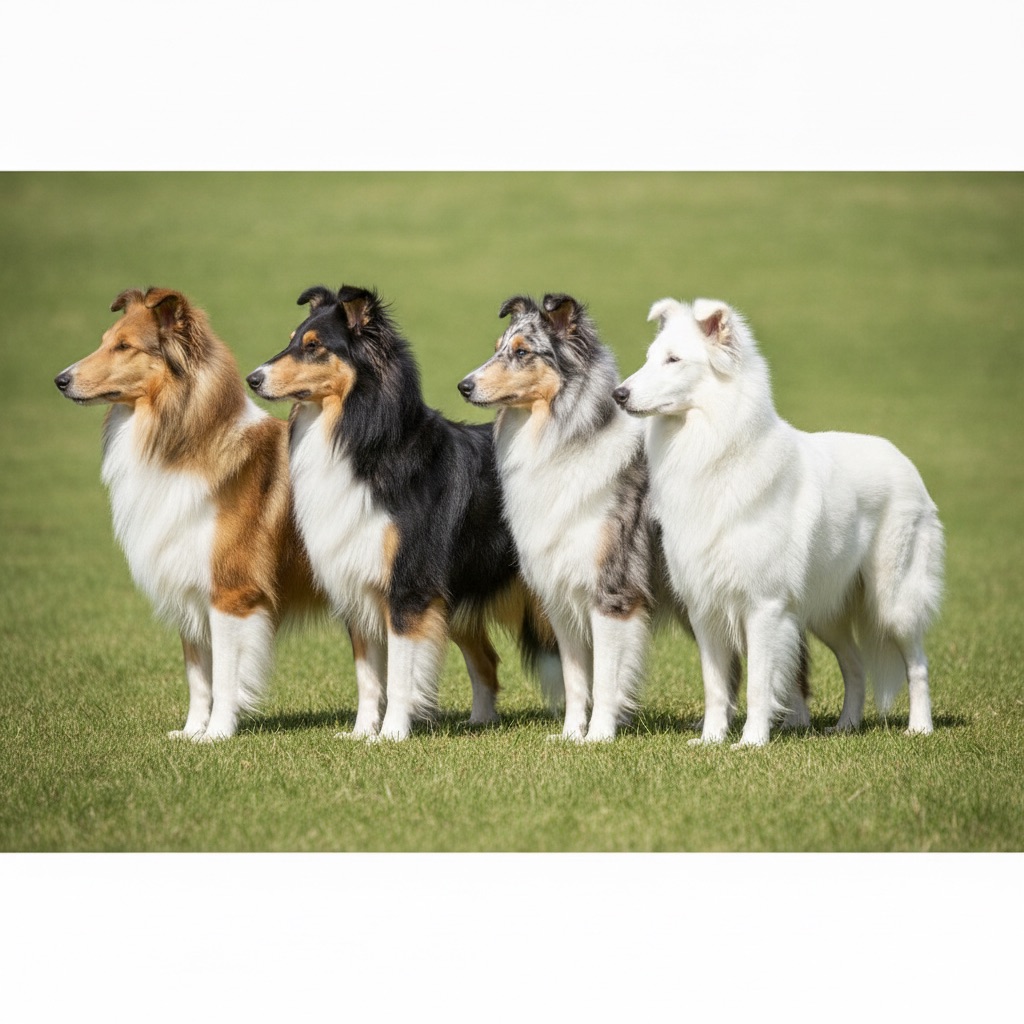
The AKC describes the Collie as devoted, graceful and proud.1 The breed is notably soft and emotionally attentive — Collies read household mood, dislike conflict, and generally require nothing harsher than a change in tone as correction.
They are alert and vocal, inclined to announce arrivals and events, and they retain enough herding instinct to circle and gather children or other pets. Collies are gentle and patient family dogs but they are not stoic; they do poorly in chaotic or harsh environments.
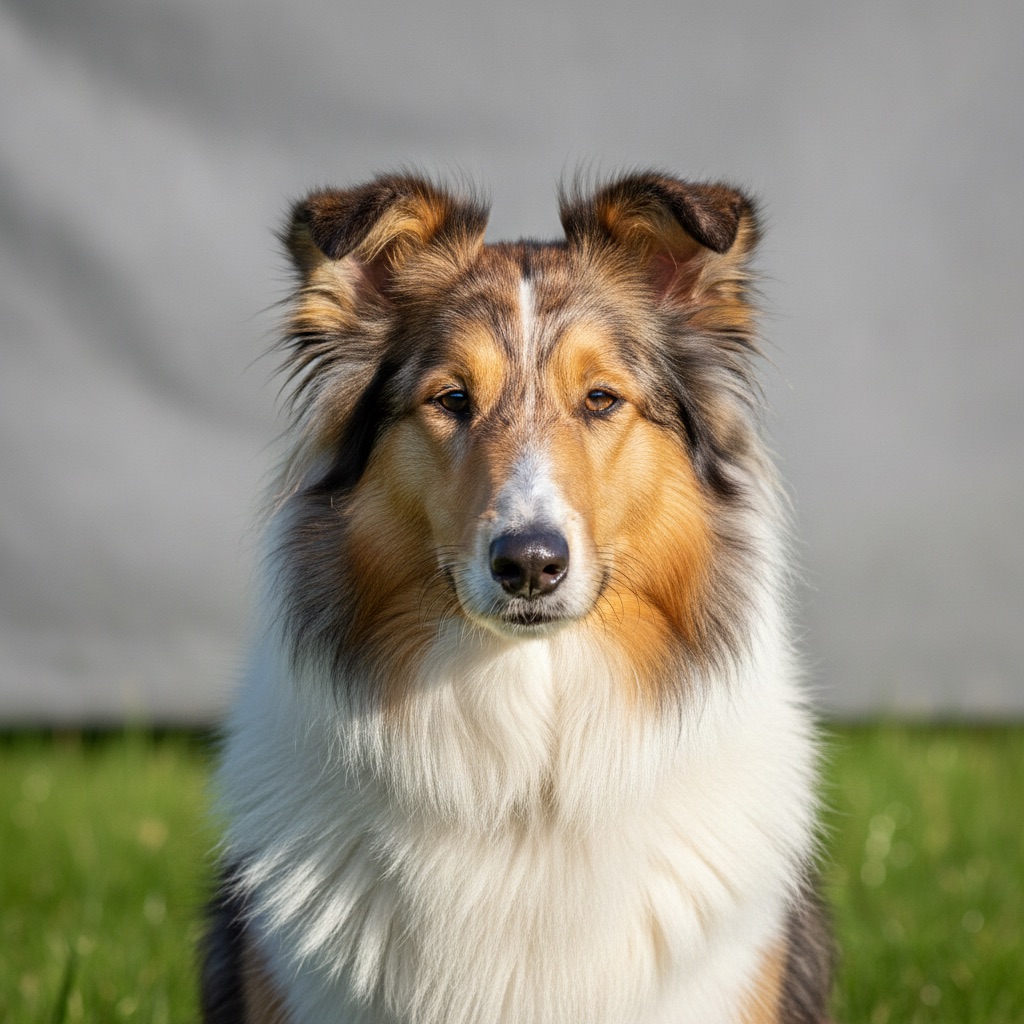
Collies carry a well-characterised MDR1 gene mutation that makes many individuals dangerously sensitive to common veterinary drugs including ivermectin. A simple cheek-swab DNA test identifies affected dogs.4
Ask your veterinarian for MDR1 genotyping. Affected Collies can react severely to standard doses of several routine drugs.4
CEA is widespread in the breed. Reputable breeders have puppies examined by a veterinary ophthalmologist at six to eight weeks.3
A weekly line-brushing through to the skin prevents the dense undercoat from matting behind the ears and in the trousers.
Collies alert readily. Teaching a "quiet" cue in puppyhood is far easier than unwinding the habit later.
This guide is educational and is not veterinary advice. Breed standards, measurements and health information are drawn from the sources listed above; consult your veterinarian for guidance specific to your dog.
Prestige Breed makes a large breed multivitamin designed for breeds like the Collie — see the Collie Multivitamin.