An ancient northern Chinese breed with a blue-black tongue, a lion-like ruff and straight hind legs, the Chow Chow is among the most distinctive and most reserved of all domestic dogs.
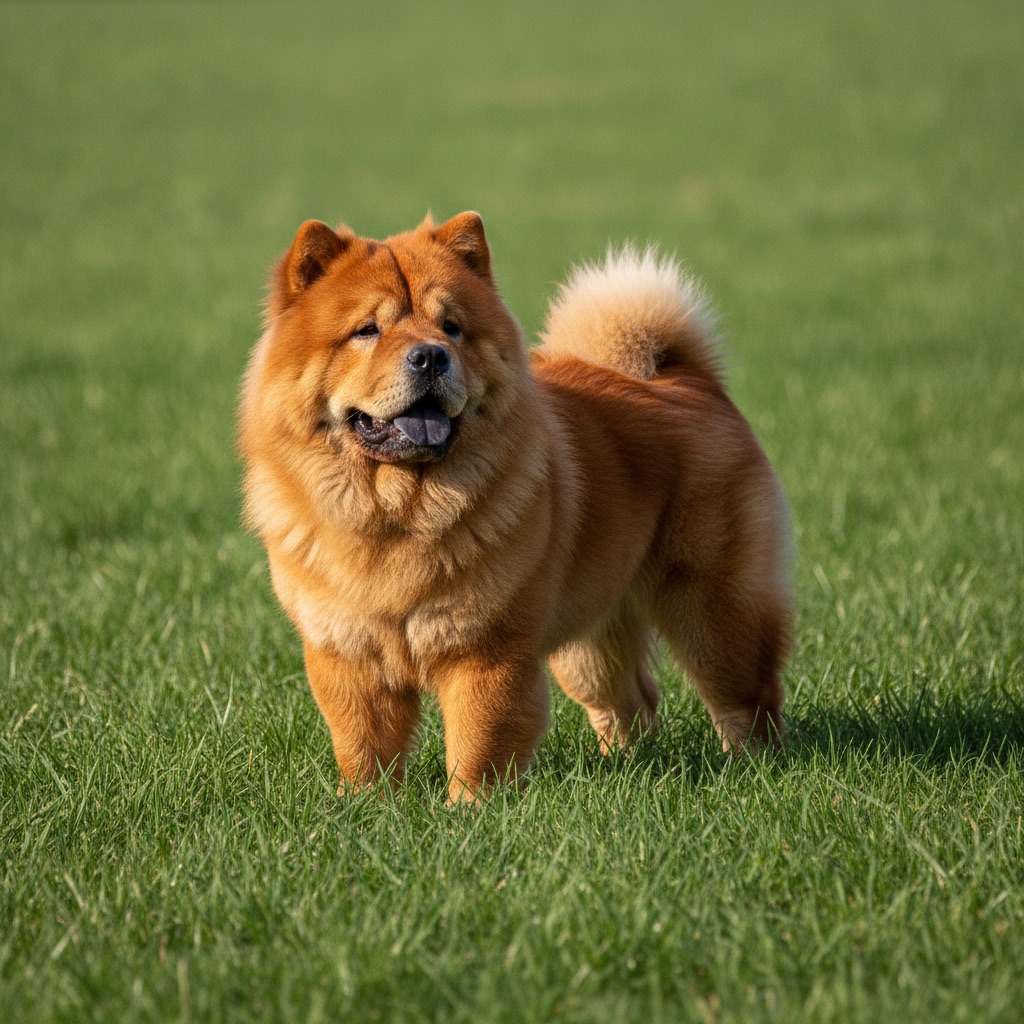

Depictions of a heavy, curl-tailed northern dog appear in Chinese Han dynasty pottery from around 200 BCE, and the Chow is consistently grouped with the small set of genetically basal breeds in modern DNA studies.2 In China the dogs served as hunting companions, cart-pullers, guardians and, at times, as a source of meat and fur.
A Chinese emperor is said to have kept thousands for hunting. The breed reached Britain in the late eighteenth century aboard East India Company vessels, and Queen Victoria's interest in the 1880s brought it wider attention.2 The AKC recognised the Chow Chow in 1903.1
The English name most likely comes from "chow chow," an eighteenth-century pidgin term used by British merchants for miscellaneous cargo or curios from the Orient — the dogs were simply logged as part of a chow chow shipment. The Chinese names are descriptive: Songshi Quan, "puffy-lion dog," and Tang Quan, "dog of the Tang Empire."2
| Life expectancy | 8–12 years |
|---|---|
| Height — male | 19–22 in (48–56 cm) |
| Height — female | 18–20 in (46–51 cm) |
| Weight — male | 55–70 lb (25–32 kg) |
| Weight — female | 45–60 lb (20–27 kg) |
| Coat type & colors | Rough or smooth double coat; red, black, blue, cinnamon or cream |
| Shedding | Heavy, especially seasonally |
| Exercise needs | Low to moderate — short daily walks |
| Country of origin | China |
| AKC group | Non-Sporting Group (AKC) |
| Prestige Breed size class | Large Breed · Over 60 lbs |
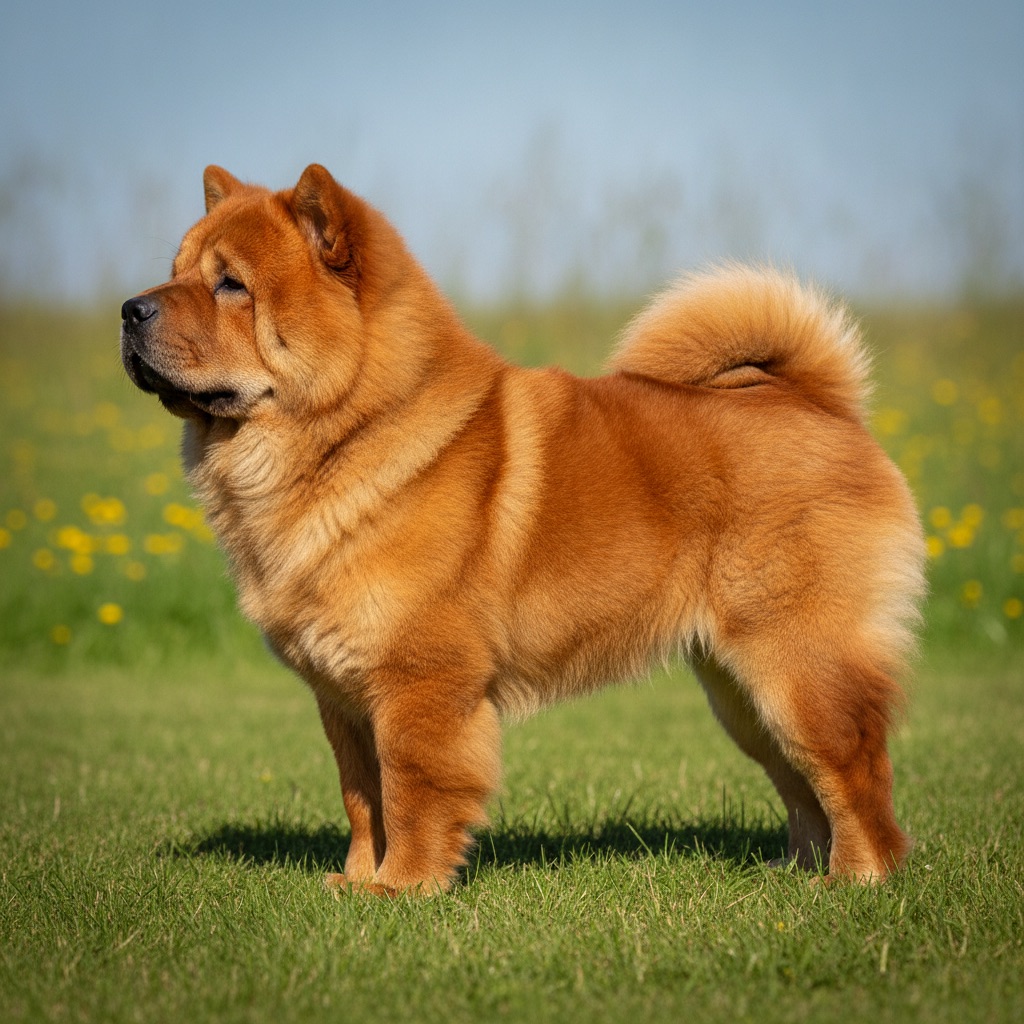
The AKC describes the Chow Chow as dignified, serious-minded and aloof.1 The breed is often compared to a cat in its independence, cleanliness and selective affection: attached to one or two people, indifferent or actively unwelcoming to the rest.
Chows do not seek approval and are not motivated by pleasing a handler, which makes conventional obedience training slow. Their deep-set eyes limit peripheral vision, and they dislike being approached suddenly or from behind — a well-documented cause of defensive reactions. Early, patient socialisation is essential rather than optional.
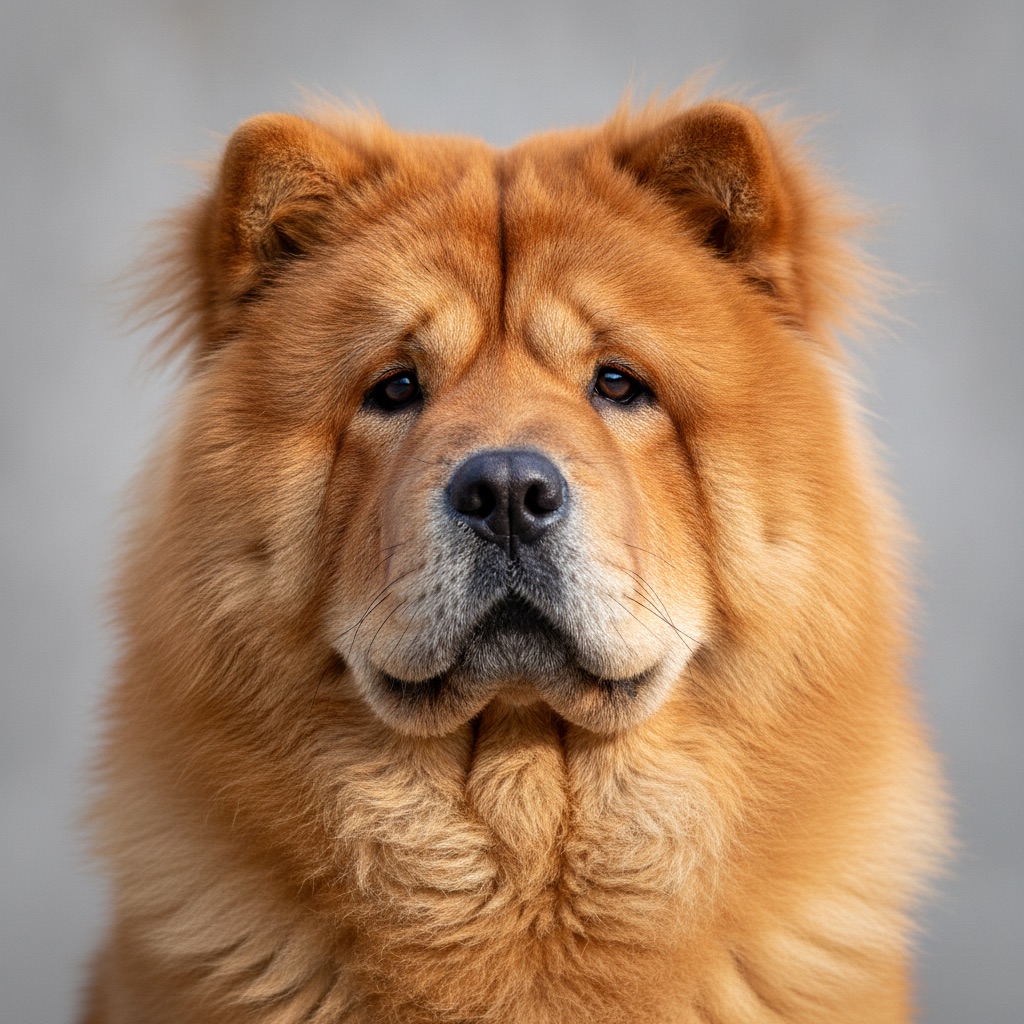
The Chow Chow and the closely related Shar-Pei are the only dog breeds with a blue-black tongue; puppies are born with pink tongues that darken within the first months.2
The breed's natural aloofness hardens quickly. Structured, positive exposure in the first sixteen weeks makes the difference.
Restricted peripheral vision means a Chow can be genuinely startled by contact it did not see coming. Teach children this explicitly.
A dense double coat and a somewhat shortened muzzle make Chows heat-intolerant. Keep exercise brief in warm weather.
Entropion — inward-rolling eyelids — is common in the breed and often requires surgical correction.3
This guide is educational and is not veterinary advice. Breed standards, measurements and health information are drawn from the sources listed above; consult your veterinarian for guidance specific to your dog.
Prestige Breed makes a large breed multivitamin designed for breeds like the Chow Chow — see the Chow Chow Multivitamin.