A tricolour Swiss farm dog from the canton of Bern, the Bernese Mountain Dog was bred to drive cattle, pull carts and guard the homestead, and is known for an exceptionally gentle disposition.
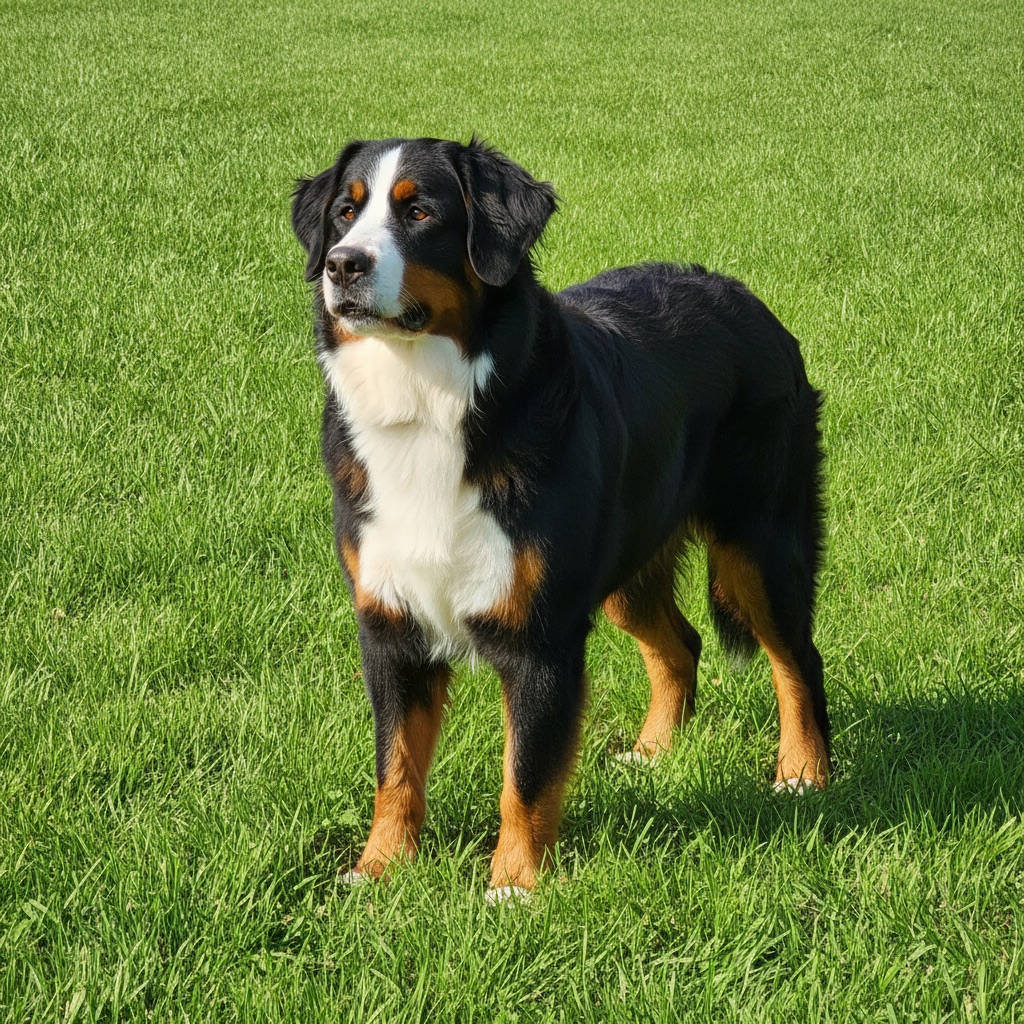

The Bernese is one of four Sennenhund breeds — Swiss mountain and cattle dogs — descended from mastiff-type dogs believed to have entered the Alps with Roman legions and crossed with local farm stock.2 It worked the alpine farms and dairies around Bern as a general-purpose animal: driving cattle to pasture, hauling milk carts, and guarding property.
By the late nineteenth century the type was nearly lost to imported breeds. The Swiss innkeeper and fancier Franz Schertenleib and the geologist Professor Albert Heim led its revival; a breed club was formed in 1907 and the name Berner Sennenhund adopted.2 The AKC recognised the breed in 1937.1
Berner Sennenhund translates roughly as "Bernese alpine herdsman's dog" — Senne referring to the alpine dairymen and Hund to dog — naming both the canton of Bern and the occupation the dog served. The English name substitutes the geography of the Alps for the occupational term.2
| Life expectancy | 7–10 years |
|---|---|
| Height — male | 25–27.5 in (64–70 cm) |
| Height — female | 23–26 in (58–66 cm) |
| Weight — male | 80–115 lb (36–52 kg) |
| Weight — female | 70–95 lb (32–43 kg) |
| Coat type & colors | Thick, moderately long double coat; jet black with rust and white markings in a fixed pattern |
| Shedding | Heavy, year-round with seasonal peaks |
| Exercise needs | Moderate — daily walking, cart work, cool-weather activity |
| Country of origin | Switzerland |
| AKC group | Working Group (AKC) |
| Prestige Breed size class | Large Breed · Over 60 lbs |
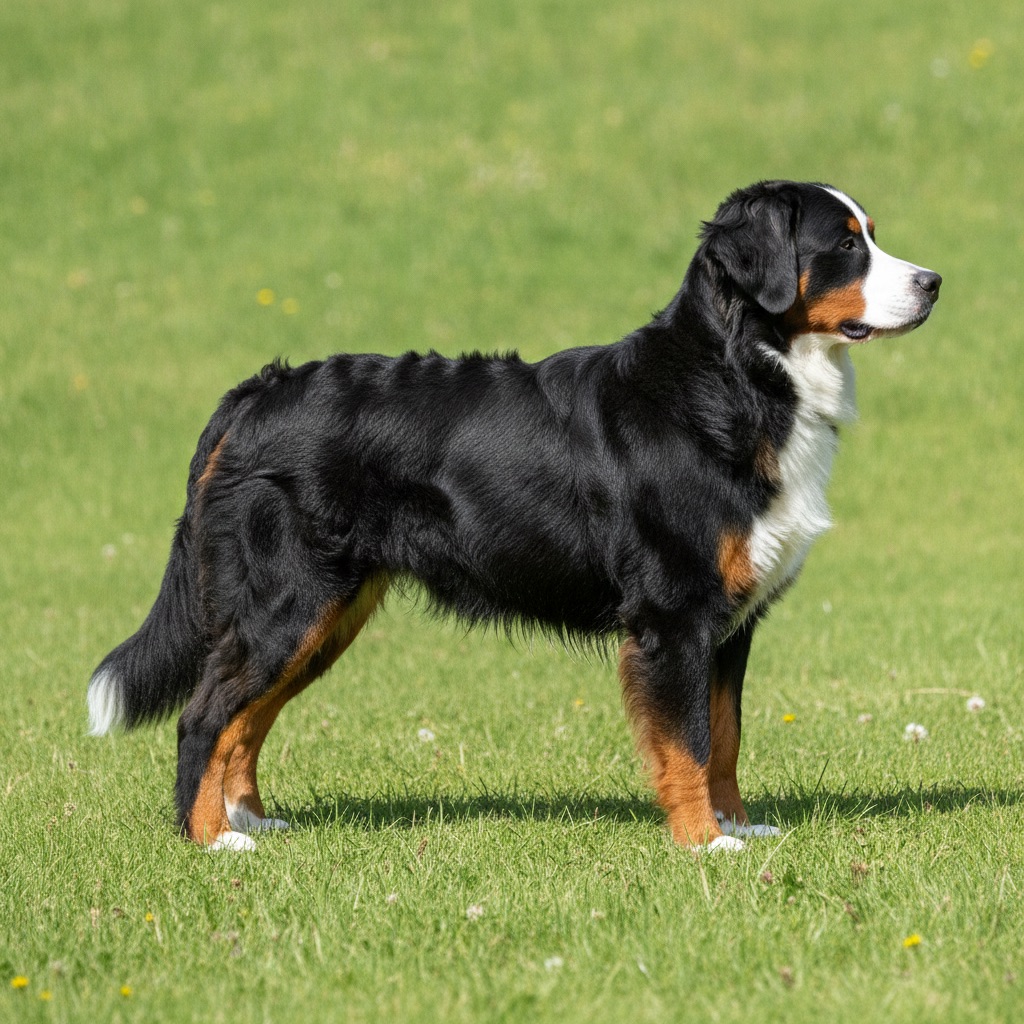
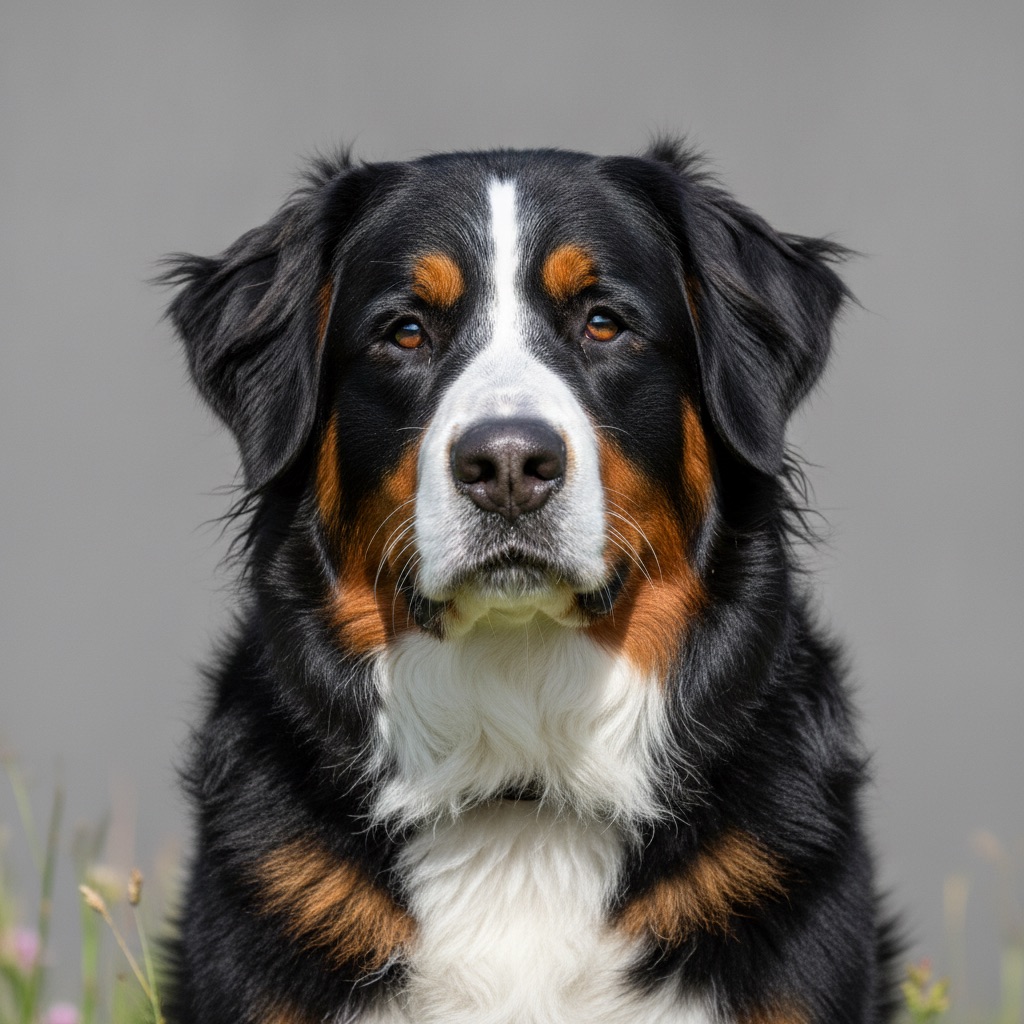
The AKC describes the Bernese as good-natured, calm and strong.1 The breed is characteristically slow to anger, tolerant of children and unusually soft — Bernese respond badly to harsh correction and tend to shut down rather than argue.
They are affectionate and attach closely to family, often placing themselves physically against their people. Bernese mature slowly and remain puppyish for two to three years. They are not high-energy dogs, but they are large, and they carry their coat poorly in heat.
Bernese Mountain Dogs still compete in draft and carting trials run by the parent club, pulling weighted carts over a set course — a direct continuation of their dairy-hauling work.3
The Bernese has one of the shortest average lifespans of any breed, with a high incidence of histiocytic sarcoma and other cancers. Choose breeders who track longevity in their lines.3
A heavy black double coat in summer heat is a real risk. Exercise early and late; provide shade and water.
Restrict jumping and forced exercise until growth plates close, and feed a controlled large-breed puppy diet.
The long double coat mats behind the ears and in the feathering; expect continuous shedding.
This guide is educational and is not veterinary advice. Breed standards, measurements and health information are drawn from the sources listed above; consult your veterinarian for guidance specific to your dog.
Prestige Breed makes a large breed multivitamin designed for breeds like the Bernese Mountain Dog — see the Bernese Mountain Dog Multivitamin.