A short-legged French scent hound with heavy bone, long ears and loose skin, the Basset Hound trails hare and rabbit at a pace a hunter on foot can follow.
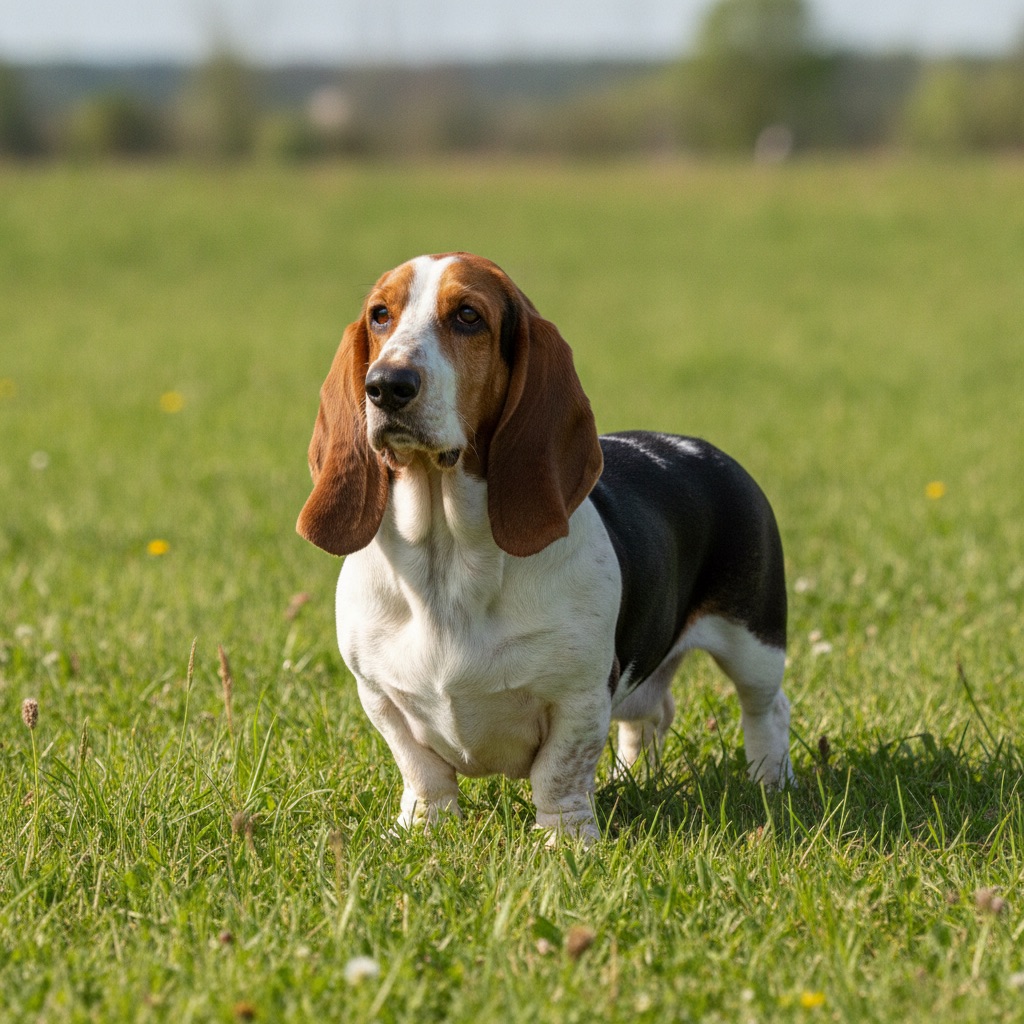

The Basset descends from French hounds — the St. Hubert line among them — in which a dwarfing mutation produced short-legged individuals. French hunters valued them precisely because the low, slow dog could be followed on foot through dense cover.2 The type is documented in French hunting texts from the sixteenth century.
English breeders imported French bassets from the 1860s, and Sir Everett Millais's crosses with the Bloodhound added size, bone and scenting power, shaping the modern breed.2 The AKC recognised the Basset Hound in 1885. Its twentieth-century visibility owes much to advertising and to the comic strip character Fred Basset.1
From the French bas, meaning low, with the diminutive suffix -et — "rather low." "Hound" from the Old English hund. The name describes the single most obvious feature of the dog and dates to the earliest French references.2
| Life expectancy | 12–13 years |
|---|---|
| Height — male | up to 15 in (38 cm) |
| Height — female | up to 14 in (36 cm) |
| Weight — male | 55–75 lb (25–34 kg) |
| Weight — female | 45–65 lb (20–29 kg) |
| Coat type & colors | Short, smooth, dense; typically tricolour or any hound colour |
| Shedding | Moderate, year-round |
| Exercise needs | Moderate — long, slow scent walks |
| Country of origin | France |
| AKC group | Hound Group (AKC) |
| Prestige Breed size class | Medium Breed · 25 – 60 lbs |
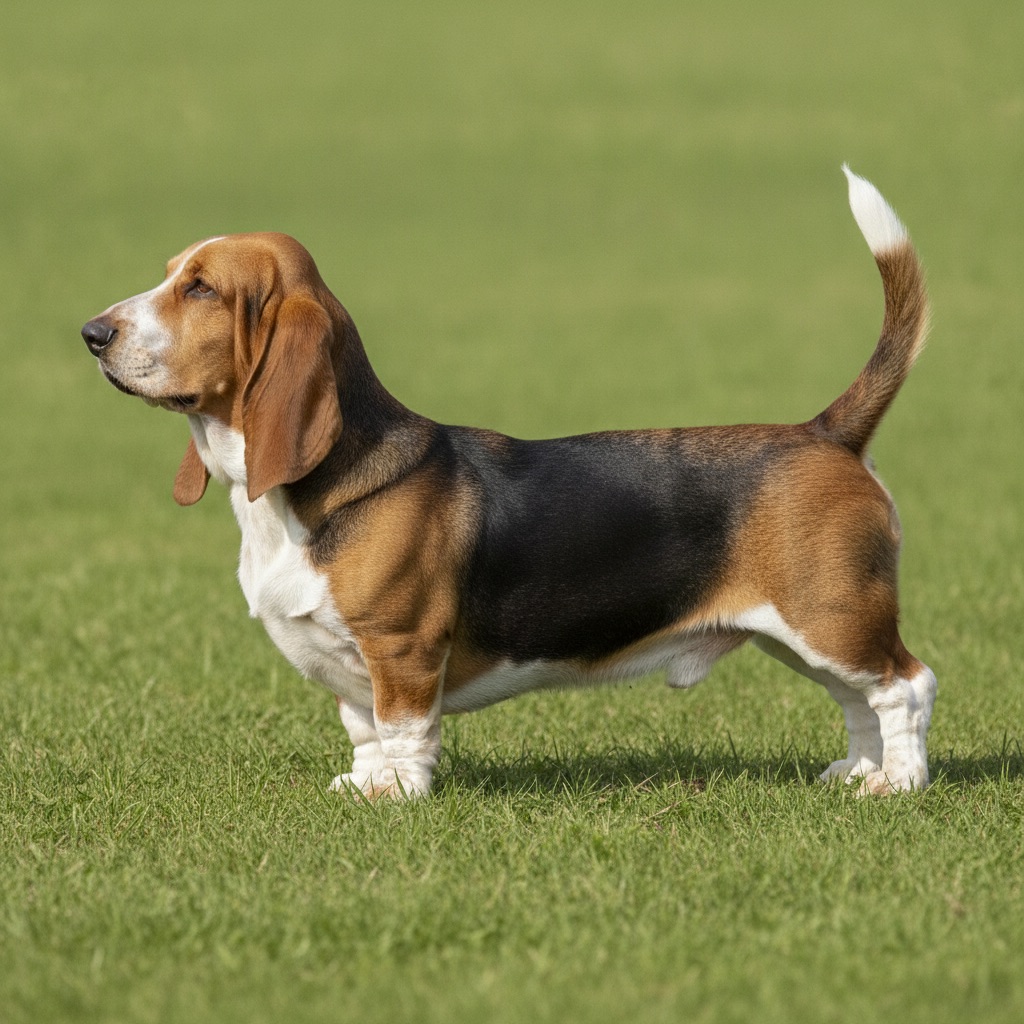
The AKC describes the Basset Hound as charming, patient and low-key.1 The breed is exceptionally tolerant and unbothered, and it is one of the most placid of the hounds in a household setting.
It is also one of the most stubborn. A Basset on a scent is not being disobedient — it has simply ceased to register you. Training requires food and repetition, and off-leash reliability is generally not achievable. The breed is vocal, with a deep bay, and inclined to howl when bored or left alone.
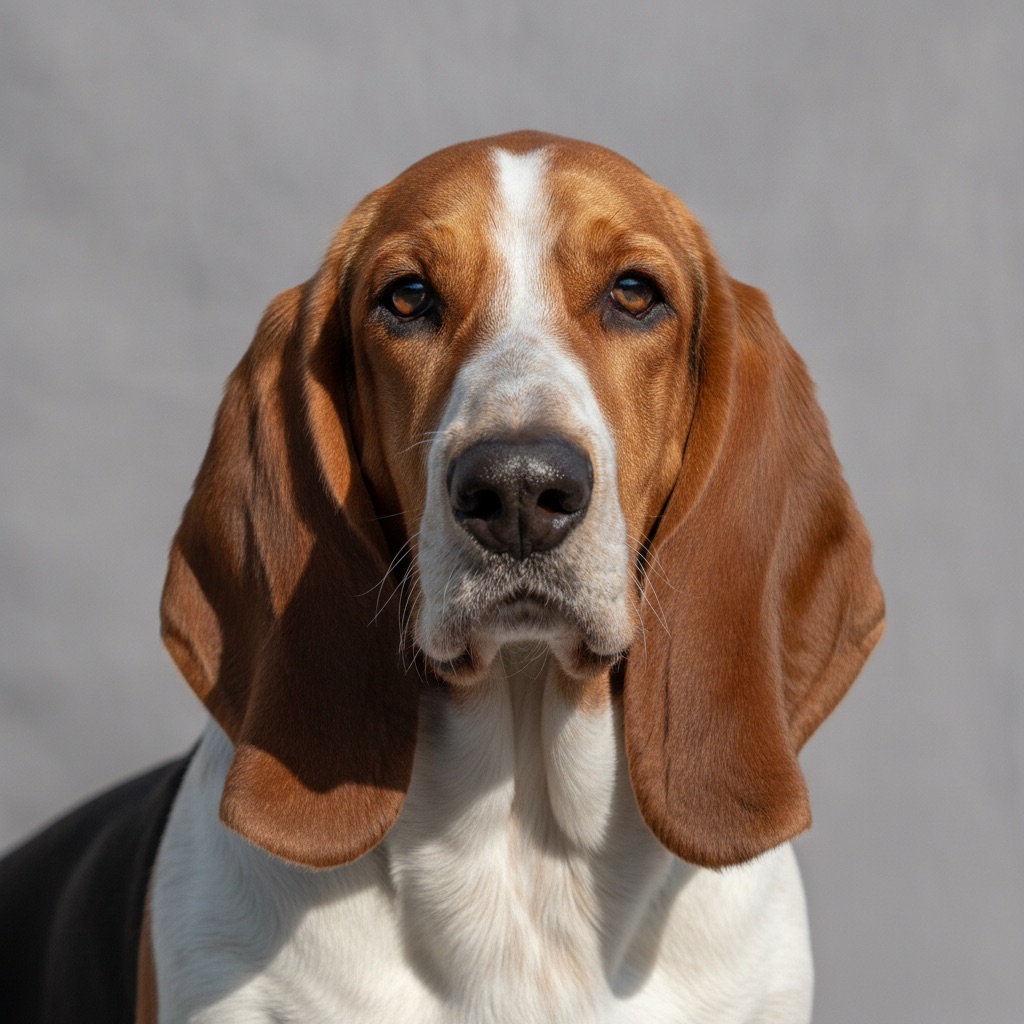
The Basset Hound is second only to the Bloodhound in scenting ability, and its long ears are functional: they sweep scent from the ground toward the nose as the dog trails.2
Long, heavy, poorly ventilated ears that drag on the ground make otitis externa near-inevitable without weekly cleaning.3
A heavy body on short legs is punishing to the spine and joints. Bassets are prodigious eaters and gain readily.
Discourage jumping from furniture and support both ends when lifting; the long spine is vulnerable.
Facial and neck folds trap moisture. Wipe and dry them regularly to prevent dermatitis.
This guide is educational and is not veterinary advice. Breed standards, measurements and health information are drawn from the sources listed above; consult your veterinarian for guidance specific to your dog.
Prestige Breed makes a medium breed multivitamin designed for breeds like the Basset Hound — see the Basset Hound Multivitamin.