Despite the name, the Australian Shepherd is an American breed — a versatile ranch and rodeo dog of the western United States, known for merle coats, light eyes and relentless working drive.
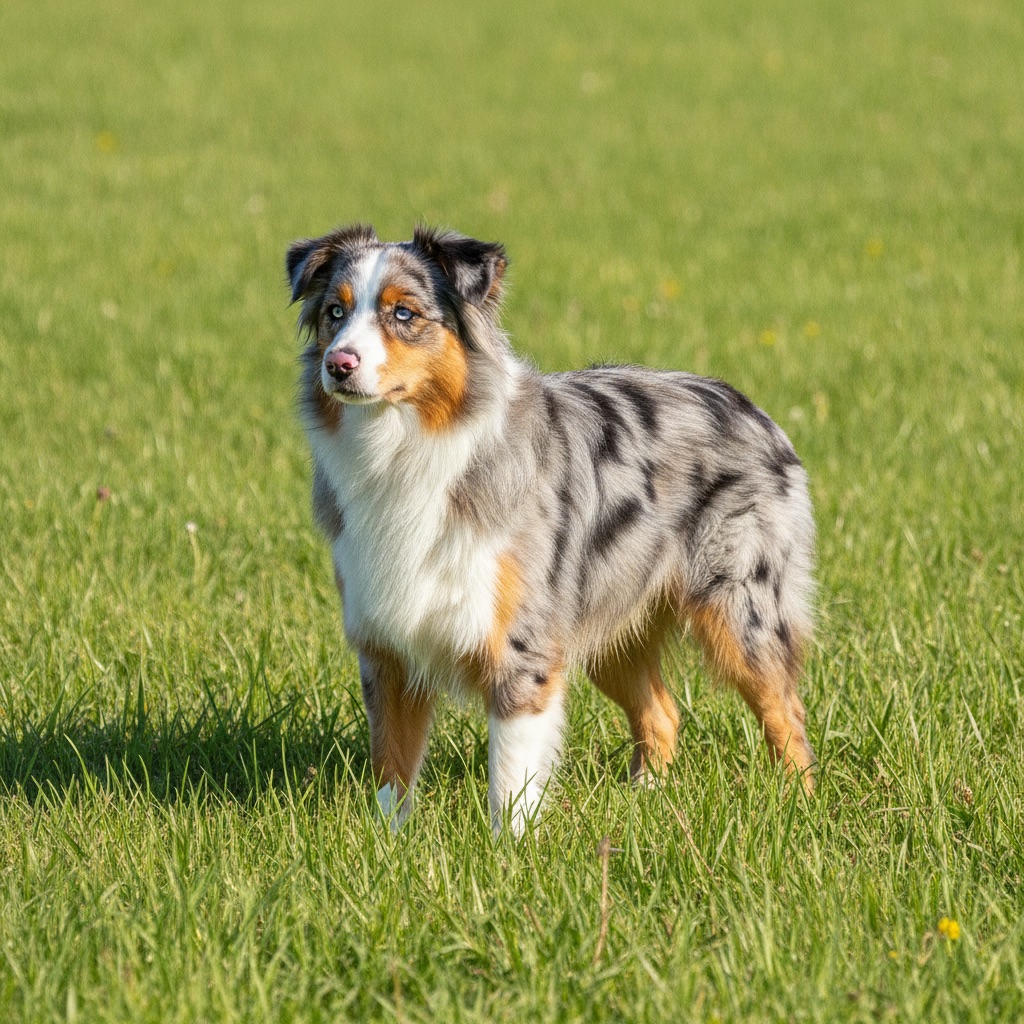

The breed developed in the American West during the nineteenth and early twentieth centuries from herding dogs brought by Basque shepherds, who had emigrated by way of Australia — hence the misleading name.2 Ranchers in California, Colorado and the Northwest selected for stock sense, endurance and biddability rather than appearance.
The breed gained visibility through rodeo and Western performance in the mid-twentieth century, notably through Jay Sisler's trick dogs and subsequent Disney films.2 The Australian Shepherd Club of America was formed in 1957; the AKC recognised the breed in 1993, a move that split the fancy between working and conformation registries.1
The name records a route rather than an origin. Basque shepherds who worked in Australia before emigrating to the western United States brought their dogs with them, and American ranchers named the dogs after the country the shepherds had come from. The breed itself was developed in the United States.2
| Life expectancy | 12–15 years |
|---|---|
| Height — male | 20–23 in (51–58 cm) |
| Height — female | 18–21 in (46–53 cm) |
| Weight — male | 50–65 lb (23–29 kg) |
| Weight — female | 40–55 lb (18–25 kg) |
| Coat type & colors | Medium-length weather-resistant double coat; blue merle, red merle, black or red, with or without white and tan |
| Shedding | Moderate to heavy, seasonal peaks |
| Exercise needs | Very high — daily physical and mental work |
| Country of origin | United States |
| AKC group | Herding Group (AKC) |
| Prestige Breed size class | Medium Breed · 25 – 60 lbs |
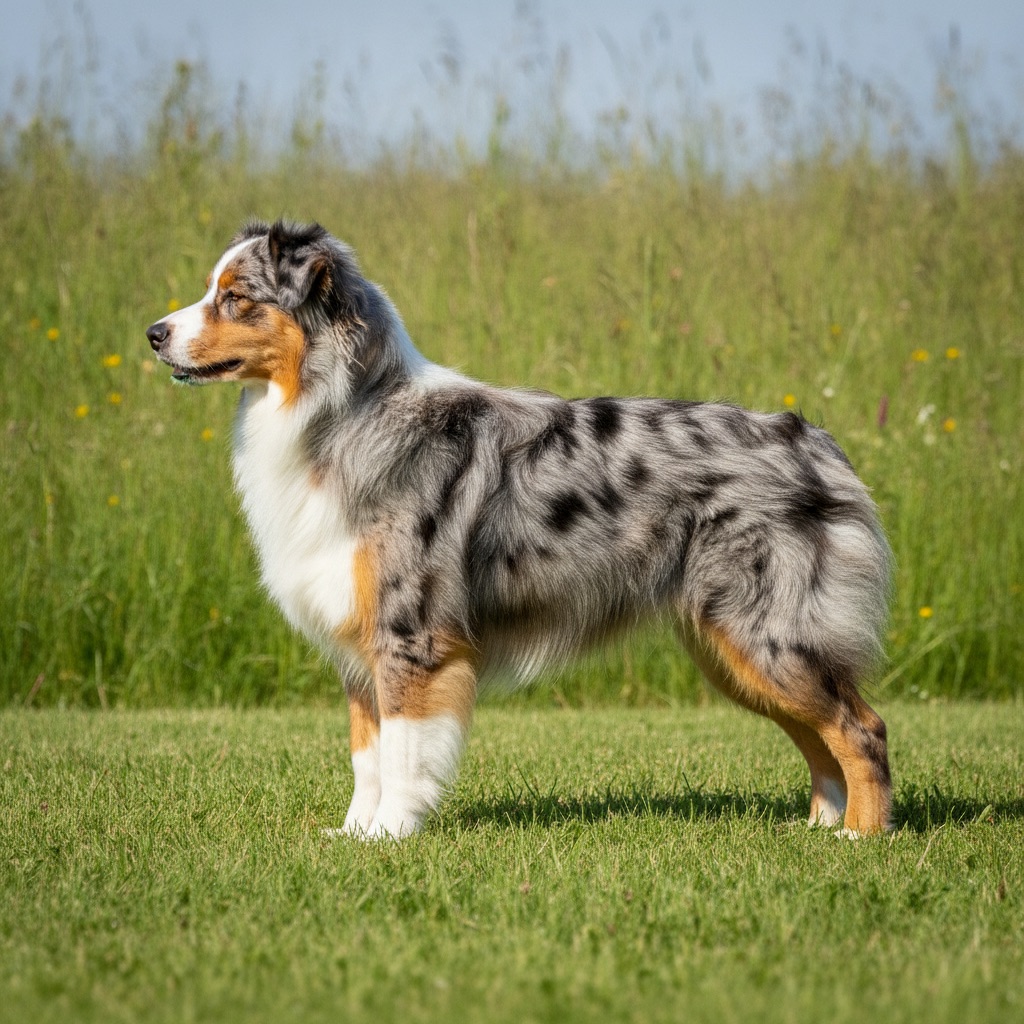
The AKC describes the Australian Shepherd as smart, work-oriented and exuberant.1 The breed is highly trainable and thrives on having a defined task; Aussies dominate agility, disc, herding and obedience competition well out of proportion to their numbers.
They are reserved with strangers, strongly attached to their household, and inclined to herd whatever moves. Aussies are sensitive dogs that respond to tone rather than force, but their intelligence cuts both ways — an under-occupied Aussie becomes anxious, noisy or obsessive rather than merely naughty.
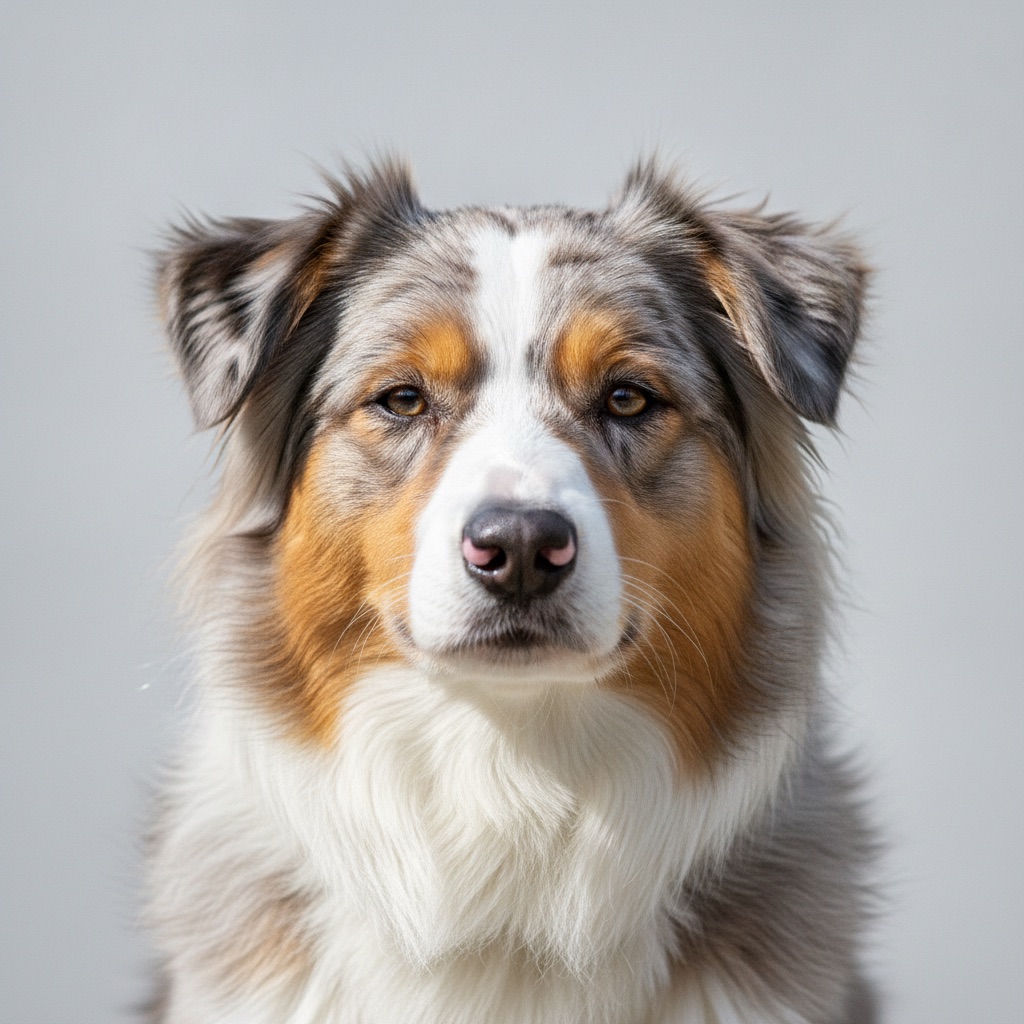
Breeding two merle Australian Shepherds together can produce "double merle" puppies with a high incidence of deafness and blindness — a well-understood genetic risk that responsible breeders avoid entirely.3
Herding, agility, disc, scent work or a structured daily training routine. Exercise without purpose does not settle this breed.
Like other herding breeds, Aussies commonly carry the MDR1 mutation causing sensitivity to several common veterinary drugs. Test before medicating.4
Double-merle offspring are frequently deaf, blind or both. Verify a breeder's pairing practices.3
Natural wariness can become reactivity without early, positive exposure to people and environments.
This guide is educational and is not veterinary advice. Breed standards, measurements and health information are drawn from the sources listed above; consult your veterinarian for guidance specific to your dog.
Prestige Breed makes a medium breed multivitamin designed for breeds like the Australian Shepherd — see the Australian Shepherd Multivitamin.