Developed to drive half-wild cattle across vast Australian distances, the Australian Cattle Dog is a compact, mottled herder of extraordinary stamina and equally extraordinary persistence.
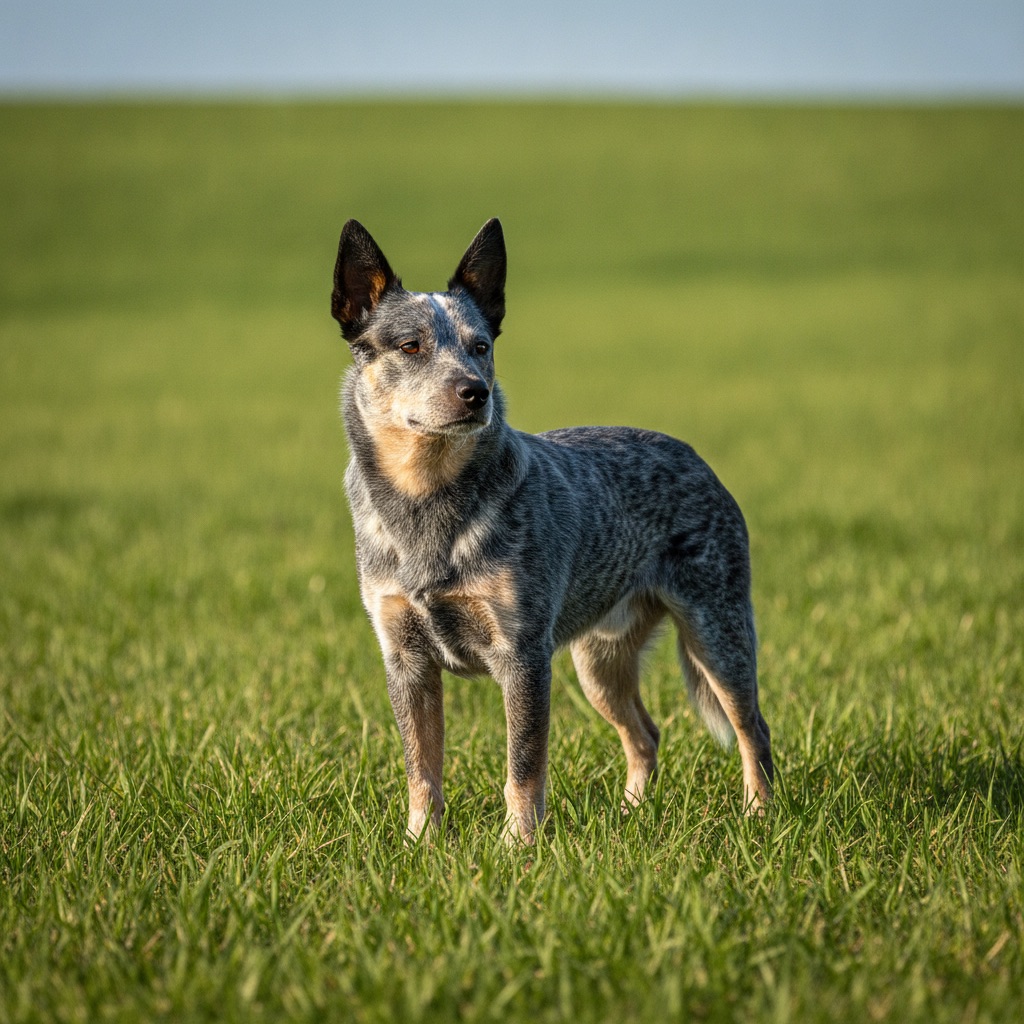

Nineteenth-century Australian graziers needed a dog that could move unmanageable cattle over hundreds of miles of dry country. Imported British herding dogs could not withstand the conditions, so from the 1840s stockmen crossed them with the native Dingo, producing silent, hardy heelers.2
Thomas Hall's "Hall's Heelers" — Dingo crossed with drover's dogs from Northumberland — form the documented base. Later breeders added Dalmatian, for affinity with horses, and Black and Tan Kelpie.2 Robert Kaleski drew up a standard in 1902. The AKC recognised the breed in 1980.1
The name is functional and national. The breed is equally known as the Blue Heeler or Red Heeler, after its coat colour and its working method — nipping at the heels of cattle to move them, then dropping flat to avoid the kick. Queensland Heeler is a regional variant of the same name.2
| Life expectancy | 12–16 years |
|---|---|
| Height — male | 18–20 in (46–51 cm) |
| Height — female | 17–19 in (43–48 cm) |
| Weight — male | 35–50 lb (16–23 kg) |
| Weight — female | 35–50 lb (16–23 kg) |
| Coat type & colors | Short, straight, weather-resistant double coat; blue or red speckled/mottled |
| Shedding | Moderate, with two heavy annual moults |
| Exercise needs | Very high — working-dog level |
| Country of origin | Australia |
| AKC group | Herding Group (AKC) |
| Prestige Breed size class | Medium Breed · 25 – 60 lbs |
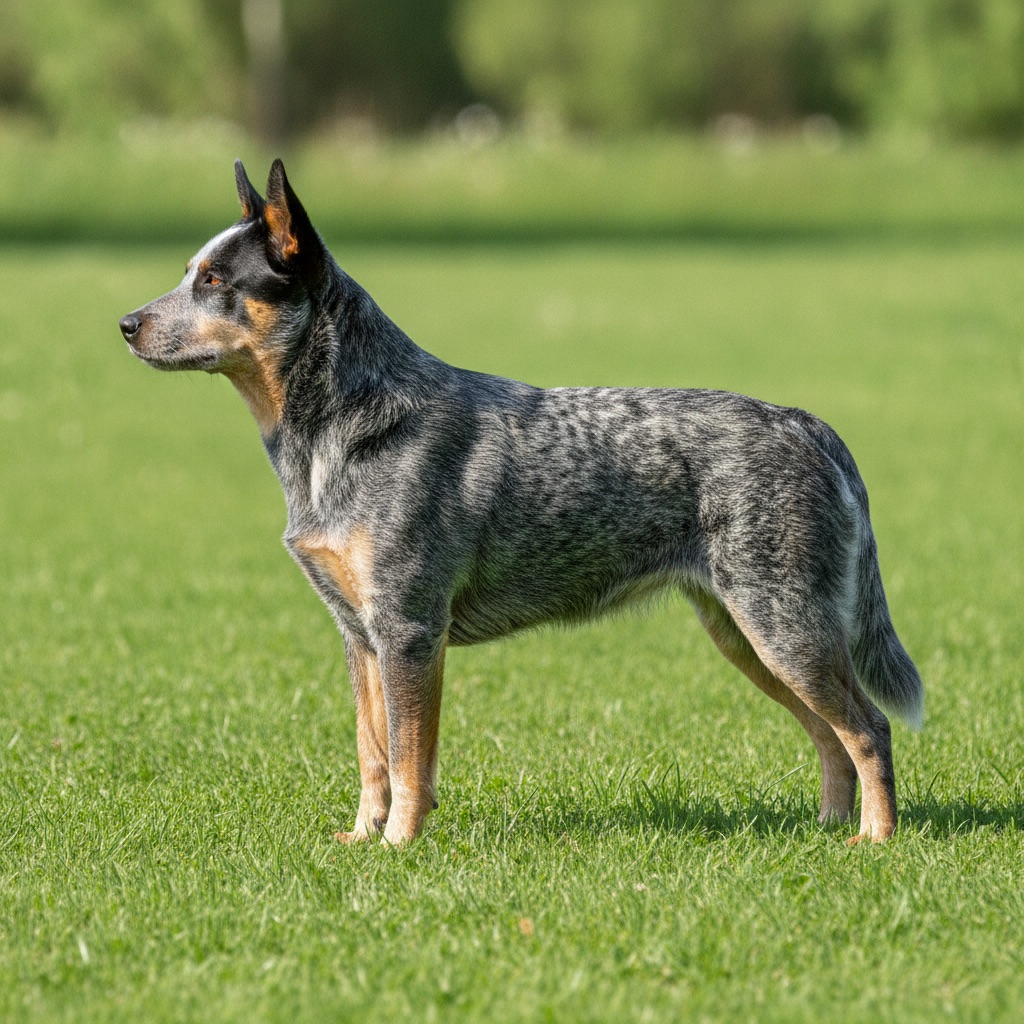
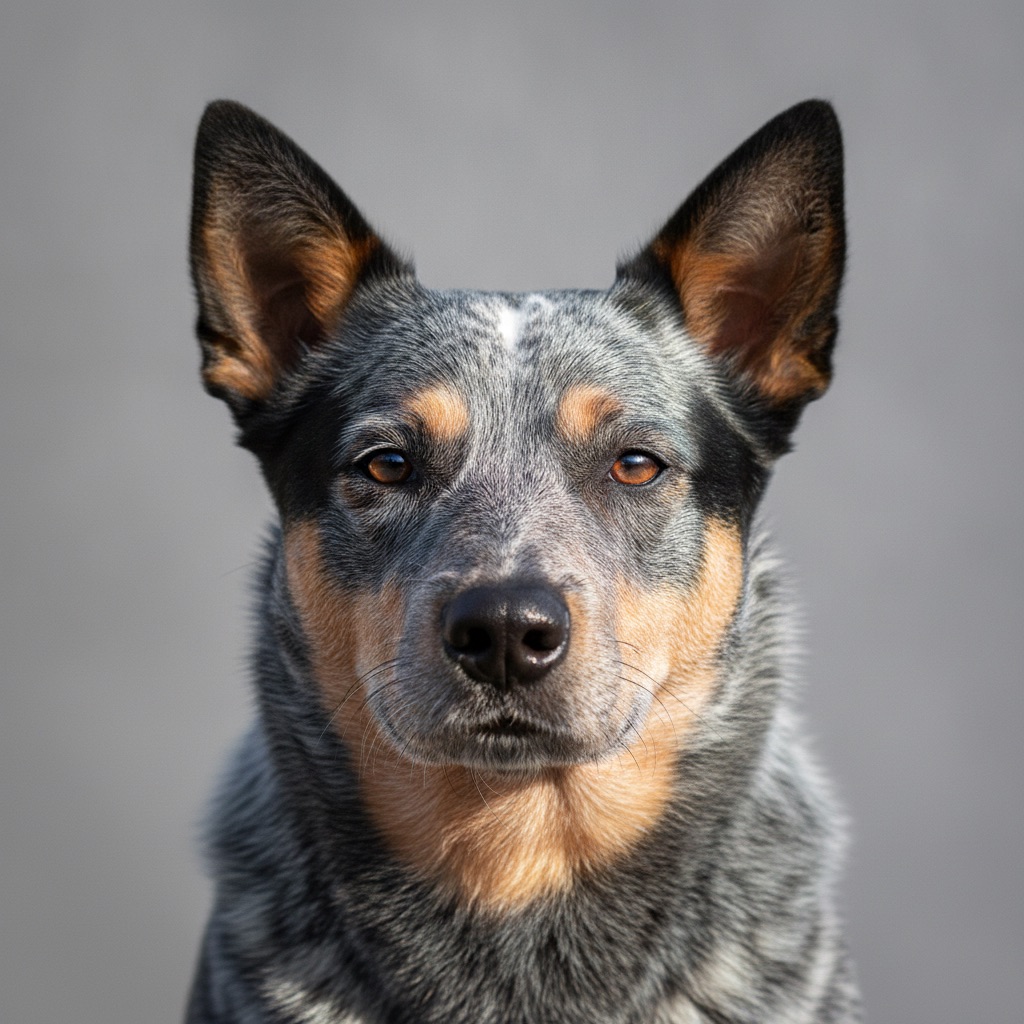
The AKC describes the breed as alert, curious and pleasant.1 Cattle Dogs are intensely loyal to one person or family and correspondingly suspicious of strangers; they were bred to work independently at a distance and they think for themselves.
The heeling instinct is strong and is directed at whatever is moving, which in a household means children, bicycles and other pets. This is a working dog in the fullest sense: without a job it will invent one, and the invented job is usually destructive. Cattle Dogs are exceptionally long-lived for their size.
The oldest dog ever verified was Bluey, an Australian Cattle Dog from Victoria who worked cattle and sheep and lived to 29 years and 5 months.2
Teach an alternative behaviour early. Herding balls, treibball, agility and formal herding give the instinct a legal target.
Physical exercise alone does not satisfy this breed. Puzzle work, scent games and trick training are as necessary as the run.
Congenital deafness occurs in the breed and is linked to the piebald colour genetics; BAER testing of litters is recommended.3
Natural wariness with strangers benefits from broad, calm early exposure.
This guide is educational and is not veterinary advice. Breed standards, measurements and health information are drawn from the sources listed above; consult your veterinarian for guidance specific to your dog.
Prestige Breed makes a medium breed multivitamin designed for breeds like the Australian Cattle Dog — see the Australian Cattle Dog Multivitamin.